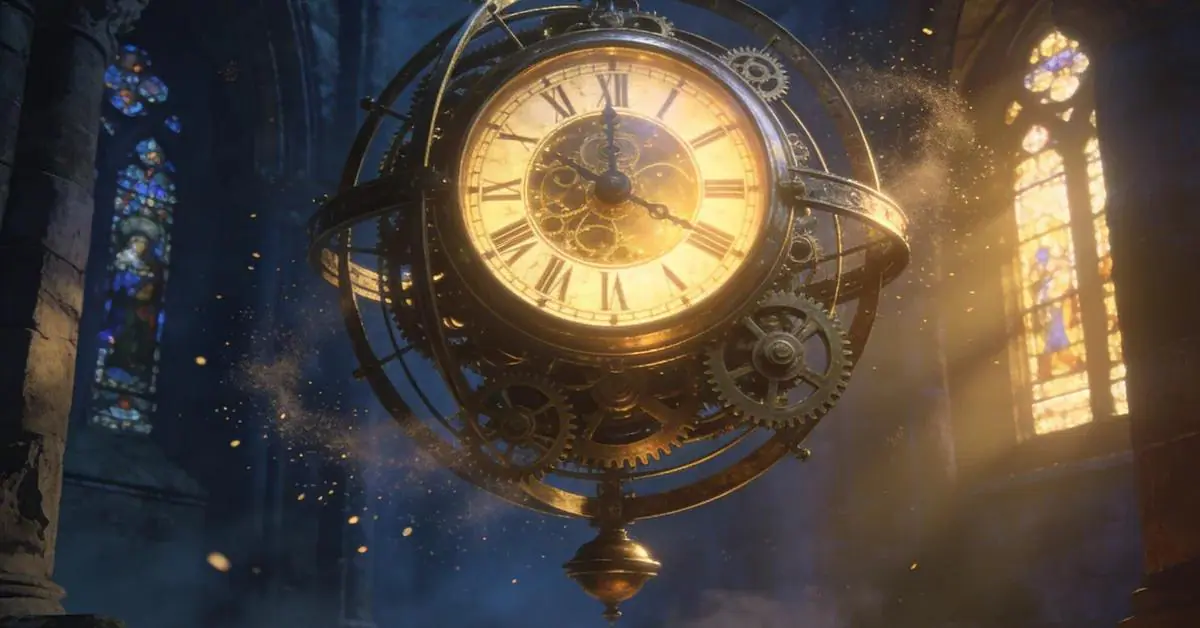
What does it mean to dream about a clock?
Dreaming of a clock reflects the finite journey of the Self, anxiety about deadlines, and pressure to fulfill your potential. Jung viewed it as a mandala imposing order on inner chaos; a clock without hands suggests lost direction and disconnection from the present, confronting mortality and the need for deeper meaning.
Is dreaming of a clock good or bad?
MixedIt depends on the dream. Dreaming of a clock can be a good or a bad sign depending on what happened and how you felt when you woke up.
Noticed a number in your dream? Read what numbers in dreams symbolize.
In Western psychology, the clock is a Jungian archetype representing the 'Self' and its finite journey through mortality. It symbolizes the ego's anxiety regarding time management, deadlines, and the subconscious pressure to fulfill one's potential. It serves as a prompt to align your inner rhythm with your external reality.
Get your personalized AI interpretation in seconds
How each tradition reads dreams about a clock
Carl Jung (Archetypes)
Man and His Symbols (1964)
Carl Jung considers the clock to represent individuation and the consciousness of time passing in the physical world. It is a symbol of the Mandala, attempting to impose order on internal chaos. Seeing a clock without hands expresses a loss of direction in the collective unconscious and a disconnection from the present. The clock embodies existential anxiety and the confrontation with the Shadow, as the dreamer realizes psychic energy is finite, prompting a search for holistic meaning beyond surface reality.
Sigmund Freud (Desire)
The Interpretation of Dreams (1899)
Freud interpreted the clock as a physical symbol with sexual connotations related to rhythm and pulse. In women's dreams, it may signify the menstrual cycle or concerns about fertility and the biological clock. He also sees it as an expression of the strict 'Superego' monitoring the dreamer for delayed repressed desires. A broken clock represents a fear of impotence or the disruption of instinctual functions due to early childhood traumas regarding control and punctuality.
Other traditions
Ibn Sirin (Islamic Core)
Muntakhab al-Kalam fi Tafsir al-Ahlam (attributed)
Ibn Sirin says the clock represents the dreamer's worldly status and livelihood; its regular ticking indicates an upright life and steady progress, while a malfunctioning clock warns of stagnation or distress. A gold watch signifies longevity and financial blessing, whereas a broken clock is an ominous sign suggesting the approach of a life-end or lost opportunities. It serves as a reminder to fulfill religious duties and a warning against heedlessness of the afterlife, symbolizing the irreversible nature of time.
Al-Nabulsi
Ta'tir al-Anam fi Ta'bir al-Manam
Al-Nabulsi interpreted the clock as a symbol of organization and the fulfillment of promises. Wearing a beautiful watch is a harbinger of lawful sustenance and commercial success. Loud ticking serves as a spiritual alarm against negligence that could lead to loss, while losing a clock indicates indecision or psychological anxiety. A clock that runs fast suggests a rushed destiny or shortness of life, whereas a slow clock represents delayed relief and the arrival of certainty after a period of waiting.
Imam Sadiq
Imam al-Sadiq views the clock as a symbol of the scales of deeds and divine justice. A precise clock reflects the dreamer's purity of intention and honesty in speech and action. A large wall clock indicates events concerning the head of the household or community elders; its fall may portend a calamity for a prominent figure. It also symbolizes the anticipation of relief; for those in distress, seeing a clock signifies that the appointed time for ease has arrived in the unseen realm.
Biblical Tradition
The Bible (Old Testament)
The clock in the Biblical sense refers to the 'appointed times and seasons' ordained by God. It recalls Daniel's visions of determined days and Jacob's ladder connecting Earth to Heaven. The clock symbolizes wisdom in stewarding one's life, as in Moses' prayer to count our days for a wise heart. It acts as a countdown to divine promises and prophetic fulfillment, calling the dreamer to repentance and emphasizing that for everything under heaven, there is a designated time.
Christian Tradition
In Christian theology, the clock represents spiritual watchfulness and readiness for the Last Day. It alludes to Saint Paul’s teaching on redeeming the time because the days are evil. A clock in a dream is a call to spiritual vigilance against lukewarm faith. Its sound signifies the 'voice crying in the wilderness' calling for repentance. If it points to midnight, it symbolizes the arrival of the Bridegroom and the need for lamps filled with oil (good deeds), reinforcing the idea of continuous spiritual warfare.
Zhou Gong
Zhou Gong Jie Meng (周公解梦)
In Chinese tradition, the clock signifies the balance between Yin and Yang forces. Regular ticking is an auspicious omen (Kichimu) indicating family stability and successful ventures. A stopped clock is an inauspicious sign suggesting stalled fortune or the end of a significant era. Hearing a clock chime warns of an opportunity that must be seized immediately. If receiving a clock as a gift, it warns of external interference in your private affairs, requiring caution and wisdom.
Hindu / Vedic
In Vedantic Hinduism, the clock is 'Kala' (Time), a manifestation of Shiva as the destroyer and renewer. Seeing a clock reminds the dreamer of the cycle of 'Samsara' (birth and death). A regular clock signifies harmony with 'Dharma' (cosmic duty). If the clock stops, it suggests accumulated 'Karma' hindering spiritual progress. The dream indicates that the eternal soul (Atman) is untouched by time, urging meditation to transcend material time toward liberation (Moksha).
Japanese (Yume Uranai)
In Yume Uranai, the clock is a guardian spirit (Kami) observing life's path. A precise clock is a 'Kichimu' (auspicious dream) promising prosperity and promotion. Hearing a clock in the silence of the night signifies a message from ancestors urging caution against betrayal. An antique clock represents inherited wisdom that must be reclaimed. Shattered clock glass is a 'Kyomu' (ominous dream) foretelling ruptured family relations or a loss of harmony with nature.
Don't let the message slip away. Get a profound, personalized analysis that reveals what your subconscious is trying to tell you.
Interpret your Clock dream with AICommon Questions & Scenarios
What does it mean to dream of a broken wristwatch?
What does it mean if the clock hands are spinning very fast in a dream?
What does it mean to dream of hearing a clock ticking or an alarm ringing?
What is the interpretation of buying a new gold watch in a dream?
What does it mean to see a wall clock hanging in an unusual place?
Written with AI from the traditions named on this page and maintained by the FASSIR English Editor. Last updated . How we interpret dreams
Disclaimer: This analysis utilizes AI based on historical and psychological texts for educational and spiritual insight. It does not constitute professional medical or psychological advice.