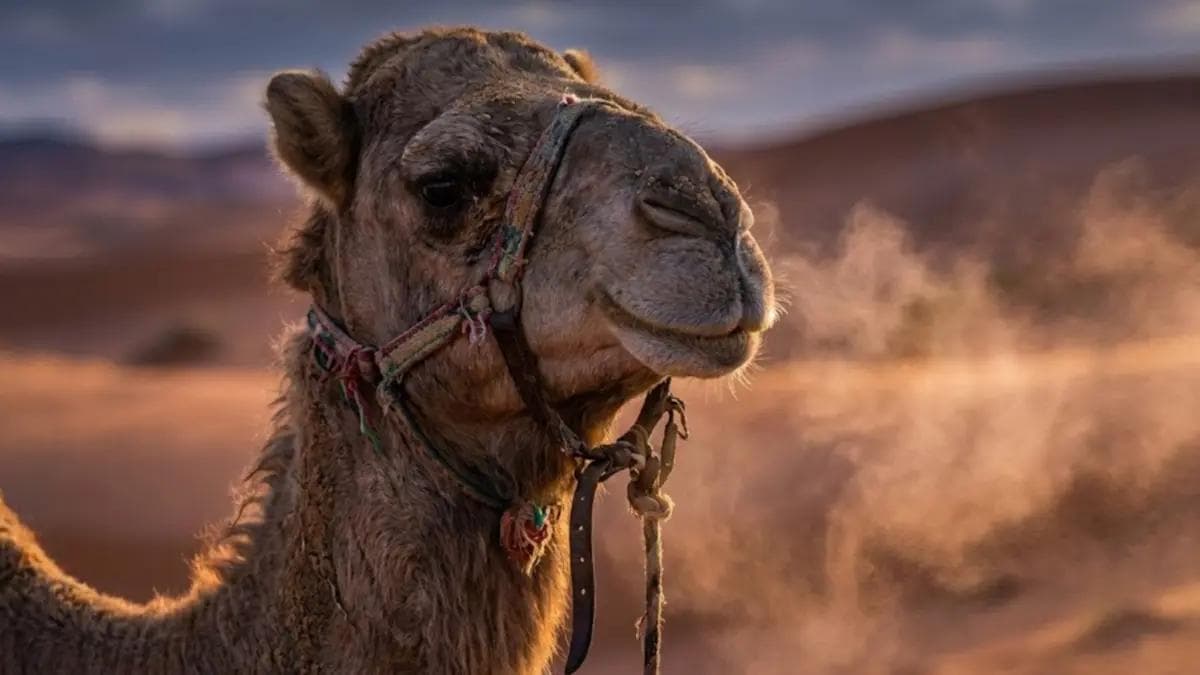
Dream Interpretation of Camel: Resilience and Travel
In the Western psychological context, the Camel is a Jungian archetype of endurance and the subconscious ability to navigate 'emotional deserts.' It symbolizes the psychic resources you carry within to survive periods of isolation or scarcity. Dreaming of a camel suggests self-sufficiency and the weight of responsibilities, urging you to trust your inner reserves and persistence to overcome life's current obstacles.
Had a dream about camel?
Get your personalized AI interpretation in seconds
Interpretations
Ibn Sirin (Islamic Core)
Ibn Sirin views the camel as a symbol of patience, endurance, and the ability to bear heavy burdens. Riding a camel signifies an upcoming journey, marriage for the single, or a religious pilgrimage (Hajj). However, since camels carry heavy loads, it may also represent grief or hidden sadness. If the camel is obedient, it reflects leadership and achieving goals. A raging camel warns of a powerful enemy or a man harboring deep-seated anger. Slaughtering a camel inside a house might portend the loss of a family leader or a significant misfortune.
Al-Nabulsi
Al-Nabulsi interpreted the camel as the 'ship of the desert,' symbolizing travel, trade, and financial gains. Owning camels represents overcoming powerful rivals or gaining authority over men. Falling off a camel is an omen of poverty or the loss of social status. If the camel enters a narrow space it shouldn't, it might symbolize spiritual deviation or the presence of jinns. Eating cooked camel meat signifies lawful livelihood, while holding camel wool is a sign of accumulating wealth and lasting prosperity through hard work and perseverance.
Imam Sadiq
Imam al-Sadiq suggests that the camel's dream has eight facets: a non-Arab king, an honorable man, a believer, travel, wealth, provision, fulfillment of needs, or sorrow. A white camel is a joyful tidings (Bushra) of blessings and abundant sustenance. A black camel, conversely, may signify illness or obstacles in one's path. Riding a camel reflects the answering of prayers or victory in a dispute. A camel giving birth symbolizes an increase in wealth, the birth of children, and the successful growth of a business venture.
Biblical Tradition
In the Old Testament, camels symbolize wealth and divine blessing, as seen in the lives of Jacob and Job. They are vehicles for fulfilling covenants, evidenced by Abraham's servant bringing Rebekah home. However, according to Mosaic Law, the camel is 'unclean' because it chews the cud but does not have a split hoof, warning against hypocrisy or blending the sacred with the profane. The camel also serves as a symbol of humble submission and faithful service in the context of divine provision.
Christian Tradition
In the New Testament, Jesus used the camel to illustrate the difficulty of the wealthy entering the Kingdom of God (the eye of a needle), making it a symbol of material burdens that hinder spiritual progress. It is also associated with John the Baptist, who wore camel’s hair, representing asceticism and the call to repentance. In Christian theology, the camel can symbolize the soul carrying the cross and the spiritual warfare against worldly passions through endurance and humility.
Carl Jung (Archetypes)
Carl Jung perceives the camel as an archetype of endurance and the capacity for survival within the collective unconscious. It represents the psyche's ability to traverse the 'inner desert'—periods of loneliness or emotional sterility—using stored spiritual resources. The camel embodies the shadow side of persistence, carrying heavy burdens toward individuation. Seeing a camel's hump suggests a reliance on inherited instincts or psychological reserves to navigate existential challenges and harsh internal landscapes.
Sigmund Freud (Desire)
Sigmund Freud might relate the camel to repressed desires or the storage of libido under external inhibition. The animal's large stature and humps could subconsciously represent the imposing figure of the father or an authority that restricts personal freedom. Dreaming of a camel may reflect childhood traumas associated with forced endurance or a feeling of being overburdened with responsibilities prematurely. It signifies the tension between the drive for gratification and the necessity of sustaining oneself through periods of deprivation.
Zhou Gong
In the tradition of Zhou Gong, a camel represents wealth coming from afar and successful trade expeditions. Seeing a camel carrying heavy goods foretells that the dreamer will receive significant rewards after arduous labor. A slowly walking camel advises patience in achieving one's goals. Conversely, a sick camel is an inauspicious omen of financial decline. A camel that kneels or refuses to move symbolizes temporary obstacles in business that require wisdom and steady persistence to overcome.
Hindu / Vedic
In Hindu tradition, the camel is sometimes associated with Rahu and the challenges posed by Karma. A camel in a dream suggests a period of austerity and hard work necessary for the purification of the soul. It represents navigating through the illusions of the world (Maya) in search of absolute truth. Seeing a camel indicates that the dreamer should prepare for a long journey of self-improvement, sacrificing fleeting desires for the sake of higher spiritual goals and endurance.
Japanese (Yume Uranai)
In Japanese Yume Uranai, the camel is an exotic animal representing quiet strength and news from afar. It is considered a 'Kichimu' (auspicious dream) if it is laden with goods, predicting a boost in financial luck. However, if the camel looks exhausted, it is a 'Kyomu' (inauspicious dream) warning against the depletion of vital energy. It represents a nature spirit encouraging the dreamer to remain steadfast in the face of adversity and to harmonize with the slow, demanding rhythms of life.
Our AI can analyze your specific dream details in seconds.
Common Questions & Scenarios
Deep Dive Interpretations
What does it mean to dream of a camel carrying water or appearing thirsty?
What does it mean to dream of a camel spitting at you or displaying aggressive behavior?
What does it mean to dream of a camel spitting or acting aggressively towards you?
What does dreaming of a camel in an unexpected or unusual environment signify?
What does it mean to dream of encountering a camel in an unexpected place, like a city street or your backyard?
What does it mean to see a caravan of camels, loaded with goods, moving slowly across the horizon in a dream?
What does it mean to see a caravan of camels loaded with goods in a dream?
What does it mean to dream of trying to feed or care for a camel, but it is uncooperative?
What does finding a lost or injured camel in your dream signify?
What does it mean to find yourself lost in a desert and a camel appears as your only rescue?
What does it mean to dream of riding a camel through a desert landscape, feeling tired but determined?
What does dreaming of riding a camel through a desert signify?
Disclaimer: This analysis utilizes AI based on historical and psychological texts for educational and spiritual insight. It does not constitute professional medical or psychological advice.
Don't let the message slip away. Get a profound, personalized analysis that reveals what your subconscious is trying to tell you.