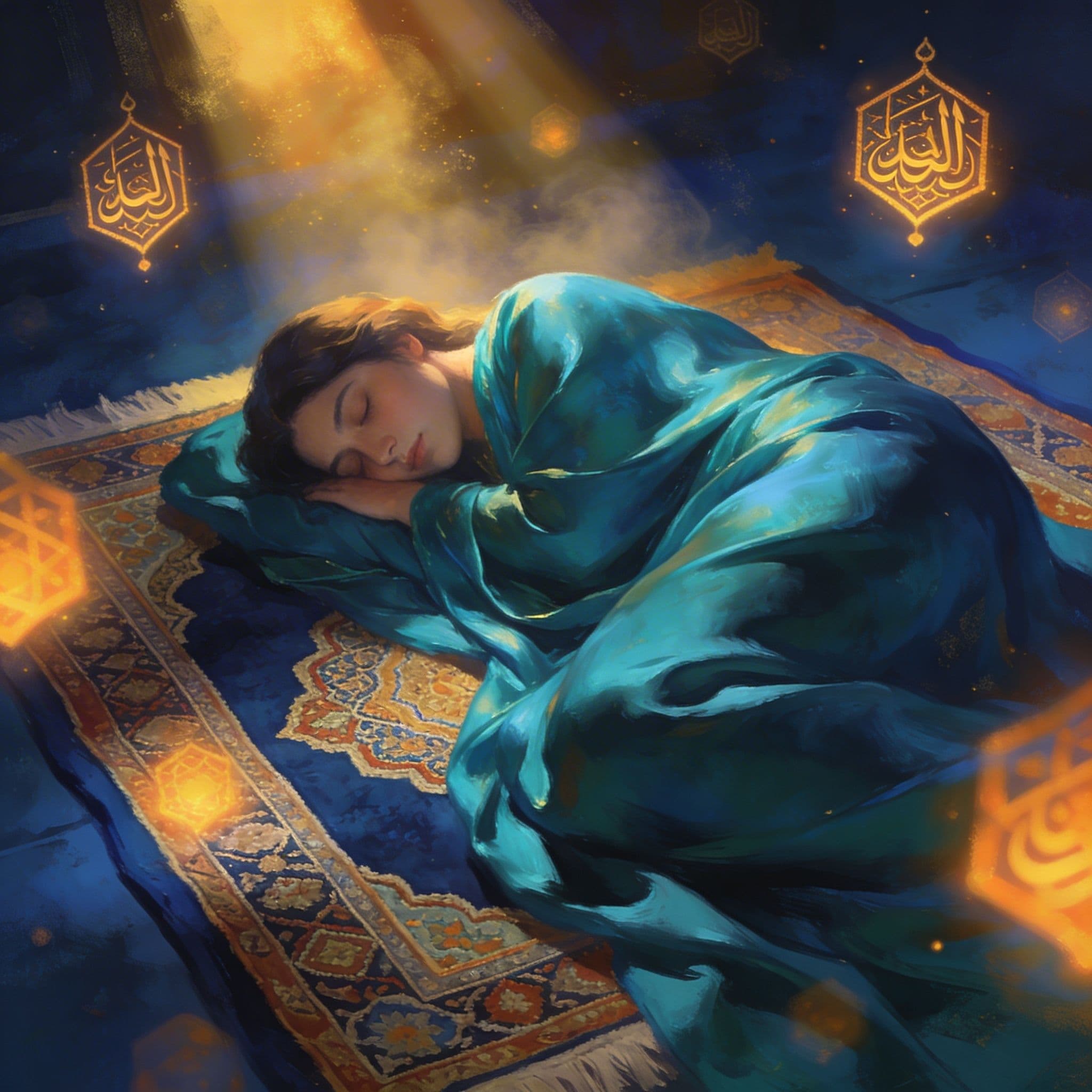
Islamic Dream Interpretation: A Complete Guide for Muslims
Dreams occupy one of the most elevated positions in Islamic theology of any tradition on earth. The Prophet Muhammad (peace be upon him) described the true dream as one of forty-six parts of prophethood, making dream interpretation not a superstition, but a sacred discipline with centuries of scholarly tradition behind it. This guide covers everything a Muslim needs to understand about dreams: their categories, their meanings, their etiquette, and how to respond to them.
The Three Categories of Dreams in Islam
The Prophet Muhammad (peace be upon him) explicitly categorized dreams into three types, preserved in authenticated hadith collections:
Had a dream about Islamic Dream Interpretation: A Complete Guide for Muslims?
Get your personalized AI interpretation in seconds
1. Ru'ya Salihah (الرؤيا الصالحة) : The True or Righteous Dream This is the most significant category. It comes from Allah and carries glad tidings, guidance, or warning. It is characterized by clarity, emotional peace upon waking, and a sense of meaning that persists. The Prophet described this as one of the remaining parts of prophethood after his passing.
2. Hulum (الحُلم) : The Ordinary Dream This comes from the nafs, the ego-self or inner psyche. It reflects the dreamer's own thoughts, desires, fears, and preoccupations. It carries no divine weight and should not be given undue attention or interpreted as a sign.
3. The Disturbing Dream : From Shaytan Frightening, shameful, or deeply disturbing dreams are attributed to Shaytan, whose aim is to cause distress and confusion. The Prophet gave specific instructions for responding to these, which we will cover in the practical section.
The Scholarly Foundation: Ibn Sirin
No discussion of Islamic dream interpretation is complete without Muhammad ibn Sirin (653–729 CE), the most revered dream interpreter in Islamic history. A Tabi'i (one who met the Companions of the Prophet), Ibn Sirin was known for his extraordinary gift in understanding dream symbolism within an Islamic framework.
His foundational principle was that the same symbol can carry entirely different meanings depending on the dreamer's identity, spiritual state, emotional condition, and the cultural context of the image. A snake dream means something different for a scholar than for a soldier. Water means something different for a fasting person than for one in a state of distress.
Ibn Sirin's tradition, preserved in Tafsir al-Ahlam and later compiled works attributed to his school, remains the primary reference for Islamic dream interpretation over thirteen centuries later.
Cultural & Spiritual Significance
Dreams hold a uniquely elevated status in the Quran and Sunnah that distinguishes Islam from most other traditions.
The Quran references dreams directly in multiple places, most extensively in Surah Yusuf (Chapter 12), which is dedicated almost entirely to the dream experiences of Prophet Yusuf (Joseph, peace be upon him). His interpretation of the king's dream of seven fat cows and seven lean ones saved an entire civilization from famine, establishing dream interpretation as a divine gift (ta'bir) capable of serving profound worldly and spiritual purposes.
The Prophet Ibrahim (Abraham) received his most difficult commandment through a dream. The Prophet Muhammad (peace be upon him) himself received early revelations in the form of true dreams before the first verbal revelation. This context elevates the ru'ya beyond personal psychology, it is treated as a legitimate channel of divine communication for the righteous.
What Makes a Dream "True" in Islamic Understanding
Islamic scholars have identified several markers that distinguish a ru'ya salihah from an ordinary or disturbing dream:
- Clarity and vividness, true dreams are often remembered with unusual sharpness upon waking
- Emotional peace, the dreamer wakes feeling calm, moved, or filled with a sense of significance rather than anxiety
- Consistency with Islamic values, a true dream will never contradict the Quran or established Sunnah
- The spiritual state of the dreamer, scholars consistently note that the purer the heart and the more regular the worship of the dreamer, the more likely their dreams carry meaning
- The time of occurrence, dreams in the final third of the night, closest to Fajr, are considered most likely to be true dreams, as this is when the soul is most settled and REM sleep is deepest
5 Common Dream Scenarios in Islamic Interpretation
1. Seeing the Prophet Muhammad (Peace Be Upon Him)
This is among the most significant dream experiences in Islamic tradition. The Prophet stated: "Whoever sees me in a dream has truly seen me, for Shaytan cannot take my form." Scholars treat this dream with the highest reverence, it is considered a genuine blessing and the dreamer is advised to feel joy, renew their commitment to the Sunnah, and share the dream with a trustworthy scholar.
2. Dreaming of Water
Water carries overwhelmingly positive symbolism in Islamic dream tradition. Clear, flowing water often represents knowledge, purification, sustenance, or mercy. Ibn Sirin associated drinking from a pure river with receiving beneficial knowledge or rizq (provision). Turbulent or dark water, by contrast, may signal trials or emotional overwhelm.
3. Dreaming of Death
Seeing oneself die in a dream is not interpreted literally in Islamic tradition. Ibn Sirin frequently interpreted death dreams as symbols of repentance, spiritual transformation, or the end of a period of hardship. Seeing a deceased person alive and well is generally considered a positive sign, and scholars say one may convey salaam to the deceased in such a dream.
4. Dreaming of Flying
Flight in Islamic dream tradition generally symbolizes elevation of status, spiritual ascent, or upcoming travel. The manner of flight matters enormously: effortless, upward flight toward light is auspicious. Chaotic or downward flight may signal instability or spiritual negligence requiring attention.
5. Dreaming of Fire
Fire carries dual symbolism in Islamic interpretation. It can represent fitna (strife or trial), anger, or warning, or, in certain contexts, warmth, provision, and sustenance. The context and emotional tone of the fire in the dream are critical to interpretation. Ibn Sirin distinguished carefully between fire that burns the dreamer and fire that illuminates or warms without harm.
What's Happening in Your Brain (The Islamic and Scientific Harmony)
Modern neuroscience and Islamic dream tradition are not in conflict, they address different dimensions of the same phenomenon.
Neuroscientifically, dreams occur primarily during REM sleep, when the brain's limbic system (including the amygdala) is highly active and the prefrontal cortex is partially suppressed. According to Harvard Medical School sleep researchers, this is when the brain consolidates emotional memory, processes unresolved experiences, and generates the symbolic narratives we experience as dreams.
A 2024 study published in Nature confirmed that dreaming plays an active, measurable role in emotional memory processing overnight, validating the intuition, present in Islamic tradition for over fourteen centuries, that dreams carry genuine psychological and spiritual significance rather than being random neural noise.
Islamic tradition never claimed that all dreams are divine communication, only the ru'ya salihah. The ordinary dream (hulum) maps almost precisely onto what neuroscience describes as the brain's default emotional processing. The alignment between the two frameworks, arrived at independently across millennia, is striking.
Received a dream that felt significant and want to understand its Islamic meaning? Try the Fassir Dream Interpreter for a personalized reading grounded in Islamic tradition and modern dream psychology.
Islamic Etiquette: What to Do After Each Type of Dream
After a True Dream (Ru'ya Salihah):
- Say Alhamdulillah (Praise be to Allah) upon waking
- Share it only with someone you trust, a scholar, a wise friend, or someone who will interpret it well
- Do not share it with everyone, as a poorly received interpretation can affect how the dream manifests
- Consider it a gift and reflect on its potential guidance for your current life situation
After an Ordinary Dream (Hulum):
- Do not attach significance to it
- Do not share it or seek interpretation
- Simply proceed with your day
After a Disturbing Dream:
- Seek refuge in Allah from Shaytan immediately upon waking: "A'udhu billahi min al-Shaytan al-rajeem"
- Spit lightly to your left three times (a Prophetic practice)
- Change your sleeping position
- Do not share the dream with anyone
- Do not seek its interpretation, the Prophet explicitly advised against it
Practical Steps for Cultivating True Dreams
- Purify your spiritual state before sleep. Perform wudu (ablution), pray two rak'ahs of night prayer if possible, and recite the recommended evening adhkar (remembrances). The Prophet's du'a before sleep and Ayat al-Kursi are particularly recommended.
- Sleep on your right side facing the qibla. This is the Sunnah sleeping position and is associated in tradition with the conditions most conducive to ru'ya salihah.
- Guard what enters your heart before sleep. Avoid screens, arguments, and disturbing content in the hour before sleeping. The emotional state you carry into sleep directly shapes the dream environment.
- Keep a dream record for significant dreams. Write down any dream that felt meaningful immediately upon waking, the emotion, the key image, the people present. Then seek interpretation from a knowledgeable person rather than random online sources.
- Do not over-interpret. The Prophet warned against seeking meaning in every dream. Not every dream is significant. Develop discernment, the ru'ya salihah is typically self-evident in its weight and quality. Trust that instinct over anxious analysis of every sleep experience.
Related Dream Symbols in Islamic Tradition
- Dead Person : the deceased in dreams and what their appearance signifies
- Fire : trial, warning, or provision depending on context
- Flight : elevation, travel, and spiritual ascent
- Sea : vast knowledge, worldly affairs, and emotional depth
- Angel : divine presence, glad tidings, and spiritual protection
- Mosque : spiritual refuge, community, and closeness to Allah
Islam does not treat dreams as entertainment or as random neurological events. It treats them as a window, one that requires discernment, spiritual preparation, and learned interpretation to use properly. The ru'ya salihah is a mercy. The hulum is noise. The disturbing dream is a test of your response. Knowing the difference, and responding to each correctly, is itself a form of Islamic knowledge worth cultivating. Wallahu A'lam, and Allah knows best.
Try the Fassir Dream Interpreter to explore the Islamic meaning of your dream, grounded in the tradition of Ibn Sirin and the guidance of the Sunnah.
Don't let the message slip away. Get a profound, personalized analysis that reveals what your subconscious is trying to tell you.
Frequently Asked Questions

A team of researchers and editors dedicated to dream interpretation, combining religious traditions, classical wisdom, psychological insight, and modern analytical methods.
Read Next

Why Your Snake Dreams Won't Go Away: A Deep Psychological Dive
That Stranger in Your Dream Isn't a Stranger at All, Here's Why

Can Eating Before Bed Really Change Your Dreams? The Science Says Yes