Animal dreams often reflect feelings, relationships, or changes that are on your mind, rather than having one fixed meaning. These animal dream meanings are starting points: the animal’s behavior, your emotions, and the details of the dream matter.
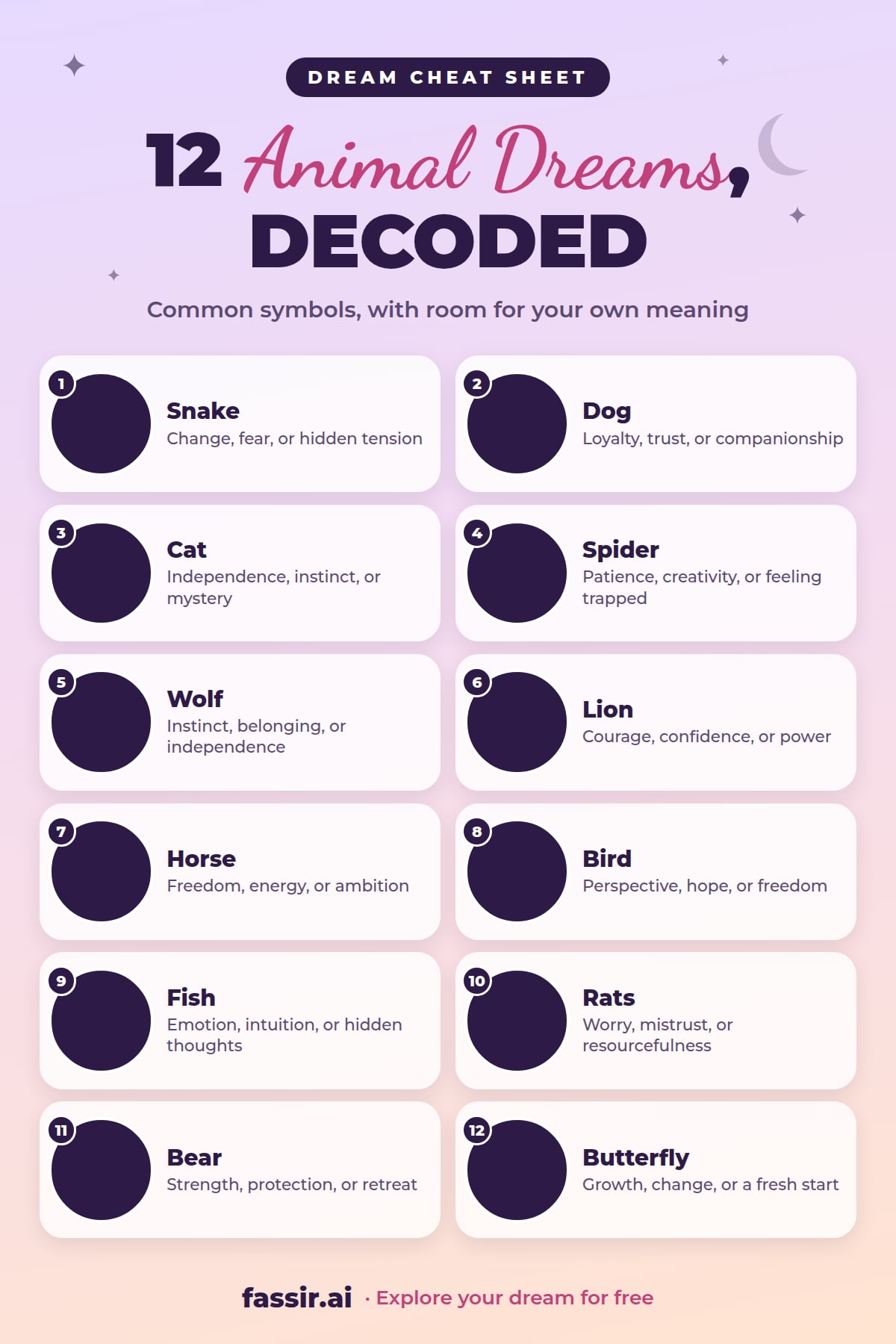 Save this cheat sheet on Pinterest
1. Snake
A snake in a dream may point to change, fear, or a tension you have not yet put into words. If it bites or chases you, the dream may reflect feeling threatened or overwhelmed; a calm snake can suggest curiosity or transformation instead. Ask yourself: What in my life feels unsettling, or ready to change? Read more about snake dreams.
Get your personalized AI interpretation in seconds
2. Dog
Dogs often bring themes of loyalty, trust, companionship, or protection into a dream. A friendly dog may reflect support or closeness, while an aggressive or lost dog can bring attention to conflict, worry, or feeling disconnected. Ask yourself: Where do I feel supported—or where is trust being tested? Explore dog dreams.
3. Cat
A cat may symbolize independence, intuition, or a part of yourself that prefers space. A relaxed cat can suggest comfort with your own company, while a frightened or hostile one may reflect unease or crossed boundaries. Ask yourself: Do I need more independence, or am I overlooking an instinct? Learn more about cat dreams.
4. Spider
Spiders can suggest patience, creativity, or feeling caught in a complicated situation. Seeing a web may bring focus to plans and connections; being trapped in one can shift the emphasis toward pressure or limited choices. Ask yourself: What am I carefully building, or what feels hard to escape? Read about spider dreams.
5. Wolf
A wolf may bring up instinct, independence, or the pull between belonging and going your own way. A lone wolf can emphasize self-reliance, while a pack may point to community, family, or group dynamics. Ask yourself: Do I feel connected to my people, or do I need more room to act independently? Explore wolf dreams.
6. Lion
A lion may reflect courage, confidence, authority, or a wish to stand your ground. A calm lion can suggest a sense of inner strength, while one that roars or attacks may signal tension around power or confrontation. Ask yourself: Where would I like to feel more confident or assertive? Learn more about lion dreams.
7. Horse
Horses often evoke freedom, energy, and forward movement. Riding a horse may feel like having direction or control, while a horse that bolts can reflect energy or ambitions that feel difficult to manage. Ask yourself: What am I eager to pursue, and do I feel in control of my pace? Read about horse dreams.
8. Bird
A bird may suggest perspective, hope, or a desire for freedom. A bird in flight can evoke new possibilities, while one that is caged or injured may bring attention to limits or vulnerability. Ask yourself: Where do I want more space, choice, or perspective? Explore bird dreams.
9. Fish
Fish may connect with emotions, intuition, or thoughts that are not fully in view. Clear water can make the scene feel more open, while murky water may reflect uncertainty; the fish’s condition and your reaction also matter. Ask yourself: What feeling might I be trying to understand? Learn more about fish dreams.
10. Rats
Rats in dreams may bring up worry, mistrust, or the sense that something is bothering you in the background. A single rat may focus attention on one nagging concern, while many rats can make the dream feel crowded or overwhelming. Ask yourself: Is there a small problem I have been avoiding, or am I being too hard on myself? Read about rat dreams.
11. Bear
A bear may symbolize strength, protection, or the need to withdraw and recharge. A gentle bear can feel reassuring, while a chasing or threatening bear may reflect pressure, anger, or a need to protect your boundaries. Ask yourself: Where do I need to be firmer, or where would rest help? Explore bear dreams.
12. Butterfly
A butterfly commonly suggests growth, change, or a fresh start. Watching one emerge or fly may emphasize a transition that feels hopeful, while a damaged or trapped butterfly can bring attention to uncertainty about change. Ask yourself: What part of my life is changing, and how do I feel about it? Learn more about butterfly dreams.
How this tradition reads animal dreams
Psychological approaches tend to start with the dreamer’s personal associations. Jungian readings may explore animals as images of instinct or inner life, while Freudian readings often ask what wishes or conflicts the dream might express; a memory-processing view considers how recent experiences and emotions may reappear in dreams.
In Christian and biblical traditions, dreams may be approached through faith and discernment, with Joseph and Daniel remembered as interpreters of dreams. These examples belong to religious tradition, not a universal code for animal symbols; readers may also explore how other traditions read this dream.
Why animal dreams happen
Dreams arise during sleep, and researchers study sleep through brain signals and stages. A review of electroencephalography and sleep research discusses sleep-related brain activity, but it does not establish a fixed meaning for any animal.
Stress, recent experiences, and memory may shape what shows up in a dream, though no single explanation fits everyone. Research on psychedelics and altered perception concerns drug-related effects, not ordinary dreams, and cannot be used to decode animal symbols. Likewise, a review discussing mental health and parasitic infection reports associations involving depressive symptoms and inflammation; it is not evidence about animal dreams.
If you want another prompt for personal reflection, try the Fassir spirit-animal quiz.