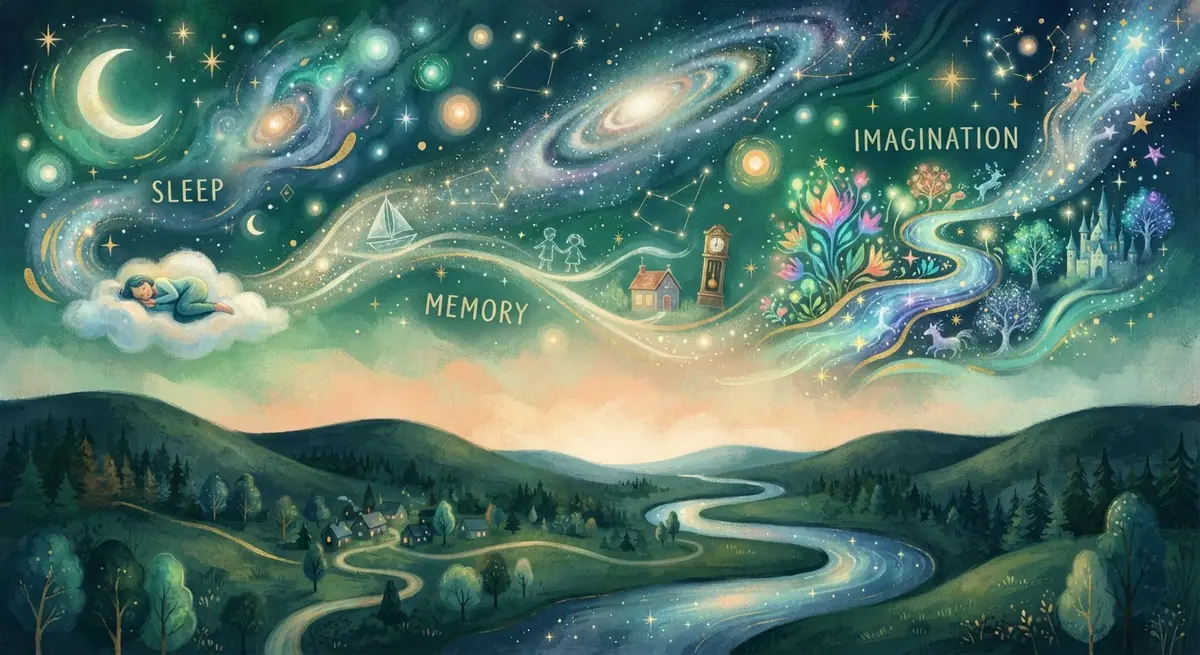

The meaning of common nightmares often connects to stress, uncertainty, or strong emotions—not a prediction of what will happen. The details and feelings in a dream matter, and the same image can mean different things to different people.
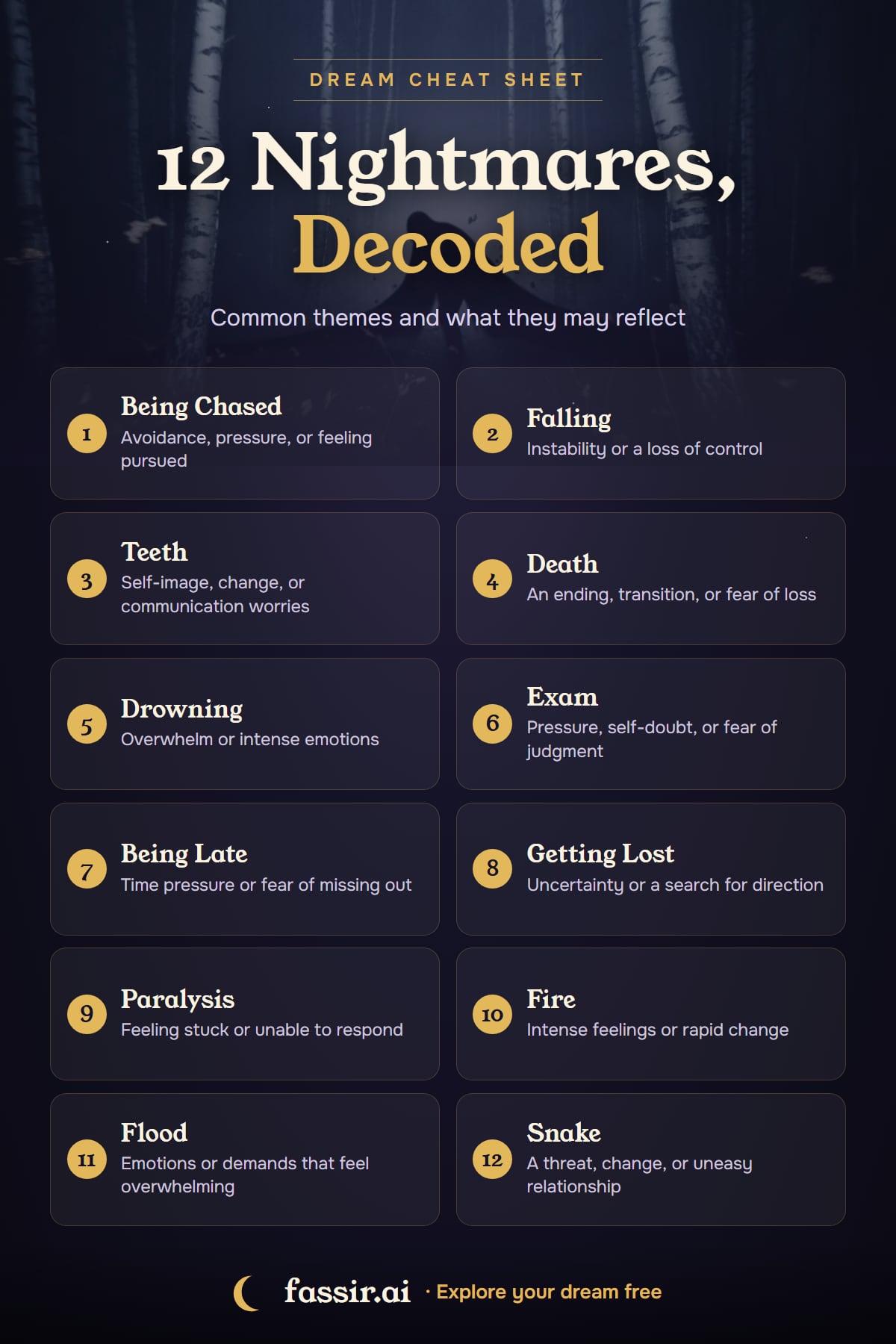 Save this cheat sheet on Pinterest
1. Being Chased
Being chased often reflects pressure, avoidance, or a situation that feels hard to face. If the pursuer is familiar, consider whether that person—or what they represent—feels demanding; if the pursuer is unknown, the tension may feel more general. Ask yourself: “What am I trying to avoid or get away from right now?” Explore the being chased dream for more possible interpretations.
Get your personalized AI interpretation in seconds
2. Falling
Falling commonly reflects insecurity, instability, or a sense of losing control. A sudden drop may feel different from slowly slipping: the first can echo an abrupt change, while the second may resemble a situation that has been becoming harder to manage. Ask yourself: “Where in life do I feel less grounded than usual?” Read more about falling dreams.
3. Teeth
Dreams about teeth often point to concerns about self-image, communication, or change. Teeth crumbling may feel like a loss of confidence, while teeth falling out in public can add a fear of embarrassment or judgment. Ask yourself: “Is there something I want to say, or a change in how I see myself, that feels uncomfortable?” See possible meanings of teeth in dreams.
4. Death
Death in a dream may reflect fear of loss, a major transition, or the sense that one chapter is ending; it does not predict a real death. Dreaming of your own death may feel more personal, while dreaming of someone else’s can bring up feelings about that relationship or about change. Ask yourself: “What feels different, finished, or uncertain in my life?” Explore the death dream meaning.
5. Drowning
Drowning often reflects feeling overwhelmed by emotions, responsibilities, or a situation that seems difficult to manage. Being pulled under may suggest the pressure feels intense, while struggling in shallow water can point to frustration with a problem that seems hard to escape. Ask yourself: “What is taking more emotional energy than I can comfortably give?” Learn more about drowning dreams.
6. Exam
An exam nightmare commonly reflects pressure, self-doubt, or worry about being evaluated. Arriving unprepared may echo feeling caught off guard, while being unable to answer a question can reflect uncertainty about what is expected of you. Ask yourself: “Where am I worried I won’t meet a standard—mine or someone else’s?” Read about exam dreams.
7. Being Late
Being late in a dream often reflects time pressure, competing demands, or fear of missing an opportunity. Missing a specific event may connect to that commitment, while being late without knowing where you need to go can suggest a broader feeling of falling behind. Ask yourself: “What deadline or expectation is weighing on me?” Explore the meaning of being late.
8. Getting Lost
Getting lost may reflect uncertainty, a search for direction, or feeling out of place. Being lost somewhere familiar can make the dream feel connected to a change in your routine, while being lost in an unfamiliar place may echo broader uncertainty. Ask yourself: “What decision or next step feels unclear right now?” See more about getting lost in a dream.
9. Paralysis
A paralysis nightmare can mirror feeling stuck, unheard, or unable to act in a difficult situation. If you feel awake but cannot move as you fall asleep or wake up, it may be sleep paralysis—a known sleep experience, not a supernatural sign. Ask yourself: “Where do I wish I had more choice or support?” Explore paralysis dreams.
10. Fire
Fire may reflect intense emotions, rapid change, or a situation that feels difficult to contain. A small, controlled fire can carry a different feeling from a spreading blaze, which may echo worry that a problem is growing. Ask yourself: “What feels heated or urgent in my life, and what might help me respond calmly?” Read about fire dreams.
11. Flood
A flood often reflects emotions or demands that feel like too much at once. Rising water may suggest pressure building, while escaping to higher ground can bring attention to the ways you seek safety or perspective. Ask yourself: “What has been accumulating, and what could I set down or ask for help with?” Explore the flood dream meaning.
12. Snake
A snake may represent unease, change, or a situation that feels difficult to read; its meaning depends on your associations and the dream’s mood. A snake that threatens you may reflect a felt concern, while one that sheds its skin may bring change to mind. Ask yourself: “What does this snake bring up for me, and does that feeling connect to anything happening now?” See possible interpretations of snake dreams.
How traditions interpret nightmares
Psychological approaches come first: Freud explored how dreams might express wishes or conflicts, while Jung considered personal and shared symbolic themes. Contemporary research also looks at how dreams may incorporate emotional memories and waking experiences, so an image is best treated as a prompt for reflection—not a fixed code.
In Christian and biblical traditions, Joseph and Daniel are remembered as interpreters of dreams, but their stories do not establish a universal meaning for every nightmare. If you are curious, explore how other traditions read this dream while keeping your own beliefs and experiences in view.
Why nightmares happen—and how to feel calmer
Nightmares can arise as the sleeping brain processes emotion, memory, and recent experiences; stress, disrupted sleep, and difficult events may play a part. Research has examined links between dreams and emotional memory, including the incorporation of recent waking-life experiences and how sensory cues may influence dreaming in targeted memory reactivation research. Sleep paralysis is also associated with REM sleep, as discussed in this review of sleep paralysis and lucid dreaming.
After a nightmare, take a few slow breaths, notice the room around you, and remind yourself that a dream is not a forecast. A steady bedtime routine and a brief note about the dream or your day may help you spot patterns without treating any single image as a diagnosis. For another way to reflect, try the free Fassir nightmare tool.