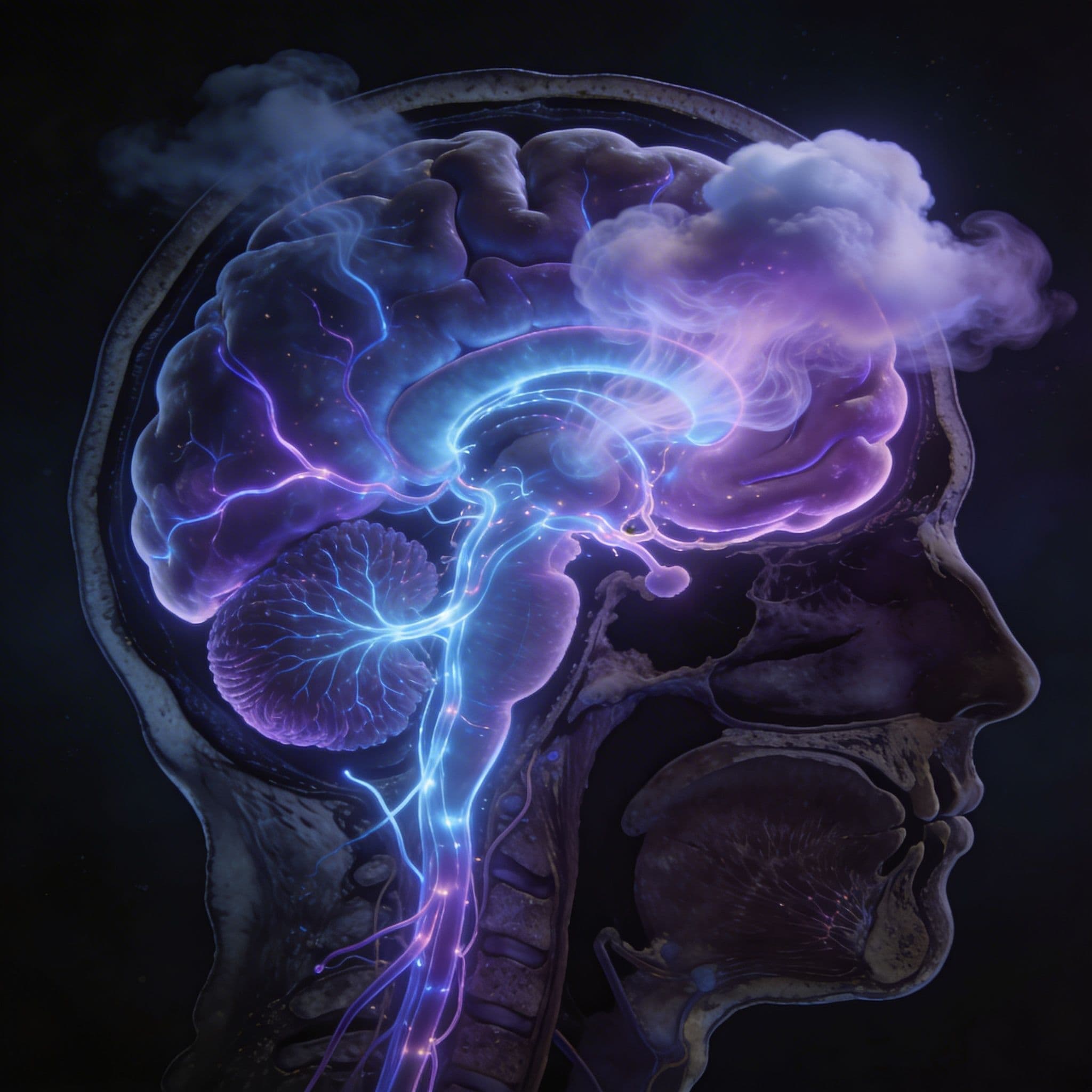
Why Don't I Dream? The Science of Dreamless Sleep
Almost everyone dreams, but not everyone remembers. The distinction between not dreaming and not recalling dreams is one of the most important and most misunderstood facts in sleep science. If you regularly wake up to a blank mental slate, the most likely explanation isn't that your brain went silent. It's that something is interrupting the bridge between sleep and memory.
You Almost Certainly Do Dream
Here's the scientific baseline: every human being with a functioning brain enters REM (Rapid Eye Movement) sleep, the stage most associated with dreaming. This happens automatically, multiple times per night, regardless of whether you remember it.
Had a dream about Why Don't I Dream? The Science of Dreamless Sleep?
Get your personalized AI interpretation in seconds
A 2003 study published in PubMed on self-described "non-dreamers", people who reported never recalling a single dream, found that when these individuals were awakened during polysomnographically confirmed REM sleep, they still reported no dream content. This is a rare but real phenomenon, suggesting a small subset of people may genuinely produce minimal dream activity. But it's the exception, not the rule.
For the vast majority, the problem isn't the absence of dreams. It's the absence of dream recall, and that difference matters enormously.
The Science of Dream Forgetting
Dreams are encoded in fragile, short-term memory during sleep. The moment you wake up, especially abruptly, competing sensory input floods the brain and overwrites that fragile encoding before it can consolidate into long-term memory.
Researcher Raphael Vallat described it perfectly: "Waking up is like going from air to water while holding sand in your hand. Holding the sand is like holding the memory of your dream, it's very hard to keep."
According to research published in Dreaming and the Brain (PMC), dream encoding involves the same hippocampal and prefrontal systems responsible for waking memory. When those systems are compromised, by sleep deprivation, medication, or mood disorders, dream recall drops sharply, even when dreaming itself continues.
A 2024 study published in Nature further confirmed that dreaming plays an active role in overnight emotional memory processing, meaning dreamless nights aren't neutral. When dreams aren't being remembered or processed, emotional regulation may quietly suffer.
The Psychological Perspective
Freud: Dreams You Can't Access
For Freud, the unconscious mind was constantly producing dream material, but the ego's censorship mechanism could suppress or obscure it entirely. From a Freudian standpoint, people who "don't dream" may simply have a particularly effective suppression system, one that keeps unconscious content tightly controlled even during sleep.
This is especially relevant for people who are emotionally avoidant in waking life. The same psychological walls that prevent you from feeling difficult emotions during the day can mute your dream life at night.
Jung: A Silenced Inner Life
Jung saw dreams as the primary language of the unconscious. When that language goes quiet, he would interpret it not as peace, but as disconnection. A person who never dreams, in Jungian terms, may be someone who has lost contact with their inner life, operating entirely on the surface level of conscious function.
Jung believed this disconnection carried a cost. The unconscious doesn't disappear when ignored, it finds other ways to express itself, through physical symptoms, mood disruptions, or a vague but persistent sense that something is missing.
Cultural & Spiritual Perspectives
The significance of dreams is so deeply embedded in human culture that people who don't dream have historically been regarded with a mixture of curiosity and concern.
In Islamic tradition, the ru'ya (true dream) is considered a gift, a fragment of divine communication granted during sleep. The absence of remembered dreams is not condemned, but Islamic scholars have noted that cultivating one's inner and spiritual life creates the conditions for meaningful dreams to surface.
Interestingly, Psychology Today references an ancient North African tribe near the Atlas mountains who were reportedly said to never dream, one of the earliest recorded accounts of a culture where dreamlessness was treated as a collective phenomenon rather than an individual anomaly.
In modern Western psychology, chronic dreamlessness is increasingly treated not as a personality quirk but as a potential clinical signal, worth examining rather than ignoring.
6 Real Reasons You're Not Dreaming (Or Not Remembering)
1. REM Sleep Is Being Suppressed
REM sleep is the primary dreaming stage, and it's also the most vulnerable to disruption. Alcohol, cannabis, benzodiazepines, antidepressants, and many common sleep aids significantly reduce REM duration. Less REM means fewer dreams, and fewer opportunities for recall.
2. Chronic Sleep Deprivation
When the body is severely sleep-deprived, it prioritizes deep, slow-wave sleep for physical recovery, often at the expense of REM. A consistently shortened sleep window cuts into the late-sleep REM periods that produce the most vivid and memorable dreams.
3. Depression and Mental Health
A 2008 study cited in Dialogues in Clinical Neuroscience found that approximately 90% of people with depression experience significant sleep quality decline. Depression suppresses REM architecture, reduces dream vividness, and impairs the memory consolidation processes that make dreams retrievable upon waking.
4. Stress and Anxiety
High cortisol levels, the hallmark of chronic stress, fragment sleep architecture and reduce time spent in REM. Even when dreams do occur under stress, the mental preoccupation with waking anxieties effectively crowds out dream recall the moment consciousness returns.
5. Waking Up the Wrong Way
The method of waking matters. An abrupt alarm clock during light sleep is almost guaranteed to erase dream memory before it can consolidate. People who wake naturally, or who lie still for a few minutes before moving, consistently report higher dream recall, not because they dream more, but because they give the memory time to form.
6. Neurological and Medical Conditions
Brain injuries, strokes, and conditions affecting the frontal or temporal lobes can structurally impair dream generation or recall. Parkinson's disease, Alzheimer's, and certain seizure disorders have all been associated with reduced or altered dreaming. If dreamlessness is sudden and new, it warrants medical attention.
What's Happening in Your Brain
During REM sleep, Harvard Medical School sleep researchers have documented intense activation of the amygdala and hippocampus, the brain's emotional and memory centers, alongside relative suppression of the prefrontal cortex, which governs logic and self-censorship.
This neurological profile is why dreams feel so real and so strange simultaneously: the emotional brain is running at full capacity while the rational brain is partially offline.
When REM is chronically disrupted, this nightly emotional processing cycle is broken. Research increasingly suggests this isn't benign, emotional memory consolidation, threat rehearsal, and even creative problem-solving all depend on healthy REM dreaming.
A notable finding from Discover Magazine: approximately 1 in 250 people report never remembering a single dream across their entire lifetime, a tiny but real subset who appear to represent genuine low-recall outliers rather than non-dreamers in a biological sense.
Curious what your dreams might be telling you when they do appear? Try the Fassir Dream Interpreter for a personalized, psychology-backed reading the next time a dream breaks through.
Practical Steps to Bring Dreams Back
- Cut alcohol and cannabis before bed. Both are among the most potent REM suppressors available. Even moderate evening consumption measurably reduces REM duration and dream recall. A two-week abstinence experiment will often produce a dramatic increase in vivid dreaming.
- Set a gentle alarm, or none at all. Abrupt waking is the single biggest killer of dream recall. If your schedule allows, try waking naturally on weekends. If not, use a gradual-light or gentle-tone alarm rather than a sharp buzzer.
- Keep a notebook at your bedside, and reach for it before your phone. The first 90 seconds after waking are critical. Before checking notifications or getting up, lie still and let the dream surface. Write down even a single image, emotion, or color. The habit builds recall over time.
- Review your medications with a doctor. Many common prescriptions, SSRIs, beta-blockers, certain antihistamines, have documented REM-suppressing effects. This doesn't mean stopping medication, but it's worth a conversation about timing or alternatives if dreamlessness is distressing.
- Extend your sleep window. REM periods grow longer across the night, with the richest dreaming typically occurring in the final 60–90 minutes before natural waking. If you're sleeping six hours or less, you're likely cutting off the most dream-dense part of your sleep cycle entirely.
- Address underlying stress and depression. Dream recall frequently recovers naturally when mental health improves. Therapy, physical exercise, and stress reduction don't just help your waking life, they restore the REM architecture your dreaming mind depends on.
Related Dream Symbols
When dreams do return, these are among the most common first themes to emerge:
- Falling : one of the first anxiety-linked dreams to resurface
- Being Chased : the brain's threat simulation reactivating
- Flying : a classic REM rebound experience after suppression
- Water : emotional processing returning to consciousness
- Houses : the self being reconstructed from the inside out
Not dreaming isn't a superpower, it's usually a signal. Whether it's your sleep schedule, your stress load, a medication, or something deeper going on neurologically, the absence of dream life is worth paying attention to. Your unconscious mind has things to say. The question is whether your sleep is quiet enough to hear them.
Try the Fassir Dream Interpreter the next time a dream surfaces, and start learning the language your sleeping mind has been trying to speak.
Don't let the message slip away. Get a profound, personalized analysis that reveals what your subconscious is trying to tell you.
Frequently Asked Questions

A team of researchers and editors dedicated to dream interpretation, combining religious traditions, classical wisdom, psychological insight, and modern analytical methods.
Read Next

Why Your Snake Dreams Won't Go Away: A Deep Psychological Dive
That Stranger in Your Dream Isn't a Stranger at All, Here's Why

Islamic Dream Interpretation: A Complete Guide for Muslims