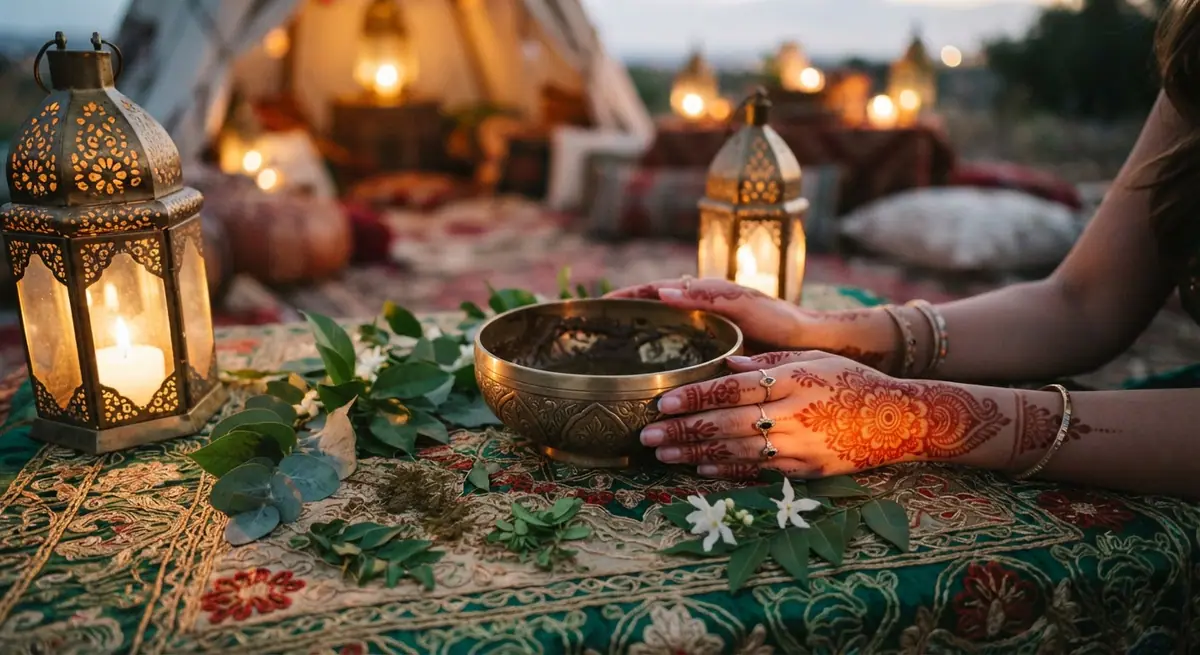
Dreaming of henna often centers on blessing, adornment, belonging, and a change publicly or privately marked. In Arab and Islamic cultures, henna is associated with weddings, Eid, hospitality, femininity, protection, and joyful preparation; vivid, beautiful designs may therefore suggest celebration, marriage prospects, reconciliation, or a respected transition. Faded, muddy, or unwanted henna can point to anxiety about reputation, obligations, concealment, or a joy that feels forced. Psychologically, the symbol may represent the wish to decorate identity, claim cultural roots, or make an inner transformation visible. Hands emphasize agency and relationships; feet suggest direction and life passage; hair can indicate sensuality, renewal, or concern with presentation. Spiritually, henna may signify blessing, ritual protection, patience while intentions develop, and the sacred value of embodied tradition. Interpretation depends on the dreamer's feelings, marital status, social context, and whether the mark is welcomed, applied by another, or difficult to remove. It is commonly a favorable but context-sensitive omen.
Get your personalized AI interpretation in seconds
How each tradition reads dreams about Henna
Carl Jung (Archetypes)
Man and His Symbols (1964)
Jungian analysis would not treat henna as a universal prediction. It would ask what this culturally charged substance means to the dreamer's personal unconscious and how it constellates archetypal material. Henna is a temporary mark placed on the body, so it can symbolize individuation: an inner change becoming visible while remaining capable of transformation. A woman who dreams of intricate henna before a wedding may be encountering the archetype of the Bride, the feminine passage into a new social and psychic identity. The dream may affirm that transition, or compensate for a fear that public role is eclipsing the individual self.
Hands are especially significant in Jungian reading because they represent agency, creative work, relationship, and the capacity to shape reality. Beautiful designs on the dominant hand may indicate a conscious readiness to act; designs spreading onto the other hand may suggest unconscious material entering practical life. If the dreamer applies henna to herself, the psyche may be claiming authorship of identity. If an unknown woman applies it, that figure may carry the archetype of the Great Mother, an ancestral feminine lineage, or the anima as a mediating image of soul. If the artist is threatening, the same image may reveal submission to collective expectations.
The shadow appears when henna is dark, muddy, compulsory, or impossible to wash away. Such a dream may expose rejected vanity, resentment toward ritual, fear of sexuality, or anger at being defined by community. A design that fades can represent the ego's anxiety that a transformation lacks permanence; a design that remains after the ceremony may show that a symbolic initiation has genuinely been assimilated. Henna on feet concerns grounded direction and the next stage of the life journey, while hair may connect with instinct, vitality, and the persona. Jungian interpretation therefore depends on amplification through the dreamer's memories, cultural associations, and emotional response, not on a predetermined omen.
Sigmund Freud (Desire)
The Interpretation of Dreams (1899)
A Freudian reading would approach henna as manifest dream imagery whose latent content may involve wishes, anxieties, sexuality, family expectations, and the management of social appearance. Since henna decorates the body and is often connected with courtship or marriage, a dream of receiving elaborate designs may fulfill a wish for admiration, romantic selection, ceremonial importance, or reassurance that one's body is desirable. It may also disguise ambivalence: the dreamer can wish for marriage while fearing loss of independence. The festive surface is the manifest content; the latent conflict may emerge through embarrassment, resistance, or an oddly inappropriate setting.
The body part matters through the dreamer's personal associations. Henna on the hands may express a desire to be touched, held, noticed, or recognized for one's work, while stained fingers can symbolize guilt about an action or the fear that a secret has left evidence. Henna on the feet may condense wishes about escape, travel, or sexual approach. Hair may connect with attractiveness, age, concealment, and concern over changing appearance. When a mother, aunt, or unknown artist applies the paste, the figure may represent parental approval, social censorship, or a rivalrous wish to control the dreamer's romantic life. Applying henna to another person can reverse the position of being desired and express a wish to beautify, possess, or influence them.
Freud would pay close attention to failed application, washing, and repetition. Henna that will not stain may signify inhibition or fear of leaving a mark; compulsive washing may indicate repression, shame, or an attempt to undo a wish. A dark, spreading stain can condense sexual anxiety with fear of public exposure. Conversely, delight in the color may reveal a successfully disguised wish for pleasure and recognition. No traditional meaning would override free association: the dreamer's memories of weddings, relatives, gender expectations, and actual experiences with henna would determine the latent interpretation.
Other traditions
Ibn Sirin (Islamic Core)
Muntakhab al-Kalam fi Tafsir al-Ahlam (attributed)
In material attributed to Ibn Sirin, henna is read through the dreamer's condition, the place marked, and the quality of the application rather than as a fixed sign. Because henna is an adornment used especially for women and festive occasions, a woman seeing beautiful henna on her hands may receive an interpretation of joy, concealment of hardship, improved household circumstances, or preparation for marriage. For an unmarried woman, a neat design can indicate a proposal or an approaching celebration when the dream feels peaceful; an uneven design, reluctance, or inability to complete it weakens that favorable reading and may point to hesitation about a suitor or public reputation. A married woman with orderly henna may see domestic harmony, renewed affection, or a happy event. If the color is strong and pleasing, the benefit is considered more manifest; if it is pale, washed away, or smeared, pleasure may be temporary or a promised matter may fail to mature.
Henna on the hands can signify an act, possession, or matter the dreamer is handling. On the feet it may relate to travel, movement, or a change in the household. Henna on hair can indicate covering, beautification, and concealment, though an unattractive or excessive application may warn of concealment that becomes burdensome. A man seeing henna on the hand is not read exactly like a woman: it may represent embarrassment, an unsuitable display, or concealment, unless he is known to use henna conventionally, such as on hair or beard. Applying henna to another person suggests participation in that person's joy or concealment of their distress. Removing it, or finding it stained on clothing, turns the symbol toward exposure, regret, or a celebration disturbed. The dreamer's religious practice, marital state, and emotional response remain decisive.
Al-Nabulsi
Ta'tir al-Anam fi Ta'bir al-Manam
Al-Nabulsi's approach treats henna within the wider symbolism of adornment, dyeing, concealment, and customary beautification. Henna is favorable when its color is established, its design is attractive, and the dreamer accepts it as appropriate. For a woman, especially one preparing for a wedding or feast, henna on the hands may indicate adornment, lawful pleasure, domestic ease, or a matter being covered from public view until the proper time. A married woman who sees her hands decorated evenly may anticipate reconciliation or renewed household happiness. For an unmarried woman, the same image can point toward engagement or a socially recognized transition, but the interpretation depends on whether the dream contains comfort rather than compulsion.
Nabulsi's method gives weight to the location. Henna on the feet can signify movement, travel, or an alteration in one's path; if the feet are attractively decorated, the transition is supported, while painful, dirty, or blotched feet suggest difficulty. Henna in the hair may indicate concealment, restoration of appearance, or relief from visible trouble. A man wearing henna in a manner associated with women's adornment may face disgrace, affectation, or an action that conflicts with his station; henna on the beard or hair may instead signify dignity, age, or customary grooming. Applying henna to another person can mean assisting them, sharing in a wedding, or hiding a fault. A bowl of henna prepared but unused represents intention awaiting fulfillment. Cracked paste, color that will not take, or designs that disappear indicate an unstable promise, concealed anxiety, or joy that does not endure. The emotional tone and the dreamer's customary use of henna qualify every reading.
Imam Sadiq
Interpretations attributed to Imam Ja'far al-Sadiq commonly organize symbols by several possible meanings rather than one unavoidable prediction. Henna can therefore be understood through adornment, joy, concealment, reputation, and a transition marked by custom. When a woman sees a carefully drawn pattern on her hands and feels happiness, the strongest reading is good news connected with family, marriage, celebration, or relief after waiting. If she is already married, the design may concern harmony in the home, a child's occasion, or the renewal of affection. If she is pregnant or preparing for a major change, henna can symbolize protective blessing and the community's recognition of that passage, without proving a specific future event.
The condition of the paste differentiates the possibilities. Fresh, fragrant henna that colors evenly suggests an intention taking root and a benefit that becomes visible. Dry paste, a broken cone, or color that vanishes before the ceremony points to delay, incomplete preparation, or fear that happiness will not be secured. A pattern on the right hand may be associated with a good deed, generosity, or an ability used well; a damaged or dirty hand shifts attention to remorse, strained relationships, or a compromised action. Henna on the feet may indicate travel or a new stage of life, while henna on hair may signify covering a private matter and restoring dignity.
For a man, henna can be favorable when connected with beard, hair, healing, or an accepted custom, but troubling when it appears as conspicuous feminine adornment and produces shame. Applying henna to a relative may show service, participation in their happiness, or responsibility for protecting their secret. Seeing another person apply it without consent introduces concerns about imposed expectations. In this interpretive framework, the dreamer's conduct, intention, and emotional response determine which of the symbol's meanings prevails.
Biblical Tradition
The Bible (Old Testament)
Henna is not a central named dream symbol in the Bible, and biblical interpretation should not pretend that Scripture assigns it a fixed prophetic meaning. The closest biblical associations come from adornment, fragrance, bride imagery, covering, covenantal identity, and the contrast between outward appearance and the heart. In Song of Songs 1:14 and 4:13, the henna plant appears as a fragrant image in a garden, linked with belovedness, sensual beauty, abundance, and intimate affection. A dream of living henna plants or a fragrant cluster may therefore evoke cultivated love, fertility, and delight within a protected garden. A bride receiving adornment may symbolize joy, preparation, and a covenant relationship, while the dreamer's moral and emotional context determines whether that relationship is faithful or merely outward.
Henna on hands can be read symbolically as visible works: hands decorated for a feast may suggest celebration and honor, but stained or guilty hands may recall the biblical concern that external cleansing cannot replace righteousness. Henna on hair or clothing may represent beauty, covering, or the temptation to hide inward distress behind appearance. A faded design can call attention to the transience of worldly glory, whereas a fragrant plant continuing to grow suggests enduring life and care. If the dreamer is preparing another person for marriage, the scene may concern service, hospitality, or participation in a covenant community.
A Christian biblical reading should distinguish poetic association from divine revelation. The dream may invite examination of whether the dreamer seeks blessing, approval, or concealment; it should not be used to predict a wedding or pronounce God's specific will without discernment. Joyful, generous henna may harmonize with biblical themes of feast, beauty, and faithful love. Compulsive adornment, deception, or shame may instead prompt reflection on hypocrisy, misplaced trust, or the need for inward integrity. Prayer, Scripture, and wise community counsel provide the appropriate framework for interpretation.
Christian Tradition
Christian mysticism may receive henna as a sign of consecrated embodiment, communal blessing, and the soul's preparation for union with God, while recognizing that the symbol comes from a culture and ritual context rather than from a universal Christian code. Its temporary color can represent the Incarnation's meeting of spirit and matter: grace is not merely abstract but becomes visible through hands, work, service, and relationship. A dream of a peaceful henna ceremony may therefore suggest readiness for a new vocation, a sacramental passage, or deeper belonging within a family or community.
The hands are central in mystical discernment. Henna on the hands may symbolize works of mercy, healing, prayer, craftsmanship, or the desire for one's ordinary actions to bear a holy mark. If the dreamer decorates another person's hands, the image may point to intercession, spiritual accompaniment, or preparation of someone for a difficult calling. If the design is imposed by authority and the dreamer feels trapped, the dream may challenge religious conformity that has become external performance. Henna on the feet can suggest pilgrimage and the consecration of a path; on the hair, it may represent the covering of vulnerability or the discipline of desire.
A vivid, fragrant design that fades naturally can be a contemplative reminder that grace need not be proven by permanence or public display. A stain that causes shame may expose scrupulosity, fear of judgment, or conflict between cultural identity and religious expectations. Muddy paste can signify spiritual confusion; carefully prepared paste can indicate patient formation before a vocation becomes visible. Christian mysticism would test the dream by its fruits: does the interpretation produce humility, charity, courage, and freedom, or vanity, fear, and compulsion? Henna may honor the sacredness of cultural beauty, but no dream image should replace conscience, prayer, or wise pastoral discernment.
Zhou Gong
Zhou Gong Jie Meng (周公解梦)
The Zhou Gong tradition does not possess a single ancient rule specifically governing modern henna, so a careful Chinese dream reading treats it through related categories: red color, bodily marking, adornment, marriage, household celebration, and stains. Red is commonly associated with vitality, auspicious occasions, and happiness, while a beautiful temporary design may be read as a favorable sign of social recognition or a welcome event. For an unmarried woman, henna seen in a bridal setting can suggest attention from a prospective partner or preparation for a change in family status; it is not, by itself, proof of marriage. For a married dreamer, it may indicate renewed festivity, a family gathering, or concern about maintaining harmony.
The hands represent capability, livelihood, and dealings with others. Henna that colors both hands evenly may imply that a plan is receiving support and that the dreamer can manage an obligation. A design on only one hand, or on a hand that cannot move, suggests imbalance, incomplete cooperation, or a task whose success depends too heavily on one person. Feet connect with travel and the path ahead: attractive markings favor a supported journey, while cracked paste or painful feet suggest delays. A red-brown stain on clothing or bedding shifts the image from auspicious adornment to worry about reputation, domestic disorder, or a matter becoming visible.
The person applying the henna is also important. A respected elder may symbolize family approval and continuity; an unknown practitioner may represent outside influence or a new social connection. Receiving henna unwillingly indicates pressure to conform, whereas preparing the paste for others points to hospitality and participation in communal joy. Color that remains vivid favors endurance; color that fades immediately indicates a short-lived opportunity. The emotional atmosphere modifies the result: delight strengthens the auspicious reading, and fear or disgust warns that an apparently fortunate social event may carry burdens. These associations adapt Chinese categories to the dreamer's actual cultural experience rather than claiming henna is a native classical symbol.
Hindu / Vedic
In Hindu dream interpretation, henna is best understood through the auspicious symbolism of mehndi, especially its role in weddings, festivals, feminine celebration, fertility, hospitality, and the preparation of a threshold event. Swapna Shastra traditions vary by text and region, so henna does not have one universally fixed classical rule. A woman dreaming of elaborate mehndi before a joyful gathering may see a sign of mangala, auspiciousness, family happiness, or a transition receiving social support. For an unmarried woman, bridal imagery may reflect a favorable relationship or desire for partnership, but it can also simply process wedding customs and family conversation.
The hands connect the dream with karma expressed through action, skill, and relationship. A deep, even stain may suggest that an intention has taken root and that efforts will bear visible fruit. Intricate designs that remain intact may represent patience, discipline, and the successful completion of preparation. A design that cracks, smears, or disappears before an important ceremony can indicate delay, distraction, or anxiety that merit and effort will not produce the hoped-for result. Henna on the feet may relate to a journey, a household transition, or grounding in dharma; if the feet are dirty or painful, the dream may warn of an unstable path. Applying mehndi to a bride or sister can symbolize seva, affectionate service, and participation in collective joy.
Color and feeling qualify the sign. Rich red-brown henna accompanied by music or lamps is generally auspicious; blackened, foul-smelling, or frightening paste suggests tamasic confusion, social pressure, or attachment to appearance. Washing it away may mean release from an old role rather than misfortune. A man dreaming of mehndi may be processing family identity, creative expression, or an unconventional role, not necessarily receiving a gendered prediction. The most responsible Hindu reading considers dharma, life stage, family custom, and the dreamer's waking associations alongside auspicious symbolism.
Japanese (Yume Uranai)
Japanese 夢占い does not have a single established classical rule for henna, since henna is not a traditional core Japanese dream object. Contemporary interpretation therefore reads it through the associations attached to colored body art, weddings, foreign culture, beauty, temporary identity, and social impression. A dream of neat henna on the hands may indicate a wish to express individuality, attract attention, or mark a new phase. If the dreamer recently encountered Indian, Arab, or South Asian decoration, the image may primarily be memory processing rather than an omen. The dreamer's felt sense is especially important in this modern framework.
Hands symbolize action, skill, communication, and the impression one leaves through practical behavior. Beautiful designs may suggest confidence in a new project or pleasure in being seen for one's creativity. Henna applied by a friend can point to encouragement and social connection; application by an unknown person may represent an unfamiliar influence, travel, or attraction to a different way of life. A design that cannot be completed may reflect perfectionism, fear of judgment, or uncertainty about presenting a new self. On the feet, henna can accompany themes of travel, independence, and changing direction; on the hair or face, it may intensify concerns about appearance and identity, though a face covered or obscured in the dream can indicate self-consciousness rather than simple beauty.
Temporary markings are central to the interpretation. A vivid design that fades naturally may mean accepting change without demanding permanence. A stain that will not wash away can symbolize regret, an embarrassing impression, or worry that a recent choice will define the dreamer. Warm red-brown color and a festive atmosphere favor romance, celebration, and self-expression; muddy color, disgust, or concealment suggest stress about conformity or reputation. In Japanese 夢占い terms, the symbol is consequently 吉凶混合: it becomes favorable when chosen and enjoyed, but cautionary when imposed, hidden, or associated with loss of control.
Don't let the message slip away. Get a profound, personalized analysis that reveals what your subconscious is trying to tell you.
Interpret your Henna dream with AIDream Scenarios
Common Questions & Scenarios
What does it mean to dream about henna?
What does henna on my hands mean in a dream?
Is dreaming of henna a sign of marriage or a wedding?
What does it mean to dream of henna that is fading or washing off?
What does it mean to dream of someone applying henna to me?
Written with AI from the traditions named on this page and maintained by the FASSIR English Editor. Last updated . How we interpret dreams
Disclaimer: This analysis utilizes AI based on historical and psychological texts for educational and spiritual insight. It does not constitute professional medical or psychological advice.