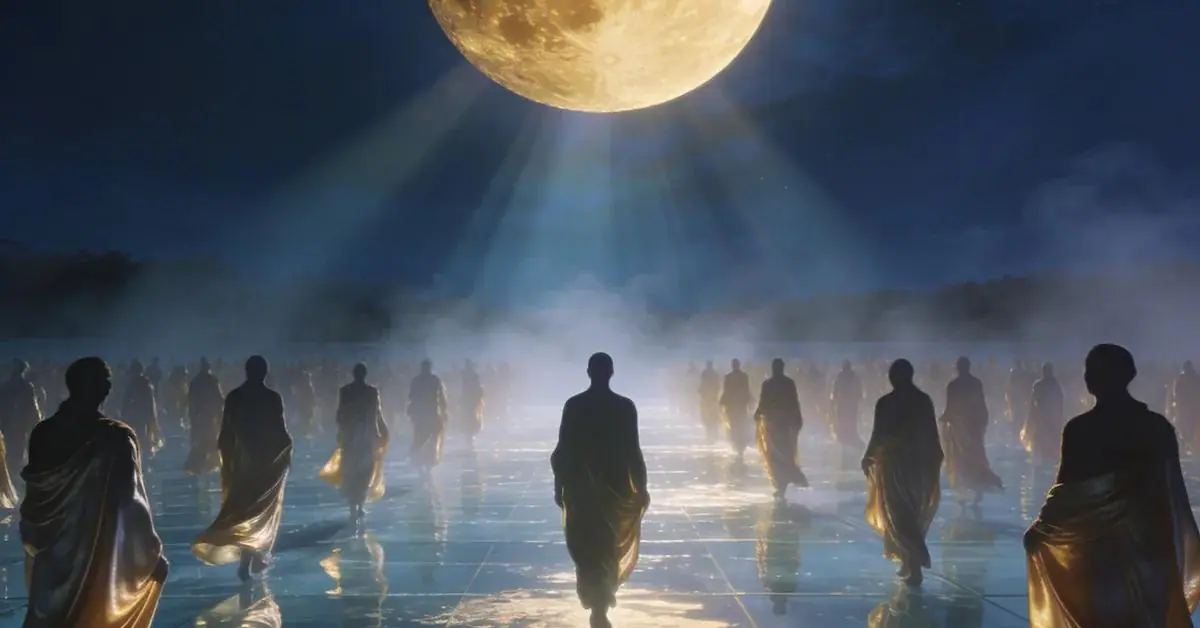
Dreaming of singing commonly concerns voice, emotional release, recognition, and the wish to be heard. Psychologically, it may show confidence and self-integration when the voice is clear, or anxiety about judgment when the singer forgets words, sings out of tune, or cannot make a sound. Singing with others can represent belonging, cooperation, and shared identity; singing alone may indicate self-discovery or a need for privacy. In spiritual traditions, song is often linked with praise, prayer, blessing, prophecy, and the soul’s alignment with a higher order. A beautiful melody may therefore suggest hope, gratitude, or favorable communication, while a mournful or discordant song can warn of grief, inner conflict, gossip, or misplaced expression. The dreamer’s feeling, audience, lyrics, setting, and cultural associations determine the meaning. Singing before a crowd emphasizes visibility; hearing an unseen singer emphasizes intuition or a message emerging from the unconscious.
Get your personalized AI interpretation in seconds
How each tradition reads dreams about Singing
Carl Jung (Archetypes)
Man and His Symbols (1964)
In Jungian psychology, singing in a dream is an image of psychic expression: something within the personality seeks form, rhythm, and an audible place in consciousness. The dreamer’s voice often represents the development of an individual standpoint. Singing confidently before others may indicate movement toward individuation, especially when the dreamer has been excessively adapted to family, work, or social expectations. Singing alone in an empty landscape can show a compensatory need to meet the inner self without the persona’s usual audience. By contrast, a singer who cannot produce sound may be experiencing a blocked feeling, an unspoken truth, or fear that the conscious personality has no legitimate voice.
The melody and audience reveal archetypal material. A chorus can symbolize the collective psyche: harmonious voices suggest participation in a living community, while an oppressive chorus may show conformity to the collective or loss of personal judgment. An unknown singer may be an anima or animus figure, carrying feeling, imagination, conviction, or a neglected inner quality. For a man, a woman’s mysterious song might constellate the anima; for a woman, a male singer may express animus opinion or logos. These are symbolic functions, not literal predictions. A child singing can embody the child archetype and the possibility of renewal; an old singer may represent the wise old person or ancestral memory.
Singing out of tune frequently belongs to the shadow. It may expose envy, theatricality, aggression, or an embarrassing truth that the ego prefers to conceal. A song whose words are forgotten can indicate material not yet ready for conscious understanding, while spontaneous words may provide a clue to the unconscious attitude. Jung would attend to personal associations before applying any universal meaning. The dream’s compensatory function is central: a silent, dutiful person may dream of powerful singing, whereas an attention-seeking person may dream of an empty hall. Integration occurs when the voice can be heard without domination by either the persona or the shadow.
Sigmund Freud (Desire)
The Interpretation of Dreams (1899)
From a Freudian perspective, singing in a dream may be the disguised fulfillment of a wish to express desire, receive admiration, or release affect that waking censorship suppresses. The manifest image—a concert, private song, or audience—should not be treated as its final meaning. The latent content lies in free associations to the tune, lyrics, singer, listeners, and bodily sensations. A dreamer who fears public judgment may nevertheless sing triumphantly before a crowd because the dream permits exhibitionistic gratification. Conversely, forgetting lyrics or losing the voice may dramatize castration anxiety, inhibition, shame, or the threat of social humiliation, depending on the dreamer’s associations.
The song itself can serve as a screen memory. Familiar lyrics may condense several people or episodes, with one line carrying a forbidden wish while the rest of the melody disguises it. Singing to a parent may express a wish for approval or rivalry with that parent; singing to a lover may symbolize seduction, reconciliation, or a desire for recognition. Hearing an unknown singer can represent a displaced voice of desire, especially when the dreamer feels both attracted and uneasy. Freud would also consider the role of infantile experience: lullabies, nursery songs, school performances, and memories of being praised or ridiculed can give the dream its emotional charge.
A harmonious duet may symbolize wished-for intimacy, but it can also conceal competition for the same loved object. A chorus may condense family members, peers, or rivals into one collective audience. Singing with excessive pleasure may be a regression to childhood play or an outlet for repressed sexuality; a solemn hymn may mask guilt and the need for absolution. Physiological stimuli, such as sounds during sleep or throat discomfort, can contribute to the dream’s construction, but they do not replace interpretation. Freud would therefore avoid calling singing simply lucky or unlucky. He would examine the dreamer’s defenses, especially repression, displacement, condensation, and wish-fulfillment, to uncover what the voice is permitted to say indirectly.
Other traditions
Ibn Sirin (Islamic Core)
Muntakhab al-Kalam fi Tafsir al-Ahlam (attributed)
In material attributed to Ibn Sirin, singing is interpreted through the dreamer’s condition, the place of the performance, and whether the sound is harmonious or disturbing. A person who sings beautifully in a suitable gathering may receive praise, gain influence, or have a matter become known. For a merchant, pleasant singing can indicate commercial publicity or profit when the setting is respectable; for a poor or troubled person, it may signify relief if the song is joyful and free of vulgarity. Singing in a marketplace, road, or public square carries a less favorable implication, because public performance may point to exposure, dispute, deception, or idle talk. The same act in a house of worship is not treated like entertainment: a devotional voice can signify remembrance, repentance, or good news, whereas frivolity in a sacred place suggests heedlessness.
A discordant voice, broken melody, or forgotten words indicates confusion, argument, or speech that harms the dreamer’s reputation. Singing accompanied by clapping, dancing, or noisy instruments is generally more ominous than quiet, dignified recitation, and may signify grief, scandal, or an approaching trial. A sick person who sings loudly may be read differently from a healthy person: the former’s singing can foreshadow worsening weakness or death, particularly if the dream has a funeral atmosphere. A prisoner or oppressed person who sings softly may instead express hope and the expectation of release. Hearing an unknown singer requires attention to the words and emotional tone: praise may represent favorable news, while lamentation warns of sorrow. Ibn Sirin’s method therefore does not make singing inherently auspicious; its meaning follows the dreamer’s circumstances, the moral quality of the gathering, and the harmony of the voice.
Al-Nabulsi
Ta'tir al-Anam fi Ta'bir al-Manam
Al-Nabulsi treats singing as a sign whose value changes sharply according to place, audience, and content. A clear and measured voice can denote reputation, eloquence, or the arrival of news, especially when the dreamer sings words of wisdom, praise, or remembrance. For a person whose livelihood depends on speech, trade, teaching, or public authority, singing may symbolize increased notice and persuasive influence. Yet the public nature of singing also makes it a symbol of exposure. Singing in a market, bathhouse, street, or noisy assembly may indicate false testimony, quarrelling, gossip, or a matter becoming widely discussed. If the dreamer is already in conflict, the song can represent the spread of accusations rather than celebration.
Nabulsi distinguishes melody from lament. A joyful but modest song may point to relief after hardship, while a mournful song may disclose grief, separation, or a hidden complaint. If the dreamer hears singing from an unknown source, the meaning rests on whether the voice brings comfort or alarm; a beautiful unseen voice can be a favorable sign, whereas a frightening or discordant voice warns of disturbance. Singing with instruments, dancing, or excessive amusement is commonly less favorable than unaccompanied, dignified vocalization. A scholar, ascetic, or worshipper who sings worldly songs may be warned against distraction and loss of spiritual seriousness. Conversely, sacred praise or recitation may indicate repentance and divine remembrance, provided the dreamer feels reverence rather than vanity.
For the ill, singing can carry a grave meaning when it is loud, theatrical, or associated with mourning; for the prisoner, traveler, or distressed person, a gentle song may express approaching ease. A woman’s or man’s singing is not interpreted by gender alone: modesty, reputation, and the setting matter more. In Nabulsi’s framework, the dream asks whether the voice brings truth and harmony into the world or merely attracts attention.
Imam Sadiq
Interpretations attributed to Imam Ja‘far al-Sadiq commonly organize a dream symbol through several possible aspects rather than one fixed prediction. Singing may therefore indicate honor, speech, joy, trial, or repentance, depending on the dreamer and the manner of the song. A person who sings with a beautiful, controlled voice before worthy listeners may gain esteem or have eloquence recognized. If the song contains praise of God, moral counsel, or words that awaken gratitude, it can signify devotion, relief, and a return to sound conduct. The dreamer’s inward state is decisive: humility strengthens the favorable reading, while vanity weakens it.
A singer who performs for applause, boasts of the voice, or cannot stop entertaining may be warned about reputation and attachment to public approval. Singing in a marketplace or amid quarrels can signify talk that circulates among people, disputation, or an accusation that brings trouble. If the dreamer sings out of tune, loses the words, or hears a melody collapse, the image points toward confused judgment, broken promises, or speech that fails to achieve its purpose. A sad song may reveal genuine grief, but it can also mark the beginning of emotional release when the dreamer awakens comforted.
The identity of the singer adds another layer. Hearing a parent or respected elder sing can recall guidance, inherited teaching, or a message connected with family duty. Hearing a stranger sing requires attention to the words: beneficial counsel is more favorable than seductive or obscene language. A prisoner, debtor, or sick person who sings quietly may be expressing patience and hope; loud singing in a scene of mourning is more ominous and may point to worsening distress. Singing together with others can signify unity when voices harmonize, but faction and rivalry when each singer competes. In this attributed framework, the moral quality of expression—truthful praise, empty amusement, or harmful speech—determines whether singing becomes blessing or warning.
Biblical Tradition
The Bible (Old Testament)
Biblical symbolism makes singing a language of praise, deliverance, lament, testimony, and communal memory. The Psalms repeatedly connect song with thanksgiving after danger, so a dreamer singing clearly in a bright or sacred setting may be encouraged toward gratitude and trust. The Song of Moses follows deliverance from oppression; by analogy, singing after crossing water, leaving captivity, or surviving darkness can represent a new phase and recognition of divine help. A new song in the Psalms and Revelation signifies renewed worship and a transformed order, not merely entertainment.
The biblical tradition also distinguishes truthful praise from empty performance. A dreamer singing with the congregation may symbolize belonging to the covenant community, shared faith, or the need to join others rather than remain isolated. Singing alone before an audience can instead expose the difference between outward display and inward devotion. If the voice is proud, theatrical, or directed toward applause, the dream may caution against seeking human glory. A broken, silent, or forgotten song can indicate spiritual dryness, grief, exile, or the inability to pray. The lament is not necessarily a bad omen: biblical lament gives sorrow a faithful form and may precede consolation.
The words and setting remain decisive. A wedding song can signify covenant, joy, and communal blessing; a funeral dirge can acknowledge mourning and the end of a season. A song of victory may point to deliverance, while a seductive or deceptive song may warn against temptation and false worship. Singing with angels or hearing heavenly music suggests an image of praise beyond the individual, though discernment is required rather than assuming supernatural revelation. In a Christian reading of biblical motifs, the dreamer should examine whether the song turns the heart toward truth, humility, mercy, and hope. Its omen is therefore mixed: joyful sacred singing is favorable, whereas proud, false, or discordant singing exposes spiritual disorder.
Christian Tradition
Christian mysticism understands singing as the soul’s movement toward harmony with God. A dream of chanting, hymnody, or unaccompanied praise may arise when prayer is becoming more inward and the dreamer is learning to listen rather than control. The significant feature is often not musical skill but the orientation of the heart. Singing with a worshipping community can symbolize the communion of saints, participation in a body larger than the isolated self, and the healing of spiritual loneliness. A solitary song in a chapel, desert, or night sky may represent contemplative prayer and the discovery of an inner liturgy.
Mystical discernment also warns that beautiful sound can become spiritual vanity. A dreamer praised for singing may be invited to examine whether devotion has become performance or whether the desire to be admired has replaced love. Discord, a muted voice, or inability to join a hymn can signify dryness, shame, unresolved sin, or a season in which faith is sustained without emotional consolation. It does not automatically mean abandonment by God; Christian writers often describe purification through periods of interior silence. A mournful song may be a form of lament that opens into compassion, especially when it leads the dreamer to pray for others.
The identity of the singer gives the image further nuance. A child’s song may evoke humility and spiritual simplicity; an angelic or unseen voice may symbolize consolation, though it should not be treated as unquestionable revelation. Singing with enemies or strangers can represent reconciliation and the breaking of self-enclosed identity. Singing over another person, drowning out all other voices, reverses the symbol and suggests spiritual pride or coercion. Christian mysticism therefore interprets singing by its fruits: does it produce charity, truth, repentance, peace, and courage? A melody that awakens these qualities is favorable; one that feeds vanity, seduction, or contempt is a warning despite its beauty.
Zhou Gong
Zhou Gong Jie Meng (周公解梦)
In the Zhou Gong tradition, singing is read through social consequence, emotional tone, and the relationship between performer and listener. Singing joyfully with other people may signify a gathering, reunion, or the public sharing of news. When the voices are orderly and the dreamer feels pleased, the image can point to cooperation and favorable social movement. Singing while facing a respected elder, ruler, or teacher may indicate the wish to be recognized or the receipt of instruction; the dreamer’s position in the scene matters, since performing before authority differs from singing among equals.
A dream of singing alone in an empty room can indicate loneliness or thoughts that have not found an audience. Singing loudly in the street or marketplace is more ambiguous: it may bring fame and attention, but it may also warn that private matters will become public. If the singer’s voice is cracked, hoarse, or unpleasant, traditional reading associates this with blocked communication, disputes, or failure in a planned undertaking. Forgetting lyrics can show uncertainty about a duty or loss of confidence. A beautiful song heard from a distance may announce good news or an approaching visitor, while a mournful song heard at night may mirror worry about separation or family sorrow.
Singing with a spouse or close companion emphasizes the condition of the relationship. Harmonious duet suggests mutual understanding; competing voices suggest disagreement and the need to yield. Singing with ancestors or deceased relatives is not automatically auspicious. The dreamer should note whether the encounter feels peaceful and instructive or frightening and grief-laden; the former may express remembrance and family continuity, while the latter calls for attention to unresolved mourning. Children singing can signify liveliness and future prospects, but a child singing a funeral or lament may reverse the usual joy. Instruments, dancing, and noisy celebration intensify the dream’s social character. Zhou Gong interpretation therefore asks whether song unites people, exposes the dreamer, or carries an omen of emotional disorder.
Hindu / Vedic
Within Hindu dream interpretation and the wider symbolism of Swapna Shastra, singing may be connected with sound, devotion, reputation, and the movement of prana. Sacred vocalization has a distinct status from ordinary entertainment. Dreaming of singing a mantra, bhajan, or divine name with steadiness can suggest bhakti, purification of feeling, and a mind turning toward sattva, the quality of clarity and harmony. Singing before a deity or in a temple may indicate religious inclination, merit, or the need to strengthen daily practice. The dreamer’s emotional response matters: reverence and peace support an auspicious reading, while vanity or theatrical display may reduce it.
A melodious voice heard from an unseen source can symbolize subtle intuition or the attraction of higher knowledge, but traditional discernment requires attention to the sound’s effect. A calming song may reflect sattvic influence; a harsh, chaotic, or frightening song may correspond to agitation and tamas, confusion, or unresolved fear. Singing in a gathering can signify social recognition and the sharing of joy. If the dreamer sings before a guru, elder, or deity, the scene may concern humility, learning, and the proper offering of one’s abilities. Singing for applause, especially while ignoring sacred surroundings, can point to attachment to praise and the restless pull of rajas.
A broken voice, forgotten words, or inability to sing may be associated symbolically with blocked expression and disturbance in the subtle flow of energy, though it should not be treated as a medical diagnosis. A devotional song accompanied by tears can indicate emotional cleansing rather than misfortune. Singing with family may reflect inherited religious practice; singing with strangers may signify a community or spiritual path not yet consciously recognized. In a broad Hindu reading, the quality of sound, the presence of mantra or divine names, the dreamer’s guna-like state, and the direction of desire determine the result. Singing is auspicious when it turns consciousness toward devotion and harmony, but mixed when it is driven by ego, sensual distraction, or disorder.
Japanese (Yume Uranai)
In Japanese 夢占い, singing is commonly associated with self-expression, emotional condition, social recognition, and the way the dreamer is being received by others. Singing happily with a clear voice is often read as a sign that feelings are moving outward and that relationships or creative efforts may become more active. Performing successfully before an audience can indicate confidence, approval, or a wish to be acknowledged. For someone beginning a project, audition, conversation, or public role, the dream may mirror readiness to show personal ability.
The details can reverse the interpretation. Singing out of tune, forgetting lyrics, or losing the voice often reflects anxiety about evaluation, difficulty saying what one truly means, or fear that a plan will not be accepted. A dreamer who is usually quiet may be compensating for restraint by singing loudly; a person who constantly seeks attention may dream of an empty audience, revealing insecurity beneath outward confidence. Singing with friends or a partner emphasizes connection: matching voices suggest harmony, while competing or drowning out one another suggests friction and unequal communication. A chorus may represent belonging to a group, but it can also show pressure to conform.
The song’s mood is especially important. A joyful tune may indicate release and an improved emotional flow, whereas a sad song can point to lingering attachment, homesickness, or the need to process grief. Hearing a favorite singer or a familiar song often reflects personal memory rather than a fixed omen; the lyrics and associations should be examined. An unknown singer may symbolize an unrecognized feeling or message from the deeper self. Singing in a shrine or temple-like setting can suggest reverence, cleansing, or a desire for protection, while loud singing in an inappropriate public place may warn of embarrassment. Japanese dream interpretation therefore treats singing as a mixed symbol: auspicious when the voice is natural and shared, cautionary when expression is forced, discordant, or dependent on external applause.
Don't let the message slip away. Get a profound, personalized analysis that reveals what your subconscious is trying to tell you.
Interpret your Singing dream with AIDream Scenarios
Common Questions & Scenarios
What does it mean to dream of singing?
What does it mean when I sing beautifully in a dream?
Why do I dream that I cannot sing or no sound comes out?
What is the meaning of dreaming about singing in front of an audience?
What does dreaming of singing with someone mean?
Written with AI from the traditions named on this page and maintained by the FASSIR English Editor. Last updated . How we interpret dreams
Disclaimer: This analysis utilizes AI based on historical and psychological texts for educational and spiritual insight. It does not constitute professional medical or psychological advice.