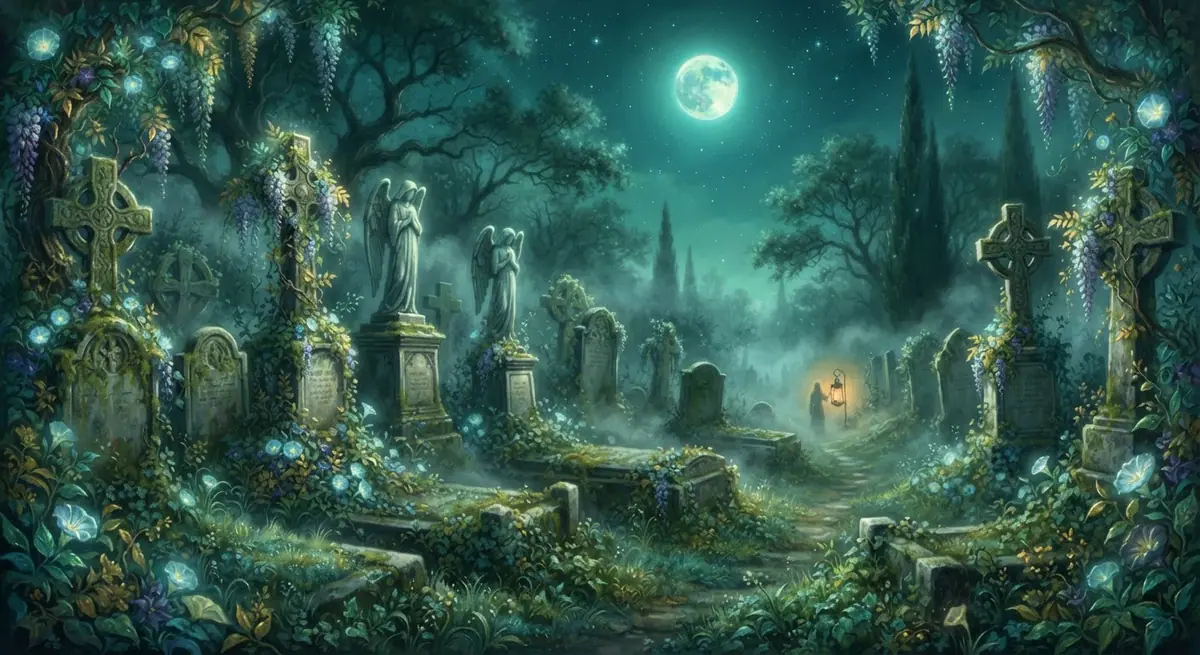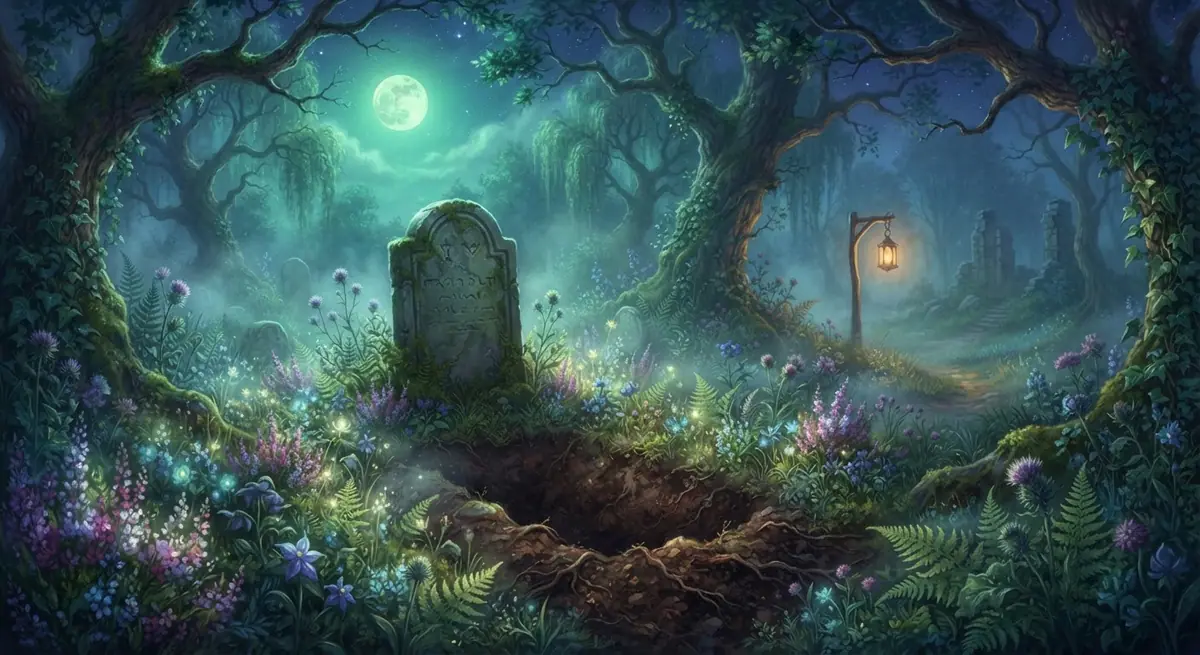
Dreaming of a grave commonly symbolizes endings, remembrance, hidden grief, and transformation. Psychologically, a grave may represent a relationship, identity, habit, or life chapter that has been buried, as well as anxiety about mortality or unresolved mourning. Digging a grave can suggest confronting painful material, uncovering memories, or preparing for a decisive change; visiting one often reflects reflection, loyalty, guilt, or a need for closure. Seeing one's own grave is not usually a literal prediction of death: it may indicate self-renewal, fear of change, or the symbolic death of an old self. In Islamic and other spiritual traditions, the grave can signify accountability, repentance, confinement, worldly attachment, or a reminder of the afterlife. Its condition matters: an open, dark, or frightening grave may warn of distress or negligence, while a peaceful, illuminated, or flower-covered grave can suggest mercy, remembrance, and release. Personal emotion and cultural belief remain essential to interpretation.
Get your personalized AI interpretation in seconds
How each tradition reads dreams about Grave
Carl Jung (Archetypes)
Man and His Symbols (1964)
In Jungian analytical psychology, the grave is an archetypal image of descent, enclosure, death, and transformation. It belongs to the symbolic world of the underworld, where the conscious personality encounters what ordinary life has excluded. The grave is therefore not principally a prediction of physical death. It may represent the burial of a former identity, a rejected feeling, a family memory, or an unconscious potential waiting for assimilation. The emotional tone and the dreamer’s relation to the grave are essential.
Digging a grave can show active descent into the personal unconscious. If the dreamer digs calmly, the psyche may be making room for honest confrontation with grief, guilt, or the shadow. If digging is frantic or secretive, the dream may depict an attempt to repress unacceptable impulses or to conceal a transformation that consciousness fears. Finding bones or a corpse can indicate contact with an inherited pattern, ancestral material, or an outdated persona. A grave that belongs to someone known may contain qualities projected onto that person. Visiting it respectfully may mark a necessary ritual of remembrance and psychological integration.
Seeing one’s own grave often symbolizes the death of the ego’s previous organization. It may accompany individuation when an old social role, dependency, or inflated self-image must be relinquished. If the dreamer climbs out, the image strongly suggests rebirth, emergence from unconsciousness, or a new relation to the shadow. Being unable to leave indicates that the transformation has not been consciously accepted. A dark grave may express an encounter with the shadow; a luminous or garden-like grave may show that the unconscious is offering containment and renewal. The anima or animus may appear indirectly through the grave’s atmosphere, a remembered dead person, or a guide at the threshold. Jungian interpretation asks what psychic function has been buried and what new life could grow from its recognition.
Sigmund Freud (Desire)
The Interpretation of Dreams (1899)
For Freud, a grave would be read through latent content rather than accepted as a fixed omen. Its manifest image may condense several wishes, fears, memories, and bodily anxieties. Because dreams employ displacement and symbolism, a grave can stand for death wishes, fear of punishment, mourning, sexual repression, or the wish to conceal an intolerable thought. The dreamer’s free associations—not a universal dictionary—would determine whether the grave recalls a funeral, a family conflict, childhood curiosity, illness, or a forbidden desire.
Digging a grave may express an effort to uncover repressed material, but it can also disguise an aggressive or hostile impulse. A dreamer who digs for a hated person may be enacting, in symbolic form, a wish to remove that person from psychic life; guilt may then transform the wish into fear of discovery. Digging one’s own grave can condense self-punishment, castration anxiety, fear of social disgrace, or the wish to withdraw from demanding relationships. If the dreamer hides an object or body in the grave, concealment and repression become especially relevant. Finding the grave empty may show that the feared loss has not been psychically completed, or that the repressed content continues to return.
Visiting a grave may represent mourning that has not reached resolution, identification with the dead, or a return to an emotionally charged childhood scene. A known dead person can function as a screen for ambivalent feelings—love, resentment, rivalry, and guilt at once. Seeing one’s own grave need not mean a literal death wish; it may express a wish for the current self or an unwanted role to disappear, alongside anxiety about the consequences. An open grave may reveal the return of repressed material, while a sealed grave may indicate successful repression or defensive closure. Freud would therefore examine who is buried, who is visiting, what is hidden, and what wish the dreamer cannot acknowledge while awake.
Other traditions
Ibn Sirin (Islamic Core)
Muntakhab al-Kalam fi Tafsir al-Ahlam (attributed)
In the attributional tradition associated with Ibn Sirin, a grave is interpreted through the dreamer’s condition, the grave’s appearance, and what occurs within or around it. A known grave may point to the deceased person, that person’s household, or a matter connected with the dead; an unknown grave can represent a strange house, imprisonment, or a concealed affair. Entering a grave, especially while alive, is commonly treated as a sign of confinement, hardship, fear, or entering a narrow and difficult circumstance. If the dreamer is buried while still living and can neither emerge nor breathe, the image is particularly ominous and may signify oppression, debt, or entanglement. Emerging from such a grave reverses the indication and suggests relief, repentance, or escape from adversity.
Digging a grave has several concrete readings. Digging for oneself may indicate building a dwelling, preparing a marriage or worldly arrangement, or pursuing a matter whose outward appearance is deceptive; the interpretation changes according to whether the dreamer lies in it. Digging a grave and finding no corpse can signify beginning a house or undertaking, while digging into an existing grave and discovering bones may warn against probing secrets or following a corrupt path. Visiting graves may represent remembering the dead, seeking admonition, or visiting prisoners and people in distress. Weeping at a grave without excessive lament can indicate softening of the heart and repentance; wailing, striking the face, or tearing clothing intensifies the warning. A grave opened and found spacious, green, or illuminated may indicate mercy and a good state, whereas a dark, narrow, burning, or collapsed grave reflects distress, wrongdoing, or a troubled conscience. Seeing one’s own grave can be a reminder of mortality and accountability, not a certain prophecy of death.
Al-Nabulsi
Ta'tir al-Anam fi Ta'bir al-Manam
In Abdul Ghani al-Nabulsi’s interpretive framework, the grave gathers several meanings: imprisonment, a house, a narrow worldly condition, marriage, hidden knowledge, and the final abode. The surrounding details determine which association is active. A person who sees himself entering a grave may enter a prison, a difficult obligation, or a house whose circumstances restrict him. Being placed in a grave while alive is a stronger image of constraint and can indicate injustice, debt, or an enemy’s power. If the dreamer exits, breaks the earth, or finds a way into daylight, the symbol turns toward deliverance, repentance, and the ending of hardship. For a sick person, a grave can carry a more serious warning, whereas for someone in conflict it may represent confinement rather than literal death.
Digging a grave may signify constructing a home, because the grave resembles a dwelling dug into the earth; for an unmarried person, this can sometimes point to marriage or establishing a household. Digging one’s own grave, then lying in it, indicates preparing a place or condition that will bind the dreamer, while digging without entering may show planning, building, or seeking a concealed matter. A grave visited peacefully may counsel remembrance of the dead and reflection on the afterlife. Opening a grave can mean investigating an old matter, uncovering buried knowledge, or exposing the condition of the deceased; taking something from it warns against unlawful gain or imitating the dead person’s faults. A broad, fragrant, or light-filled grave signifies ease, mercy, and a sound spiritual state. A narrow, dark, burning, or foul grave signifies distress, corruption, or punishment. Seeing one’s own grave may urge repentance and preparation for the hereafter; seeing many graves may indicate a community affected by ignorance, hypocrisy, or collective hardship.
Imam Sadiq
Interpretations attributed to Imam Ja‘far al-Sadiq treat the grave as a sign whose meaning may fall among remembrance, imprisonment, sorrow, repentance, hidden affairs, or an approaching transition. The dreamer’s conduct and emotional response are decisive. A person who sees a grave and feels reverence may be receiving a reminder to correct conduct, repay obligations, and remember the afterlife. One who feels panic, suffocation, or entrapment may be experiencing the symbolic pressure of debt, fear, injustice, or a morally constricted life. Thus the same grave can be admonition for one dreamer and a warning of hardship for another.
Digging a grave for oneself suggests preparing a residence, plan, or condition that will outlast the present moment. If the dreamer digs carefully but does not enter, the image may concern building, marriage, property, or a concealed undertaking. If the dreamer digs and then lies inside, the symbolism becomes more severe: self-imposed restriction, attachment to a harmful habit, or entry into a difficult obligation. Seeing another person dig may show that someone is arranging a matter behind the dreamer’s knowledge. Visiting the grave of a known person can express loyalty, longing, or a duty toward the deceased’s family; visiting unknown graves directs attention toward mortality and spiritual accountability.
An open grave is not automatically a death omen. It may expose a hidden truth, unresolved grief, or an opportunity to repent before consequences mature. A grave that is spacious, clean, green, or luminous points toward mercy, relief, and good remembrance. A grave that is dark, narrow, ruined, or filled with snakes and frightening creatures indicates fear, wrongdoing, hostile circumstances, or neglected obligations. Seeing one’s own grave may symbolize the end of an old state and the beginning of self-examination. If the dreamer emerges alive, relief follows the warning; if trapped, the dream emphasizes the need to seek help, settle debts, and change course.
Biblical Tradition
The Bible (Old Testament)
Biblical symbolism presents the grave through several related images: the pit, the tomb, burial, Sheol, remembrance, judgment, and resurrection. Scripture does not provide a single dream dictionary in which every grave has one meaning. A grave may signify mortality and the return of human beings to dust, as in the creation and burial narratives; it may also represent a pit of danger, oppression, or descent from which God delivers a person. The condition of the dreamer and the moral setting therefore matter more than the object alone.
For someone who dreams of entering or being shut in a grave, the image may echo biblical language about confinement, enemies, sorrow, or being brought low. If the dreamer cries from the pit and is brought into light, the pattern resembles deliverance and restoration. Digging a grave can symbolize preparing a place for death, hiding wrongdoing, or confronting the consequences of sin. Digging for oneself may function as a warning about pride, violence, or a household built on unjust foundations. Finding a grave open can evoke mourning and the unresolved condition of death, but in a Christian reading it may also recall the empty tomb and the possibility that God transforms death into life.
Visiting a grave may signify faithful remembrance, grief, or solidarity with mourners. Seeing a known dead person can call the dreamer toward compassion and truth rather than necromancy or attempts to control the dead, practices Scripture condemns. A peaceful burial place may represent rest, while a polluted or dishonored tomb can symbolize hypocrisy: outward religious appearance concealing inner corruption, as in the prophetic and Gospel imagery of unclean graves. Seeing one’s own grave is best treated as a sober summons to repentance, humility, and readiness before God, not as a guaranteed prediction of death. Biblical interpretation finally places the grave beneath divine judgment, mercy, and the hope of resurrection.
Christian Tradition
Christian mysticism treats the grave as a threshold between the visible self and the hidden life of the spirit. Its central pattern is paschal: descent, surrender, silence, and emergence. A grave in a dream may thus represent dying to pride, compulsive attachment, resentment, or a false identity so that a deeper life in God can begin. It can also expose spiritual dryness, grief, fear of judgment, or the sense of being buried under obligations. Discernment requires attention to the fruit of the dream: humility, charity, repentance, and peace suggest a constructive summons, while despair, vanity, or obsessive terror should not be mistaken for divine revelation.
Digging a grave may symbolize the ascetic work of uncovering hidden motives. If the dreamer digs for another person, the image may warn against judging, controlling, or spiritually burying a neighbor. Digging one’s own grave can represent self-emptying and the surrender of ego, but it may instead reveal unhealthy self-condemnation; Christian discernment distinguishes repentance from despair. Visiting a grave may be a prayerful encounter with memory, the communion of saints, or unresolved mourning. A dream of praying beside a grave can indicate a need to entrust the dead and the living to God rather than remain bound to guilt.
Seeing one’s own grave can portray baptismal death to the old self, especially when the dream includes light, water, flowers, bells, or a peaceful emergence. Being trapped in a grave may describe acedia, spiritual isolation, addiction, or a conscience burdened by unconfessed wrongdoing. An empty grave can carry resurrection symbolism, though it should not be treated as a private prediction or command. A dark, foul, or desecrated grave may call for moral examination and healing, while a quiet, luminous tomb may signify rest and hope. Christian mysticism reads the symbol within prayer, Scripture, community, and ethical fruit, never as an excuse for fatalism.
Zhou Gong
Zhou Gong Jie Meng (周公解梦)
In the Zhou Gong tradition of Chinese dream interpretation, a grave is read in relation to family continuity, fortune, ancestors, official circumstances, and the movement between old and new conditions. The tomb is not solely an image of death: it may be a storehouse of ancestral influence and a marker of the household’s root. Seeing a grave or cemetery can therefore call attention to family obligations, inherited matters, reputation, and the need to settle what has been neglected. Visiting a grave respectfully may indicate remembrance, filial concern, or an approaching change connected with the family.
Digging a grave is interpreted according to whether the dreamer opens, repairs, or enters it. Digging and repairing a family tomb can suggest restoring order, honoring ancestors, or stabilizing domestic fortune. Disturbing a grave carelessly may warn of conflict, disrupted family harmony, or interference in an old matter. Opening a grave and finding treasure or useful objects may symbolize discovering resources, inherited opportunity, or information from the past; taking ominous or dirty objects reverses the sign and points to trouble brought from unresolved history. A dreamer who enters a grave may be facing a period of restriction or withdrawal, while emerging from it can signify recovery, release, or renewed luck.
A clean, dry, well-kept tomb generally carries a more favorable implication than a collapsed, flooded, overgrown, or damaged one. Water entering a grave may indicate emotional disturbance or family instability; flowers, light, or orderly offerings can suggest harmony and good remembrance. Seeing one’s own grave may symbolize the ending of a phase and the establishment of a new position, rather than literal death. For a sick person, however, traditional interpretation becomes more cautious, especially if the grave is dark or sealed. A crowded cemetery can represent many competing obligations or concern about social reputation. Zhou Gong readings are highly contextual: season, family circumstances, ancestral practice, and the dreamer’s feeling of reverence or fear all alter the omen.
Hindu / Vedic
In Hindu dream interpretation, including themes associated with Swapna Shastra, a grave is approached through ideas of impermanence, samskara, karma, ancestral obligation, and transition between states. The symbolism is not uniform across texts or regional practice, so the dreamer’s caste or community customs, recent bereavement, ritual life, and emotional state matter. A grave may represent the end of a phase, the residue of past impressions, or a warning that neglected duties and attachments require attention. It is not automatically a prophecy of physical death.
Digging a grave can symbolize bringing buried samskaras into awareness, confronting karmic consequences, or preparing to release an old identity. If the dreamer digs peacefully and finds clean earth, the image may suggest purification, disciplined closure, or the completion of a duty. Digging frantically, disturbing remains, or entering a contaminated grave can indicate fear, unresolved ancestral sorrow, or actions that disturb dharma. Visiting a grave or memorial place may reflect remembrance of ancestors and the call to perform appropriate rites, offerings, or acts of charity. In a household that observes shraddha or related ancestral practices, the dream may be connected directly with those obligations rather than with a general omen.
Seeing one’s own grave can signify the death of attachment, the conclusion of a karmic chapter, or the need for inner renunciation. If the dreamer emerges, rises into light, bathes, or sees a lotus, the imagery favors renewal and spiritual awakening. A dark, sealed, or frightening grave can point to tamasic states, fear, grief, or bondage to habitual conduct. A clean place with lamps, flowers, or peaceful ancestors may indicate blessing, remembrance, and movement toward balance. Hindu interpretation also distinguishes ordinary dream impressions from spiritually significant dreams: repetition, clarity, devotional feeling, and subsequent ethical change may give a dream greater importance, but no dream overrides reason, dharma, or responsible guidance.
Japanese (Yume Uranai)
In Japanese 夢占い, a grave or tomb, haka, is commonly connected with family roots, ancestors, remembrance, endings, and the dreamer’s relationship to the past. Contemporary dream interpretation often treats it as a symbol of transition rather than a literal death omen. The emotional atmosphere is decisive: a calm visit may show acceptance and closure, while fear, neglect, or a ruined tomb may reflect family tension, unresolved grief, or anxiety about obligations. Cultural associations with Obon, memorial visits, and household ancestral care can strongly shape the image.
Visiting a grave in a dream may indicate a wish to reconnect with family history, receive emotional grounding, or finish mourning. Cleaning a grave, arranging flowers, lighting incense, or offering water is generally read favorably: these acts suggest restoration, gratitude, respect for origins, and the clearing of mental confusion. A grave covered in weeds or damaged by weather can symbolize neglected relationships, guilt about the past, or a need to attend to family matters. Seeing a known ancestor may represent memory and inner guidance, but it can also arise naturally after bereavement and should not automatically be treated as a supernatural message.
Digging a grave may signify making a decisive break with an old life, uncovering hidden feelings, or exposing a family issue that has been avoided. Entering a grave can represent feeling trapped by expectations or immersed in the past; climbing out indicates recovery and a new stage. Seeing one’s own grave usually symbolizes renewal, the end of a former identity, or preparation for a significant change. A bright, clean, flower-filled grave favors healing and good relationships, while a dark, flooded, or collapsing grave points to emotional fatigue and unsettled responsibilities. Japanese dream readings often connect the symbol with luck and life cycles, but they also advise practical action: communicate with family, honor memories, and release what no longer belongs to the present.
Don't let the message slip away. Get a profound, personalized analysis that reveals what your subconscious is trying to tell you.
Interpret your Grave dream with AIDream Scenarios
Common Questions & Scenarios
What does it mean to dream about a grave?
Is dreaming of a grave a bad sign?
What does it mean to dream of digging a grave?
What does it mean to see a loved one's grave in a dream?
What does it mean to dream of being buried in a grave?
Written with AI from the traditions named on this page and maintained by the FASSIR English Editor. Last updated . How we interpret dreams
Disclaimer: This analysis utilizes AI based on historical and psychological texts for educational and spiritual insight. It does not constitute professional medical or psychological advice.