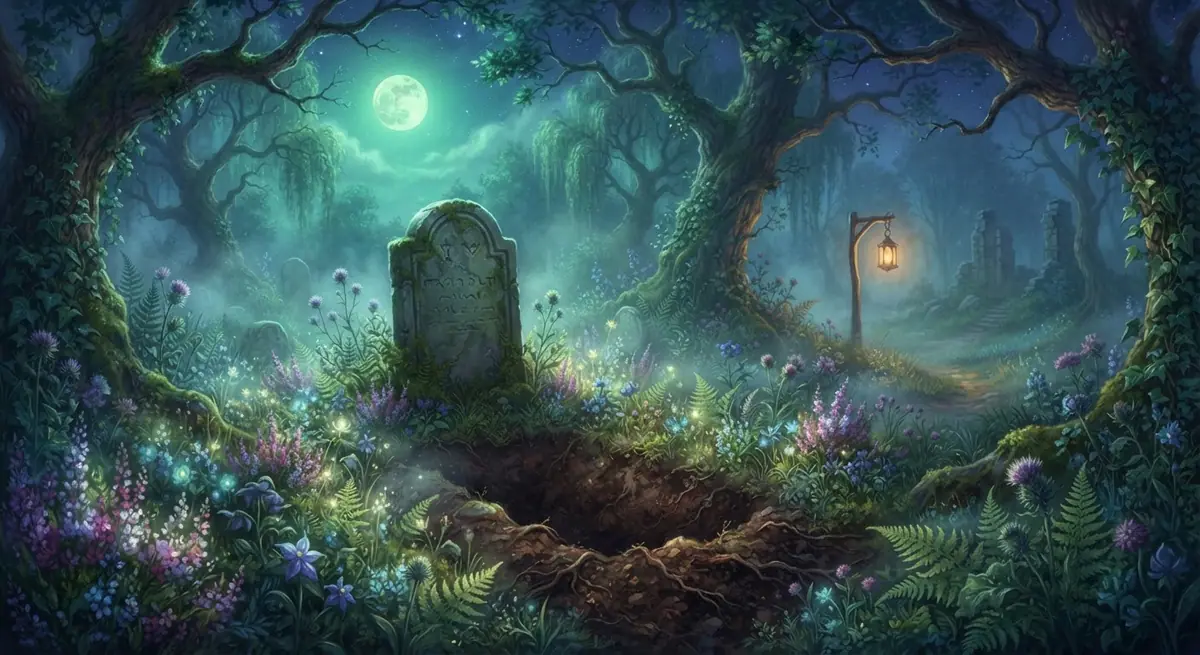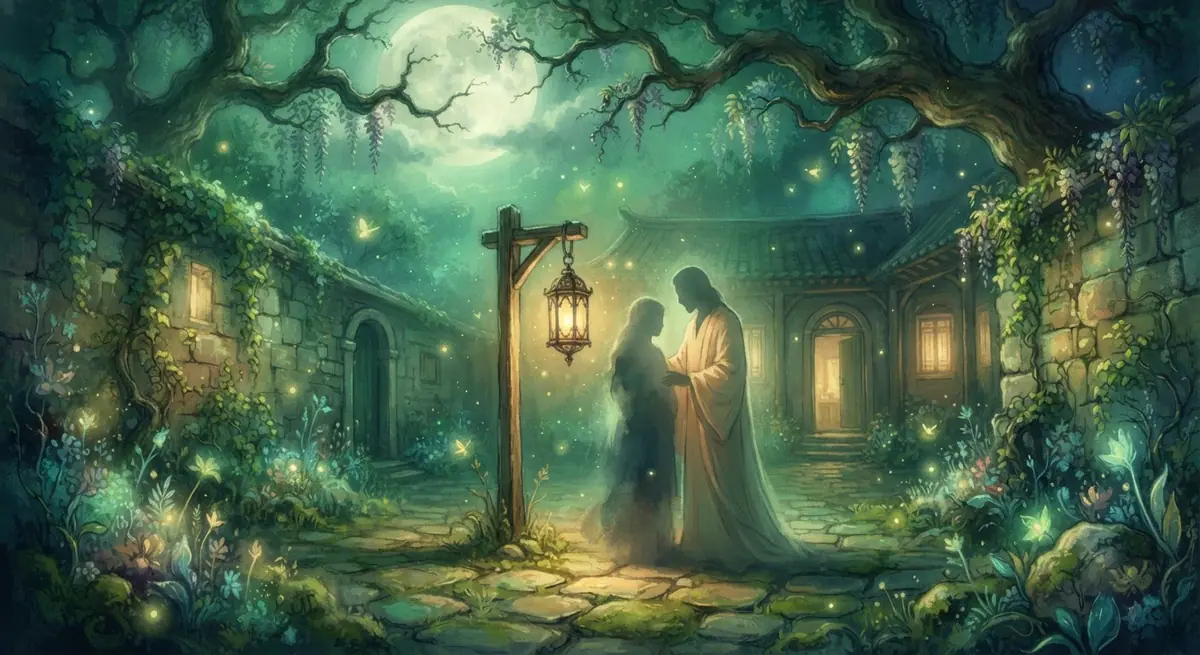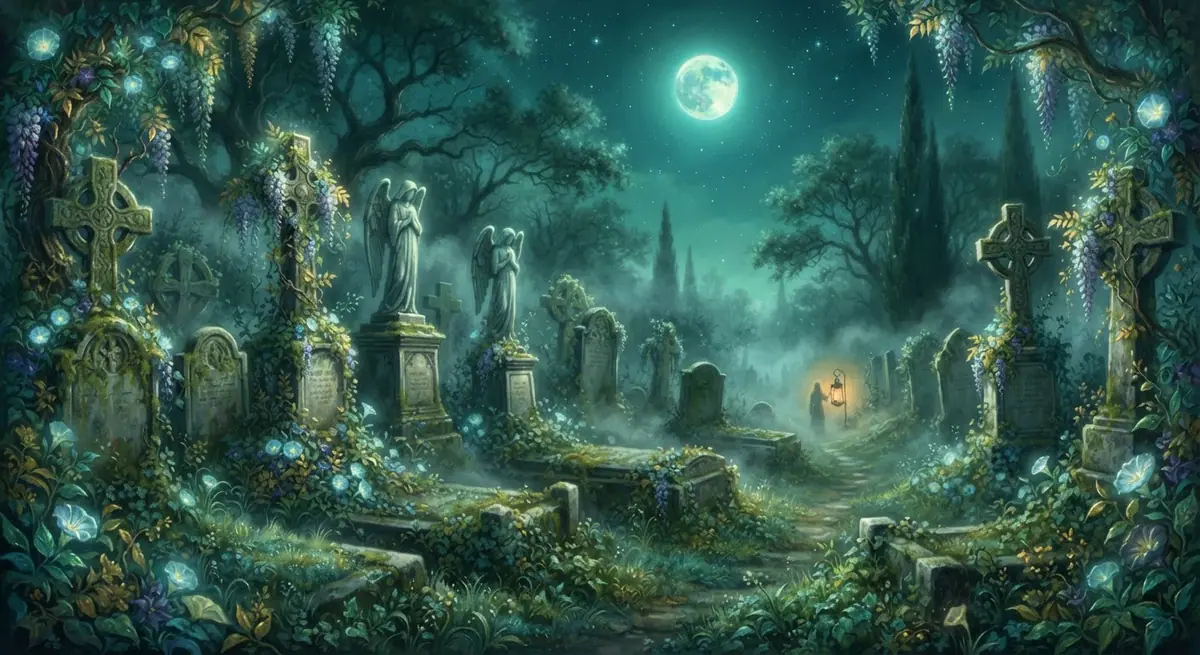
Dreaming of a cemetery commonly brings themes of memory, endings, ancestry, grief, and the boundary between visible life and the unseen. Psychologically, it may represent a completed phase, suppressed mourning, fear of mortality, or the need to revisit family history; walking among relatives’ graves often points to unresolved attachment rather than a literal prediction. In Jungian terms, the cemetery is a threshold where the conscious personality meets the shadow, ancestral patterns, and the transformative wisdom of the unconscious. Freudian readings may connect it with repressed wishes, guilt, separation anxiety, or ambivalence toward the dead. Spiritually, Islamic, Christian, Hindu, and Japanese traditions may treat a cemetery as a reminder of impermanence, repentance, ancestral continuity, or karmic transition. A peaceful, tended cemetery can signify acceptance, prayer, protection, or closure, while darkness, decay, entrapment, or fear suggests burdens that require attention. The dreamer's feelings, relationship to the deceased, and the cemetery's condition determine whether the omen is consoling, cautionary, or mixed.
Get your personalized AI interpretation in seconds
How each tradition reads dreams about Cemetery
Carl Jung (Archetypes)
Man and His Symbols (1964)
In Jungian analytical psychology, a cemetery is an archetypal threshold between conscious life and the unconscious. It is not simply a sign of literal death; it is a psychic landscape containing what the ego has buried, forgotten, or inherited. For someone beginning a major transition, walking through graves may show that an old persona, relationship, vocation, or belief system is undergoing symbolic death. If the dreamer feels calm, the cemetery can represent acceptance and the beginning of individuation. If the dreamer is trapped or pursued, the unconscious may be insisting that neglected material be recognized rather than sealed away.
Graves of relatives add an ancestral dimension. A parent’s grave may constellate the parental complex, family expectations, or an inherited emotional pattern. A grandparent’s burial place may connect the dreamer with memory, tradition, and the wisdom of the past. Jung would not reduce such figures to biography alone: the dead relative can carry an archetypal role, such as the wise elder, the wounded child, or the rejected shadow. A cemetery populated by unknown graves may indicate forgotten aspects of the personality or collective images shared across humanity.
The shadow appears when the dreamer avoids certain tombs, sees a neglected grave, or encounters a frightening figure emerging from the ground. What is buried may include aggression, grief, sexuality, guilt, or creative potential. The anima or animus may be suggested by a mysterious guide, a light-bearing figure, or a voice leading through the burial ground; these images mediate between ego and unconscious rather than predict an external event. Green growth over stones implies transformation and psychic renewal, while barren earth suggests stagnation. Jungian interpretation follows the dreamer's associations, the cemetery's emotional tone, and its relation to current individuation. The central question is not who will die, but what part of the old personality must be mourned so that a fuller self can emerge.
Sigmund Freud (Desire)
The Interpretation of Dreams (1899)
In Freudian psychoanalysis, a cemetery is examined as manifest dream imagery whose latent content may involve mourning, ambivalence, separation anxiety, guilt, and repressed wishes. The location can condense several associations: the actual death of a relative, childhood encounters with burial, fear of one's own mortality, or an unconscious wish to end a burdensome relationship or phase of life. Freud would not treat the cemetery as a universal omen; he would ask what the particular dreamer associates with graves, relatives, darkness, and visiting rituals.
Walking among the graves of family members may express grief, but it may also reveal ambivalent feelings toward those relatives. Love, resentment, rivalry, and guilt can coexist, especially where the dreamer feels relief at a death and then condemns that relief. In psychoanalytic terms, the cemetery may provide a disguised setting for forbidden hostility or a wish that someone, or some demand represented by that person, would disappear. A peaceful visit may be a wish-fulfilment fantasy of reunion or emotional repair. A frightening visit may represent punishment anxiety arising from the superego.
Dreams of digging, opening a grave, or discovering a living person can be linked to the return of repressed material. The buried object becomes a metaphor for a memory, desire, or conflict that has resisted repression. Being unable to leave may show fixation on mourning or compulsive repetition; finding an exit may express a wish to end the period of grief. Flowers, ceremonies, and clean family graves can serve as compromise formations, allowing affection and social respect to cover less acceptable feelings. Freud would attend closely to recent events, slips in the dreamer's account, and personal associations with each deceased person. The cemetery's meaning therefore lies in latent emotional conflict and wish-fulfilment, not in a literal forecast of death.
Other traditions
Ibn Sirin (Islamic Core)
Muntakhab al-Kalam fi Tafsir al-Ahlam (attributed)
In the classical method associated with Ibn Sirin, a cemetery is read through the dreamer's religious condition, conduct, and emotional response rather than as a fixed sign of death. Entering a graveyard may indicate reflection on the Hereafter, repentance, or withdrawal from worldly distraction. For a person who is heedless or burdened by wrongdoing, walking among graves is a warning to remember mortality and correct conduct. For a devout person, the same scene may signify ascetic reflection, visitation of the righteous, or a sincere desire for guidance.
A cemetery that is known and orderly can point to the dreamer visiting, remembering, or benefiting from the legacy of deceased relatives. Seeing the graves of one's parents may call attention to duties of prayer, charity, debt, or family responsibility. If the dreamer prays for the dead, gives charity, or recites Qur'an peacefully, the image generally favors mercy, remembrance, and restored religious awareness. Weeping without wailing can express relief or repentance; loud lamentation, tearing clothes, or screaming carries a more adverse meaning and may indicate calamity, distress, or innovation in mourning.
An unknown cemetery may represent confusion, a place of isolation, or association with people whose beliefs and actions are spiritually unproductive. Entering a grave and finding oneself alive can signify hardship, confinement, or repentance after error; emerging from it suggests release and return to right conduct. A grave opening, a collapsed tomb, or exposed bones intensifies the warning about neglected obligations, worldly attachment, or a matter thought buried that has returned. A green, rain-washed cemetery softens the interpretation, indicating mercy and benefit from the prayers of the living. Because classical Islamic dream books often use the graveyard as a moral mirror, the dreamer's state and actions after waking remain decisive.
Al-Nabulsi
Ta'tir al-Anam fi Ta'bir al-Manam
For Abdul Ghani al-Nabulsi, the cemetery belongs to a cluster of symbols involving admonition, the Hereafter, solitude, and the condition of the heart. A person who enters a graveyard with humility may be seeking instruction from the dead, repentance, or detachment from transient pleasures. Visiting the graves of known relatives specifically directs attention to obligations toward family: prayer for the deceased, fulfillment of promises, repayment of debts, or preservation of kinship. The dream may therefore be beneficial when it awakens compassion and remembrance rather than fear.
Al-Nabulsi distinguishes the emotional and physical state of the place. A peaceful cemetery, with recognizable graves and no disturbance, can signify security through counsel, spiritual awakening, or reconciliation with an old sorrow. A dark or desolate burial ground may indicate loneliness, a corrupt environment, imprisonment of the spirit, or association with people who have abandoned guidance. Walking aimlessly among graves suggests perplexity and lack of direction. Sitting beside a grave may mean remaining attached to a past matter, while lying in a grave can warn of confinement, illness, poverty, or a condition resembling imprisonment; leaving it reverses the sign toward deliverance and repentance.
If the dreamer digs a grave, the action can refer to constructing, investigating, or becoming entangled in a hidden matter. Finding a living person in a grave may signal that the person is oppressed, restricted, or spiritually heedless, whereas finding the dead alive can symbolize renewal of a forgotten cause or unexpected news. Rain, greenery, fragrance, and recitation temper the cemetery's severity and suggest mercy. Fire, smoke, exposed corpses, or frantic lamentation make the omen more cautionary. Al-Nabulsi's approach does not make every cemetery dream a death prediction: the interpreter weighs the dreamer's profession, illness, piety, relationship to the deceased, and the practical circumstances surrounding the vision.
Imam Sadiq
Interpretations attributed to Imam Ja'far al-Sadiq commonly organize graveyard imagery around several possible meanings rather than one inevitable outcome: admonition, fear, imprisonment, hardship, estrangement, or return to God. A cemetery seen by a person in spiritual neglect is chiefly a reminder of accountability and the shortness of worldly life. By contrast, a worshipper who visits relatives' graves calmly may be receiving an image of remembrance, mercy, and continuity of family duty. The dreamer's inner state determines whether the same location functions as warning or consolation.
Walking along marked paths among graves may represent following the example of earlier generations, learning from consequences, or searching for a lawful direction. Losing the path, entering an unfamiliar burial ground, or finding no exit can indicate perplexity, isolation, or entanglement in a trial. Discovering the grave of a known parent or relative places emphasis on rights owed to that person: supplication, charity, reconciliation among heirs, or completion of an unfinished obligation. If the dreamer cleans a grave, waters plants, or recites prayers, the symbol leans toward beneficial remembrance and the repair of family or religious ties.
A sealed grave can signify a matter concluded, while an opened or broken grave can disclose hidden wrongdoing, a revived dispute, or a secret returning to consciousness. Being buried alive is a severe image of restriction, injustice, debt, or fear; escaping from the burial place points to relief and repentance. Seeing a dead relative rise peacefully may indicate renewed hope, news, or the restoration of a neglected virtue, whereas a threatening or angry dead person calls for self-examination and restitution. Greenery and light soften the sign; filth, darkness, and cries intensify it. In this attribution, the cemetery is not read mechanically: the dreamer's conduct, the identity of the dead, and the actions performed there establish the particular moral meaning.
Biblical Tradition
The Bible (Old Testament)
The Bible does not provide a standardized dream dictionary for the modern image of a cemetery, yet its symbolism of tombs, burial places, bones, and remembrance supplies a clear interpretive framework. A cemetery may evoke the biblical realities of mortality, judgment, mourning, and hope in resurrection. In Genesis, burial grounds mark covenantal belonging and family memory; the burial of Sarah and the ancestral tomb of the patriarchs connect death with land, promise, and kinship. A dream of visiting a relative's grave may therefore call the dreamer to honor the past without worshipping it.
The condition of the burial place changes the emphasis. Dry bones, as in Ezekiel's vision, can symbolize national desolation and the possibility of divine restoration rather than only personal death. A neglected cemetery may represent spiritual forgetfulness, while a clean and peaceful place can suggest dignified mourning and trust in God's order. Tombs that are whitewashed or outwardly beautiful but inwardly unclean recall Jesus' warning about hypocrisy: the dream may expose a discrepancy between public respectability and the heart. An opened tomb can signify revelation, judgment, or the breaking of death's apparent finality.
For Christian biblical symbolism, the empty tomb of Jesus is decisive. A cemetery dream need not end in despair; an empty grave, dawn light, or a living voice may represent resurrection, forgiveness, and the promise that death does not have the last word. Conversely, fear of the grave, wailing, or burial without hope may express grief, anxiety, or a call to repentance. The dreamer should not infer a literal death announcement from the image. Biblical discernment considers the dream's moral fruit: does it lead toward humility, compassion, reconciliation, and hope, or toward superstition and terror? Family graves especially invite prayer, honest mourning, and faithful remembrance.
Christian Tradition
Christian mysticism treats a cemetery as a contemplative threshold where the soul encounters mortality, memory, and the hidden work of grace. The image may recall the practice of memento mori: remembering death in order to loosen attachment to vanity and awaken love of God and neighbor. Visiting relatives' graves can become an interior pilgrimage, not a prediction of another death. The dreamer may be invited to forgive, pray for the departed, accept grief, or recognize that earthly identities do not exhaust the person's spiritual value.
A quiet cemetery at dawn often carries a mystical movement from desolation toward resurrection. Light between stones, flowers growing from broken ground, or a sense of peace can indicate consolation and the gradual transfiguration of sorrow. The dream may echo Christian hope in communion across time, while still distinguishing reverence for the dead from attempting to summon or control spirits. A deceased relative who appears peacefully may represent memory, intercession in the dreamer's imagination, or a virtue associated with that person; the image should be tested by humility and its spiritual fruits rather than accepted as an unquestionable message.
A cemetery covered in fog, locked gates, or decaying graves may signify attachment, unconfessed guilt, fear of judgment, or a soul unable to release an old wound. Digging up the dead can warn against obsessive fixation or occult curiosity, whereas cleaning a grave may symbolize works of mercy, reconciliation, and honoring the body. Christian mystical interpretation also distinguishes healthy sorrow from despair: tears that lead to prayer can be purifying, while terror that denies hope requires pastoral care. The central movement is paschal—descent into loss followed by the possibility of renewal. The dream becomes spiritually constructive when it turns remembrance into compassion, repentance into freedom, and the awareness of death into a deeper participation in life.
Zhou Gong
Zhou Gong Jie Meng (周公解梦)
In the Zhou Gong dream tradition, cemetery imagery is interpreted through changes in fortune, family continuity, and the condition of the tomb rather than through a single psychological definition. Visiting ancestral graves can be connected with remembrance, family obligations, and the roots of one's household. A well-kept tomb, fresh offerings, sunlight, or green vegetation generally carries a favorable tone: it may indicate family harmony, support from elders, the preservation of lineage, or the settling of an old concern. For a person preparing a journey or undertaking business, an orderly ancestral place can symbolize stable foundations, though practical circumstances still matter.
A dreamer who sees a grave sink, crack, or become overgrown may face disorder in family affairs, neglected responsibilities, or anxiety about reputation and inheritance. Digging a grave can signify uncovering a hidden matter or disturbing what should be left settled; in some readings, however, excavation also represents finding an opportunity or bringing concealed resources to light. Seeing oneself buried is a strong image of constraint, misfortune, or a difficult period, while emerging from the earth suggests recovery and a turn in circumstances. A dead relative appearing alive may indicate renewed family news, the return of a former issue, or the persistence of that person's influence.
Darkness, rain without shelter, empty offerings, and wandering without a path make the dream more cautionary, especially when the dreamer feels fear. Burning incense, bowing, cleaning a tomb, or placing flowers can represent respect, reconciliation, and the restoration of relational balance. The tradition also recognizes that cemetery dreams may arise after Qingming or other grave-visiting customs, when recent impressions naturally enter sleep. Accordingly, the identity of the deceased, the state of the ancestral site, the dreamer's conduct within it, and the emotional atmosphere determine whether the sign favors harmony, warns of neglect, or combines opportunity with obligation.
Hindu / Vedic
Within Hindu dream interpretation associated with Swapna Shastra, a cemetery or cremation ground is a powerful liminal image connected with impermanence, dispassion, ancestors, karma, and transformation. The precise symbolism varies by regional practice and by whether the place is a burial ground, cremation ground, or ancestral shrine. Visiting the resting place of relatives may direct attention to pitṛ, the departed ancestors, and to duties of remembrance, offerings, or family harmony. It does not automatically foretell death; it may instead expose attachment to the body and invite recognition of the soul's continuing journey.
A calm dream in which the dreamer offers water, flowers, lamps, or prayers can indicate respect for lineage, completion of mourning, and movement toward spiritual clarity. In traditions that emphasize śrāddha and ancestral rites, a neglected or disturbed grave may suggest unresolved family obligation, guilt, or the need to restore ritual and emotional balance. A clean, illuminated ground, a sacred tree, or a sense of detachment tends to support auspicious interpretations. By contrast, smoke, fear, corpses, or frantic wandering may reflect tamasic heaviness, grief, confusion, or karmic entanglement rather than a literal omen.
Cremation-ground symbolism is especially important in Śaiva and tantric contexts, where confronting death can cultivate vairāgya, the loosening of worldly attachment, and insight into the impermanence of form. A practitioner who sits peacefully there may be symbolically overcoming fear and ego; an unprepared dreamer who is chased or trapped may be struggling with suppressed sorrow or worldly insecurity. Seeing a deceased relative alive can signify continuing ancestral influence or unfinished relational duty. Interpretation should consider the dreamer's dharma, recent rituals, family circumstances, and emotional response. The cemetery ultimately asks whether remembrance becomes bondage or wisdom, and whether the dreamer can honor the dead while continuing the soul's path.
Japanese (Yume Uranai)
In Japanese 夢占い, a cemetery, or 墓地, is commonly read through family ties, remembrance, emotional cleansing, and the condition of the dreamer’s life. Visiting the graves of relatives often points to the ancestral bond and to feelings that have not yet been expressed. If the cemetery is bright, clean, and well cared for, the dream may be considered favorable: family support, protection, reconciliation, or a settled mind may be developing. Cleaning a grave, arranging flowers, or offering incense can symbolize respect, gratitude, and the resolution of lingering grief.
A neglected grave, weeds, cracked stones, or a cemetery hidden in darkness is more cautionary. Such images may suggest strained family relationships, fatigue, guilt, or an issue that has been postponed. In popular Japanese dream interpretation, the dreamer's feelings are essential. Peace while visiting the grave tends to show acceptance and emotional recovery; fear, pressure, or inability to find the exit can indicate stress, unresolved mourning, or anxiety about change. A deceased relative appearing peacefully may embody cherished memory and guidance, while an angry or sorrowful figure may reflect the dreamer's own regret rather than a supernatural threat.
Rain can have two readings: it may wash the cemetery clean and signal release, or create a gloomy atmosphere that mirrors sadness. Sunlight, blossoms, and fresh offerings generally soften the symbolism, whereas empty offerings, damaged memorials, or foul water intensify concerns about neglect and imbalance. Japanese custom also makes recent Obon visits, memorial services, or thoughts of ancestors likely sources of the dream, so it should not be treated as a fixed prophecy. The cemetery often marks a transition: something in the dreamer's emotional life is ending, but remembrance can become a source of strength. The most constructive response is to acknowledge family feeling, restore neglected ties where possible, and care for one's present life.
Don't let the message slip away. Get a profound, personalized analysis that reveals what your subconscious is trying to tell you.
Interpret your Cemetery dream with AIDream Scenarios
Common Questions & Scenarios
What does it mean to dream about a cemetery?
What does it mean to dream of walking through a cemetery?
Is dreaming of a cemetery a bad sign?
What does it mean to dream about a grave or gravestone?
Why do I keep dreaming about cemeteries?
Written with AI from the traditions named on this page and maintained by the FASSIR English Editor. Last updated . How we interpret dreams
Disclaimer: This analysis utilizes AI based on historical and psychological texts for educational and spiritual insight. It does not constitute professional medical or psychological advice.