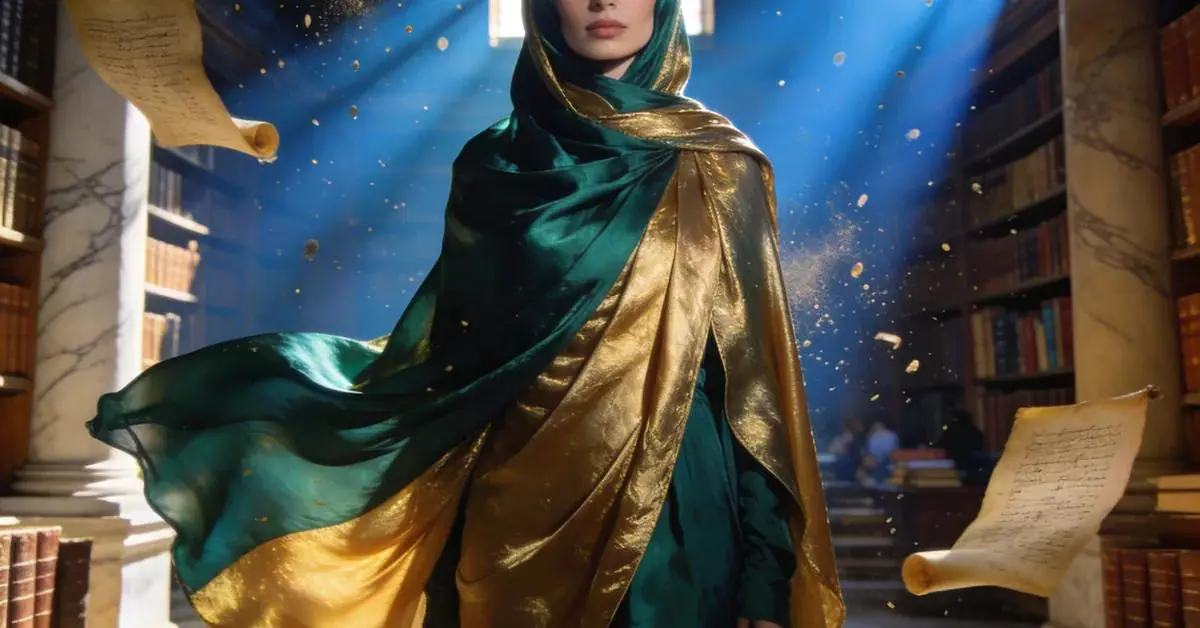
What does it mean to dream about a hijab?
Dreaming of a hijab, Jung’s interpretation suggests the Persona: a social mask protecting the inner self and marking the boundary between the Ego and the collective unconscious. It may express a need for privacy, sanctuary, or integration of hidden identity aspects, while removing it can symbolize readiness to confront shadow aspects.
Is dreaming of a hijab good or bad?
Good signMostly a good sign. Dreaming of a hijab is usually read as positive, though what happened in the dream and how you felt still change the meaning.
What to do after a good or a bad dream in Islam: read our guide to Islamic dream etiquette.
In psychological terms, the hijab serves as a potent archetype of the 'Persona'—the bridge between the private self and the public gaze. It represents the boundaries of the ego, signifying a subconscious desire for boundaries, sanctuary, or the preservation of inner integrity. Depending on the dreamer's context, it may manifest as a symbol of 'the Veiled Truth,' suggesting hidden aspects of the psyche or a search for spiritual identity and self-containment amid external pressures.
Get your personalized AI interpretation in seconds
How each tradition reads dreams about a hijab
Carl Jung (Archetypes)
Man and His Symbols (1964)
Jung views the hijab as the 'Persona'—the social mask we wear to protect the inner self. It symbolizes the boundaries between the Ego and the Collective Unconscious. Dreaming of a veil indicates a psychological need for privacy or the integration of the Anima/Animus. It may represent 'shadowing' aspects of the identity that the dreamer is not yet ready to confront, or signify the 'Sacred Mystery' of the self during the process of individuation, where some parts of the psyche remain hidden to foster inner growth.
Sigmund Freud (Desire)
The Interpretation of Dreams (1899)
Freud associates the veil with repressed desires and the fear of sexual exposure. In dreams, the hijab functions as 'Censorship' imposed by the Super-ego over the Id (Libido). Removing the veil may symbolize a subconscious urge to break free from paternalistic restrictions or social taboos. Conversely, clinging tightly to a veil might indicate childhood traumas related to shame or guilt. It represents the psychological conflict between the urge for exhibitionism and the compensatory need for repression and safety.
Other traditions
Ibn Sirin (Islamic Core)
Muntakhab al-Kalam fi Tafsir al-Ahlam (attributed)
Ibn Sirin identifies the hijab as a symbol of protection, beauty, and religious integrity. Wearing a wide and beautiful veil signifies abundance in sustenance, moral excellence, and divine shielding in both worlds. For a woman, it represents her husband or her guardian's state; if it is sturdy, her security is firm. Conversely, losing or removing the hijab in a dream acts as a spiritual warning (Nadhir), suggesting the exposure of private matters, a loss of dignity, or impending trials regarding one's family or social status.
Al-Nabulsi
Ta'tir al-Anam fi Ta'bir al-Manam
Al-Nabulsi interpreted the hijab as a woman's husband, her superior, or her shield against hardship. A veil embroidered with gold or silver signifies wealth and elevated social standing. If the hijab flies off the head, it may foretell a separation from a partner or the departure of a protector. A white veil is a 'Bushra' (good tidings) of piety and blessings, while a torn veil warns of poverty or the revelation of flaws. If a man sees himself veiled, it may suggest he is concealing a secret or seeking refuge from an enemy.
Imam Sadiq
Imam al-Sadiq views the hijab as representing five facets: prestige, concealment, a spouse, social standing, and purity. A new veil indicates a positive shift in circumstances and a commitment to chastity. Purchasing a hijab reflects a desire for dignity or a search for a righteous life partner. Multicolored veils symbolize the joys and fluctuations of life, while removing the hijab in front of strangers is interpreted as a loss of modesty or involvement in a situation that brings social embarrassment.
Biblical Tradition
The Bible (Old Testament)
Biblically, the veil symbolizes modesty, reverence, and consecration. Drawing from the Torah, such as Rebekah veiling herself before Isaac, it signifies respect and dignity. It also represents the barrier between the mundane and the Divine glory, as seen in Moses veiling his face. Dreaming of a veil suggests hidden spiritual truths that will be revealed in due time, or a call to 'set oneself apart' through prayer and seclusion, mirroring the sacred boundaries established in Hebrew tradition.
Christian Tradition
From a New Testament perspective, the veil symbolizes spiritual submission and holiness, referencing Apostle Paul’s teachings. It represents consecrated chastity and the soul's commitment to the Church. Dreaming of a hijab or veil suggests a call to a deeper spiritual life or divine protection during 'spiritual warfare.' A torn veil might signify a breach in communion with God or a need for repentance. Wearing a white veil is a joyful omen of purity, grace, and the beginning of a sanctified chapter in the dreamer's life.
Zhou Gong
Zhou Gong Jie Meng (周公解梦)
In traditional Chinese divination, a head covering symbolizes rank and dignity. An elegant veil portends good fortune and social advancement. If the veil conceals the face entirely, it warns of ambiguity or being deceived by those nearby. Losing a head covering signifies a loss of authority or facing a family scandal. If someone offers you a veil, it means you will receive protection or valuable advice from a wise person. Brightly colored veils are auspicious omens of upcoming communal celebrations or weddings.
Hindu / Vedic
In Hindu thought, a veil or 'ghunghat' represents 'Maya'—the illusion that obscures ultimate reality. Dreaming of a veil suggests the dreamer is focused on material appearances rather than the spiritual essence (Atman). A transparent veil indicates an approaching epiphany and heightened awareness. Removing the veil symbolizes spiritual enlightenment (Moksha) and the dispersal of ignorance. It can also reflect the necessity of adhering to traditional family values and respect to secure ancestral blessings.
Japanese (Yume Uranai)
In Yume Uranai, the veil symbolizes modesty and the aesthetic of 'Yugen' (mystery). Seeing a veiled figure suggests a hidden secret within the dreamer or a close associate. A silk veil is a 'Kichimu' (auspicious dream), signaling protection from malevolent spirits and the attainment of tranquility. If the veil is caught in the wind, it may be a 'Kyomu' (inauspicious dream) forewarning instability. A white veil represents new beginnings or the protective 'Shimenawa'-like shielding provided by nature spirits (Kami) to the dreamer.
Don't let the message slip away. Get a profound, personalized analysis that reveals what your subconscious is trying to tell you.
Interpret your Hijab dream with AICommon Questions & Scenarios
What does it mean to dream about taking off the hijab if I wear it in real life?
What is the interpretation of losing a hijab and searching for it in a dream?
What does it mean to wear a colored hijab (white, pink, green) in a dream?
What does it mean to see a friend or another woman without her hijab when she wears it in reality?
What is the meaning of buying a new hijab in a dream?
Written with AI from the traditions named on this page and maintained by the FASSIR English Editor. Last updated . How we interpret dreams
Disclaimer: This analysis utilizes AI based on historical and psychological texts for educational and spiritual insight. It does not constitute professional medical or psychological advice.