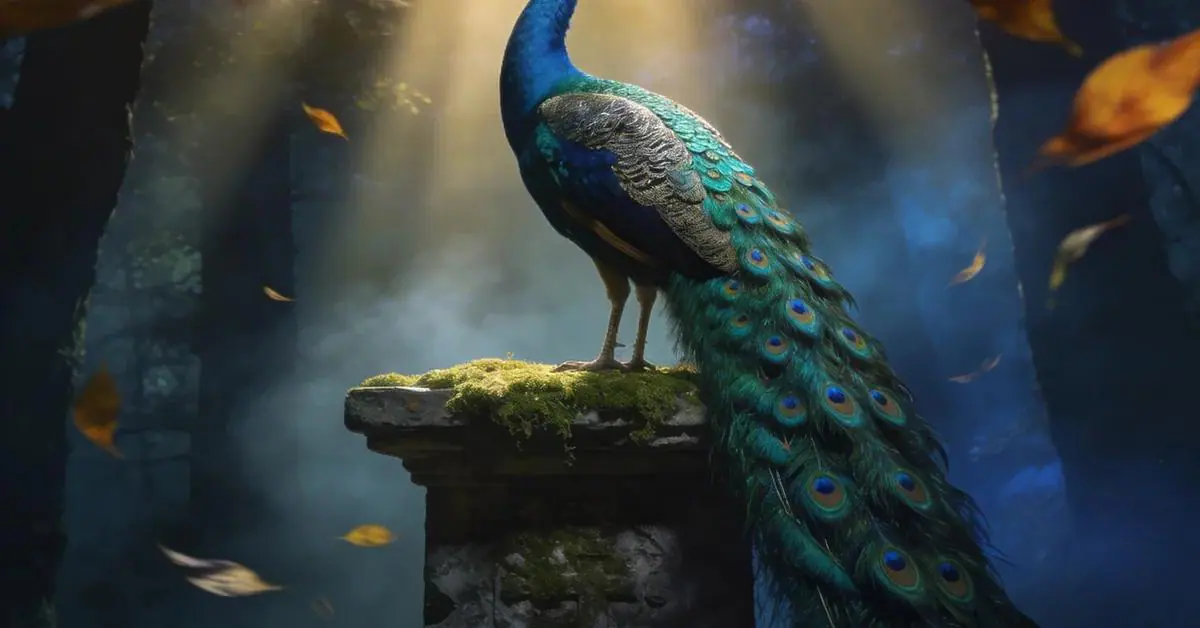
What does it mean to dream about a peacock?
Seeing a peacock in a dream points to the Self and the journey toward wholeness, according to Carl Jung. Its many-eyed feathers suggest integrated aspects of consciousness, psychological rebirth, and a truer identity emerging beyond the persona, while the display may also warn against inflated ego and superficial vanity.
Is dreaming of a peacock good or bad?
Good signMostly a good sign. Dreaming of a peacock is usually read as positive, though what happened in the dream and how you felt still change the meaning.
Which animal guides your dreams? Take the spirit animal quiz.
In Jungian psychology, the peacock is a powerful archetype of the 'Self' and the process of individuation. Its multi-colored feathers, resembling eyes, symbolize psychic wholeness, self-actualization, and the integration of the shadow self into a radiant personality. Seeing a peacock suggests your subconscious is urging you to embrace your true identity and inner beauty, though it warns against the ego's inflation and the trap of superficial vanity.
Get your personalized AI interpretation in seconds
How each tradition reads dreams about a peacock
Carl Jung (Archetypes)
Man and His Symbols (1964)
Carl Jung regarded the peacock as a powerful symbol of 'The Self' and the process of individuation, with its 'thousand eyes' on the feathers reflecting the multifaceted aspects of personality and consciousness. It represents psychological rebirth and resurrection, where lower instincts are transformed into higher awareness. The peacock's appearance suggests the integration of opposites (Anima and Animus) and the emergence of the true identity from beneath the 'Persona,' reflecting the completion of the psychic journey toward wholeness.
Sigmund Freud (Desire)
The Interpretation of Dreams (1899)
Freud focuses on exhibitionism and the libido, where the peacock’s fanned tail symbolizes repressed sexual desires and the need for attention or physical validation. It represents a narcissistic 'Superego' striving for perfection and distinction. In dreams, it may point to childhood memories of admiring external beauty or conflicts related to sexual identity and the competitive drive to outshine rivals in professional or familial settings.
Other traditions
Ibn Sirin (Islamic Core)
Muntakhab al-Kalam fi Tafsir al-Ahlam (attributed)
Ibn Sirin states that the peacock symbolizes a non-Arab king or a person of immense beauty, wealth, and status, yet it can also represent vanity and being seduced by worldly charms. If one dreams of owning a peacock, it signifies attaining a high rank or marrying a stunningly beautiful woman of noble lineage. However, the peacock's voice may portend worries or distressing news from a person of authority. Its feathers are a sign of abundant wealth and livelihood derived from women or inheritance.
Al-Nabulsi
Ta'tir al-Anam fi Ta'bir al-Manam
Al-Nabulsi interpreted the peacock as a symbol of excessive beauty, vanity, and pride, often representing a wealthy, beautiful, but perhaps arrogant woman. For the righteous, it foretells blessings in life and wealth, but for the wayward, it warns against temptations and lies. Eating peacock meat suggests inheriting one's wife's wealth after her passing. Generally, Al-Nabulsi sees it as an omen of prestige and authority, coupled with a warning against falling into the trap of ego and narcissism.
Imam Sadiq
Imam al-Sadiq views the peacock as representing the adornment of worldly life, wealth, and status, though it may also indicate deception from a charismatic and beautiful close associate. A flying peacock signifies a lost opportunity or loss of position. Seeing peacock eggs is a sign of lawful livelihood and righteous offspring characterized by beauty and intelligence. In dreams, the peacock serves as a balance between material success and spiritual vigilance against the cunning of envious people.
Biblical Tradition
The Bible (Old Testament)
The peacock is associated in the Old Testament with King Solomon's trading voyages, being imported as a precious commodity signifying wealth, prestige, and international wisdom. In the Hebrew context, it symbolizes the grandeur of creation and the diversity of God's blessings bestowed upon chosen kings. However, it can occasionally point to the dangers of excessive luxury that might lead one to forget the Creator's law, much like Solomon's treasures were symbols of both glory and a warning against materialism.
Christian Tradition
In Christianity and the New Testament, the peacock symbolizes resurrection and immortality, based on an ancient belief held by Church Fathers that its flesh did not decay. The 'eyes' in its feathers represent the all-seeing eye of God and the Church watching over its flock. It also symbolizes spiritual renewal through its annual shedding of feathers, signifying putting off the 'old self' and putting on the 'new self' in Christ. It is a symbol of heavenly glory and the eternal life awaiting the faithful.
Zhou Gong
Zhou Gong Jie Meng (周公解梦)
In Chinese tradition, Zhou Gong views the peacock as a very auspicious omen symbolizing high rank and dignity. Seeing one means the dreamer will receive a promotion or official honors. A peacock standing on the ground indicates financial stability, while peacock feathers in the home bring blessings and protection from evil spirits. If the peacock cries, it may warn of fluctuations in fortune, but generally, it is a symbol of beauty, prosperity, and offspring who will bring pride to the family.
Hindu / Vedic
In Hindu tradition, the peacock is a sacred bird, serving as the vehicle (vahana) for Lord Kartikeya (god of war) and Goddess Saraswati (goddess of wisdom). In dreams, it symbolizes divine protection, spiritual beauty, and victory over negative impulses like anger and ego. Seeing peacock feathers is a sign of good luck and advancement in spiritual knowledge. It also represents the harmony of nature and the soul's ability to transmute poison (suffering) into radiant beauty, much as the peacock is believed to eat snakes.
Japanese (Yume Uranai)
In Yume Uranai, the peacock (Kojaku) is a symbol of high status, love, and compassion, often associated with Kannon (the Goddess of Mercy). Seeing a peacock fanning its tail is a 'Kichimu' (auspicious dream) foretelling business prosperity and improved family relations. However, it may warn against deceptive appearances or people focused solely on the exterior. In Japanese ritual, the peacock fan symbolizes the expulsion of evil spirits and illness, making its appearance a herald of healing and psychological peace.
Don't let the message slip away. Get a profound, personalized analysis that reveals what your subconscious is trying to tell you.
Interpret your Peacock dream with AICommon Questions & Scenarios
What does it mean to dream of a peacock flying?
What is the interpretation of a peacock attacking me in a dream?
What does it mean to see colorful peacock feathers in a dream?
What is the meaning of seeing a white peacock in a dream?
What does it mean when a peacock displays its tail/feathers in a dream?
Written with AI from the traditions named on this page and maintained by the FASSIR English Editor. Last updated . How we interpret dreams
Disclaimer: This analysis utilizes AI based on historical and psychological texts for educational and spiritual insight. It does not constitute professional medical or psychological advice.