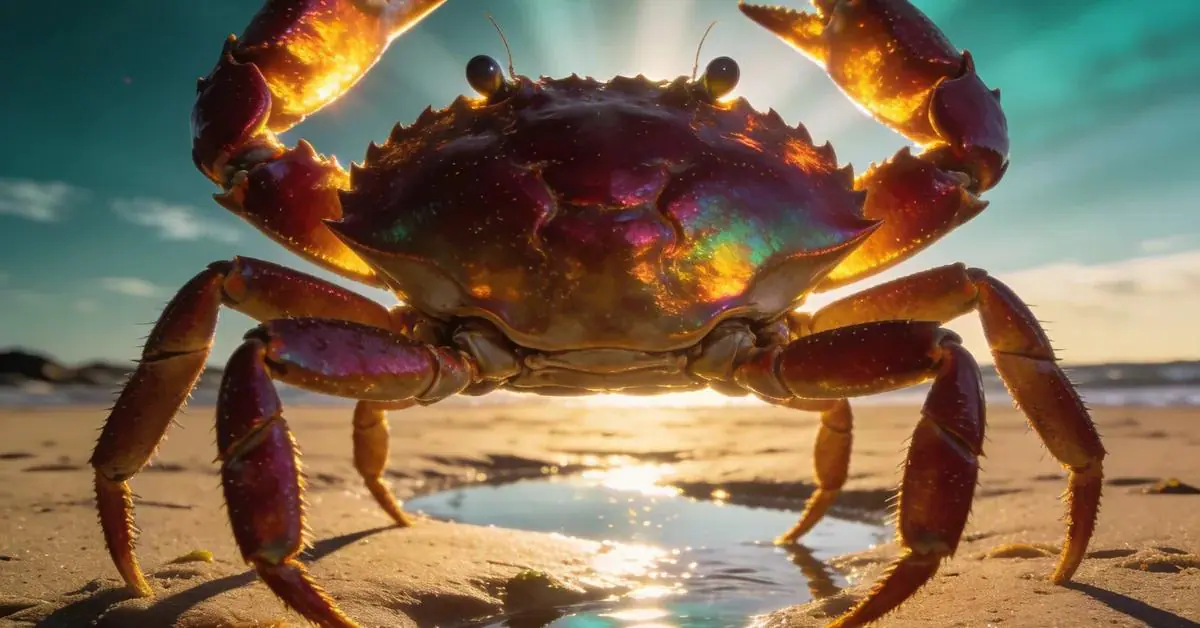
What does it mean to dream about a crab?
Dreaming of a crab reflects a protective shell masking vulnerability and a tendency to approach goals indirectly. Jung associates its sideways movement with avoiding emotional confrontation, while the shell represents a defensive persona. The dream may indicate emotional defenses, retreat, and the possibility of inner growth through greater emotional openness.
Is dreaming of a crab good or bad?
MixedIt depends on the dream. Dreaming of a crab can be a good or a bad sign depending on what happened and how you felt when you woke up.
Which animal guides your dreams? Take the spirit animal quiz.
In the Jungian archetype, the crab symbolizes the subconscious 'armored self'—a protective shell masking vulnerability. It represents a psychological tendency to retreat or approach goals indirectly ('sidestepping'). It often reflects a period of emotional defense or an invitation to shed old skins for inner growth.
Get your personalized AI interpretation in seconds
How each tradition reads dreams about a crab
Carl Jung (Archetypes)
Man and His Symbols (1964)
Jung views the crab as representing psychological aspects protected by a hard shell, symbolizing the 'devouring mother' archetype or a defensive clinging to the past. The crab's sideways movement indicates the dreamer's inability to confront a problem directly, reflecting a tendency to evade emotional confrontation. The shell represents the Persona worn to protect inner vulnerability. It emerges from the depths of the collective unconscious (the ocean) to remind us of the need to balance outward toughness with inner softness and emotional fluidity.
Sigmund Freud (Desire)
The Interpretation of Dreams (1899)
Freud links the crab to repressed animalistic instincts and sexual anxieties. The pincers symbolize a desire for possession or a castration anxiety related to losing control. The crab's defensive posture and hard exoskeleton reflect psychological defense mechanisms used to suppress libidinal desires. It may also point to childhood traumas involving harsh environments or 'clinging' parental figures that prevent independent emotional development, resulting in a fear of emotional entanglements that stifle personal freedom and autonomy.
Other traditions
Ibn Sirin (Islamic Core)
Muntakhab al-Kalam fi Tafsir al-Ahlam (attributed)
Ibn Sirin interprets the crab as representing a man of high ambition and great strength, yet one who is difficult, malicious, and cunning. Capturing a crab signifies gaining wealth or victory through a formidable and unyielding person. Eating its meat suggests receiving sustenance or money from a distant land or foreign source, though it may be tainted by deceit. A crab bite is a warning of harm or discord caused by a relative or close associate. Overall, it symbolizes a mixture of abundant livelihood and intense, hidden enmity.
Al-Nabulsi
Ta'tir al-Anam fi Ta'bir al-Manam
Al-Nabulsi interpreted the crab as a dignified and haughty man. Seeing it suggests wealth and status for those who deserve it, but it also warns of treachery. Eating a crab signifies attaining lawful sustenance through great effort and perseverance. The crab also symbolizes navigating risks with intelligence; however, if a crab chases the dreamer, it indicates people seeking to expose their weaknesses or cause harm. Possessing a crab reflects power and pride, while killing one symbolizes severing ties with a person of ill character.
Imam Sadiq
Imam al-Sadiq views the crab in a vision as representing six aspects: authority, money, spoils of war, worries, disputes, and a difficult woman. It often signifies livelihood derived from the sea or travel, but it embodies instability and moodiness. If a crab appears inside the home, it suggests a mean-spirited or strange person entering the family circle, causing anxiety. Dealing patiently with a crab in a dream reflects the wisdom required to face complex problems and difficult circumstances that demand emotional stability and resilience.
Biblical Tradition
The Bible (Old Testament)
In the Old Testament, crustaceans like the crab fall under the category of 'unclean' creatures (Leviticus 11:10) because they inhabit waters but lack fins and scales. Biblically, the crab symbolizes entanglement in worldly matters and a departure from spiritual purity. It represents 'clinging' or holding onto sin due to its strong pincers. Seeing it may be a warning against being swayed by appearances or adhering to unholy thoughts that hinder the dreamer from walking the path of righteousness and healthy spiritual growth.
Christian Tradition
In Christian theology, the crab can represent a soul living in the 'sea' (the world) clinging to vices. Since it walks sideways, it symbolizes one who does not walk straight toward the Kingdom of God but swerves toward error. However, based on the shedding of its shell, it can also symbolize resurrection and spiritual renewal—shedding the 'old self' to put on the 'new self.' It is a call to engage in spiritual warfare against forces that seek to bind one’s spiritual life and keep the believer mired in sin.
Zhou Gong
Zhou Gong Jie Meng (周公解梦)
In Chinese tradition, the crab is a symbol of academic and career success as its name homophonically relates to success. However, seeing a crab walking suggests obstacles in business that require caution. If the crab is cooked, it is an auspicious omen foretelling the disappearance of illness and improvement in general health. Seeing swarms of crabs warns of many envious people watching the dreamer; thus, one should guard secrets and avoid boasting to prevent misfortune and jealousy from disrupting their path.
Hindu / Vedic
In Hindu culture, the crab (Karka) is linked to the realm of emotions and intuition. Seeing it in a dream suggests protection and strong ties to home and family. If attacking, it indicates internal or external emotional conflicts. The crab also symbolizes the soul's ability to adapt between two worlds (water and land), encouraging the dreamer to seek balance between spirituality and material life. Sometimes it serves as an omen of upcoming changes requiring caution in significant financial or emotional decision-making processes.
Japanese (Yume Uranai)
In Yume Uranai, the crab symbolizes transformation and self-defense. A large crab can be a Kichimu (lucky dream), indicating divine protection or willpower. Its sideways gait suggests the need for lateral thinking to solve complex problems. However, being pinched by a crab may be a Kyomu (unlucky dream) foretelling betrayal by someone close. The crab's spirit (Kami) in ancient beliefs represents patience and resilience in the face of life's turbulent waves, emphasizing enduring strength and adaptability.
Don't let the message slip away. Get a profound, personalized analysis that reveals what your subconscious is trying to tell you.
Interpret your Crab dream with AICommon Questions & Scenarios
What does it mean if a crab is biting or attacking me in a dream?
What is the meaning of seeing a large black crab in a dream?
What does dreaming about cooking or eating crabs signify?
What does it mean to be chased by or running away from a crab?
What does it mean if a crab is crawling on my body in a dream?
Written with AI from the traditions named on this page and maintained by the FASSIR English Editor. Last updated . How we interpret dreams
Disclaimer: This analysis utilizes AI based on historical and psychological texts for educational and spiritual insight. It does not constitute professional medical or psychological advice.