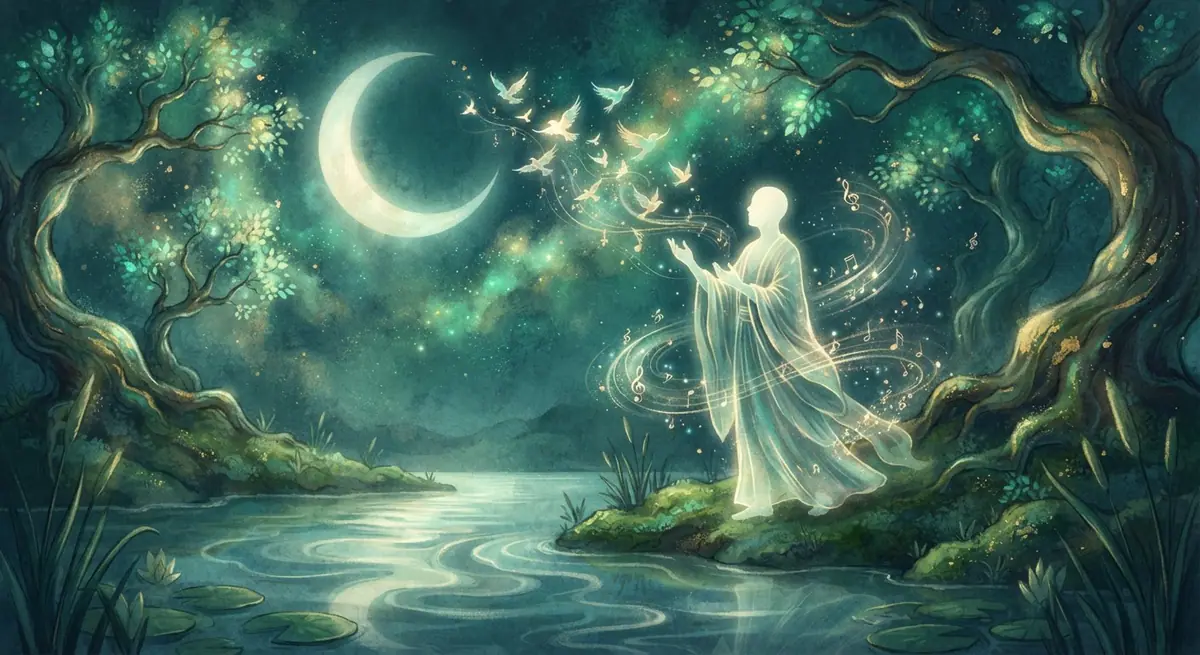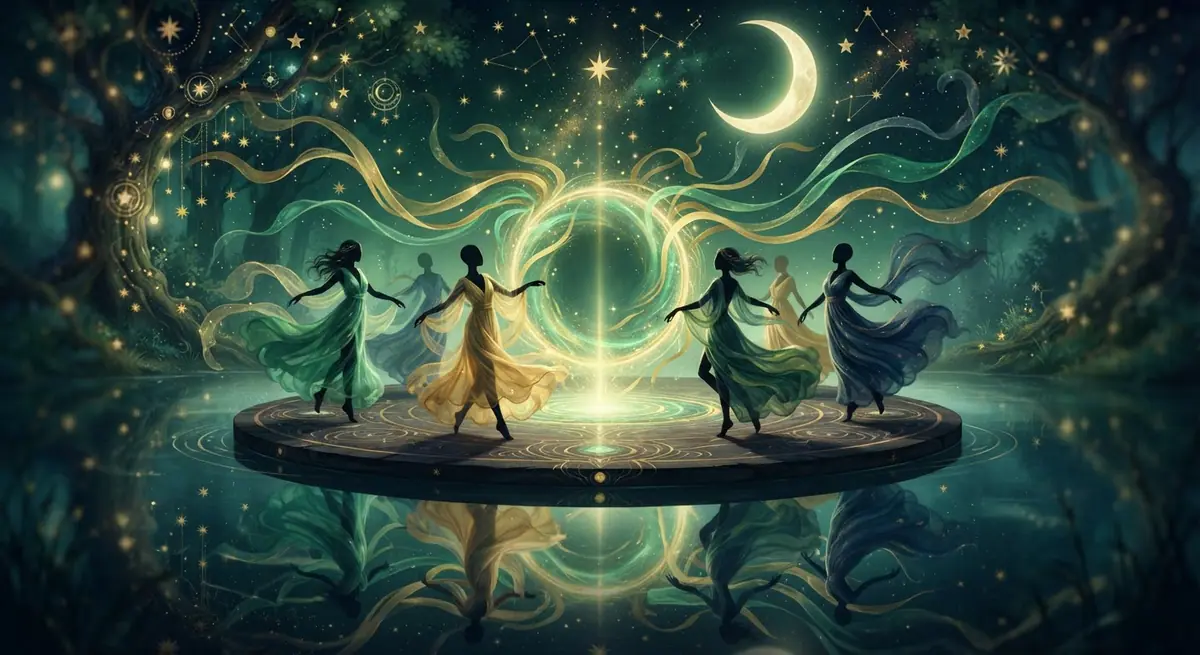
Dreaming of dancing commonly symbolizes movement, emotional release, social connection, and the wish to express a self that ordinary life restrains. Psychologically, the rhythm may show how well conscious intentions and instinctive feelings are cooperating: graceful dancing suggests integration, while stumbling, forced movement, or dancing alone can point to anxiety, shame, or loss of control. The partner, audience, music, and setting refine the meaning. Spiritually, dancing may represent celebration, prayer, initiation, fertility, or participation in a greater cosmic order; yet some religious traditions warn that public or ecstatic dancing can signal vanity, disorder, scandal, or surrender to misleading impulses. Dancing with a deceased person, stranger, lover, child, or crowd carries distinct associations. The dream’s emotional tone is decisive: joyful movement generally favors renewal and blessing, whereas fear, exhaustion, or compulsion suggests that the dreamer is being carried by circumstances rather than choosing a direction. Across traditions, dancing is therefore a mixed symbol of liberation and exposure.
Get your personalized AI interpretation in seconds
How each tradition reads dreams about Dancing
Carl Jung (Archetypes)
Man and His Symbols (1964)
In Jungian analytical psychology, dancing is an image of psychic relatedness: the ego moves within a rhythm generated by forces larger than conscious intention. It can portray individuation when the dreamer discovers a personal pattern of movement rather than copying the crowd. A graceful solo may show emerging autonomy; dancing with a partner may represent a relationship between consciousness and the unconscious. The partner’s gender, familiarity, and emotional charge can suggest an encounter with the anima or animus, while an unknown dancer may embody a neglected inner possibility.
A masked or faceless dancer often belongs to the shadow. The figure is not necessarily evil; it may carry spontaneity, sensuality, aggression, play, or creativity that the waking personality has excluded. If the dreamer refuses to join, the psyche may be showing fear of instinct and embodiment. If the dreamer dances uncontrollably, the ego may be overwhelmed by archetypal energy. Conversely, an entirely controlled performance can reveal excessive persona: the dreamer is presenting a socially acceptable role while remaining disconnected from feeling. The audience then becomes important, because spectators may symbolize collective judgment or the pressure of the cultural persona.
Circular dancing evokes mandala imagery and can represent the psyche seeking wholeness. A spiral, ritual circle, or dance around fire may indicate transformation, initiation, and the ordering of opposites. A broken rhythm, missing music, or repeated misstep suggests a conflict between conscious plans and unconscious timing. Dancing with a dead person may symbolize an ancestral complex or a psychological attitude inherited from the family, not a literal visitation. The interpretation depends on amplification and personal associations: the dreamer’s culture, memories of dancing, and emotions are indispensable. Jung would therefore treat the dream as a compensatory drama, asking what quality the dance makes possible—freedom, eros, embodiment, relation, or surrender—rather than assigning it a universal omen.
Sigmund Freud (Desire)
The Interpretation of Dreams (1899)
From a Freudian perspective, dancing is a manifest dream activity that may disguise wishes concerning pleasure, sexuality, recognition, rivalry, or release from restraint. Its rhythmic repetition can provide a socially acceptable screen for bodily excitement, while the dream’s latent content is reconstructed through free association rather than through a fixed dictionary meaning. Dancing with a desired person may express wish-fulfilment, but it may also conceal ambivalence, jealousy, or a wish to be chosen and admired. The partner’s identity, substitutions, and the dreamer’s childhood memories of performance are therefore more revealing than the dance itself.
A public performance can dramatize exhibitionism and the desire for an admiring audience. If the dreamer forgets the steps, falls, or appears improperly dressed, the scene may condense sexual anxiety with fear of humiliation and castration, in Freud’s broad psychoanalytic sense of threatened potency or status. Dancing alone can signify private fantasy and autoerotic pleasure, but it can also represent retreat from interpersonal risk. Being forced to dance may disguise a conflict between instinctual wishes and a prohibiting superego: pleasure is present, yet guilt makes it feel compulsory or dangerous.
Freud would attend closely to rhythm, music, bodily contact, and the transition from stillness to motion. A circle of dancers may condense family rivalry, social competition, or the wish to belong while retaining distinction. Dancing with a deceased person could express mourning, unresolved attachment, or the wish to recover an earlier relationship; the dead figure need not be interpreted literally. A child dancing may connect the dream to infantile freedom, parental approval, or memories of being watched. Repetition of the same dance may point to compulsion and an unresolved conflict returning in disguised form. The dreamer’s associations decide whether the scene is primarily erotic, aggressive, narcissistic, or defensive. For Freud, the symbol’s apparent joy should never be assumed to be its entire meaning: pleasure may cover forbidden desire, anxiety, guilt, or a compromise between wish and censorship.
Other traditions
Ibn Sirin (Islamic Core)
Muntakhab al-Kalam fi Tafsir al-Ahlam (attributed)
In the classical material associated with Ibn Sirin, dancing is generally not read as simple pleasure. Movement that lifts the body from the ground can indicate exposure, agitation, or a trial, because the dancer appears to lose ordinary composure and stability. A poor person who dances may be understood as receiving temporary relief or unexpected prosperity, while a wealthy or established person who dances risks humiliation, the disclosure of a secret, or a reversal of status. The dreamer’s condition is therefore essential: the same motion can signify release for one person and disgrace for another.
Dancing in one’s own house is treated more favorably when the dreamer is ill or burdened, since movement within a private place may point to easing and the return of strength. If the dancing occurs before strangers, in a marketplace, or on a public road, the interpretation becomes more adverse, suggesting gossip, scandal, or a matter made visible. Dancing for another person can signify dependence upon that person or sharing in his trouble. A prisoner dancing may represent chains being broken or, in a darker reading, increased distress; the surrounding symbols decide the matter.
Dancing accompanied by singing, clapping, drums, or noisy celebration intensifies the warning of commotion and calamity. Quiet, orderly movement with no spectators is less threatening and may reflect the settling of grief. A sick person who dances excessively can be a sign of worsening illness, particularly if the dream includes falling or exhaustion. Dancing with a deceased person is not automatically a blessing: if the dead person leads the dreamer into an unknown place, it may signify danger, whereas a brief appearance in a familiar setting is more compatible with remembrance. Ibn Sirin’s method ultimately gives priority to social position, bodily condition, location, and the dreamer’s emotional state rather than treating every dance as auspicious.
Al-Nabulsi
Ta'tir al-Anam fi Ta'bir al-Manam
In Abdul Ghani al-Nabulsi’s interpretive tradition, dancing belongs to the signs of disturbance because it suspends ordinary dignity and makes the body conspicuous. It may indicate a calamity, imprisonment, or public embarrassment when performed before people, especially if the dreamer is shouting, clapping, or turning wildly. The more theatrical and disorderly the scene, the more likely it is to signify a matter that will be exposed or a dispute that will attract witnesses. A ruler, scholar, merchant, or respected householder who dances publicly therefore faces a sharper warning than a child or a person already accustomed to festive display.
Al-Nabulsi also preserves important exceptions. A person confined, sick, or oppressed may dance because the dream reverses the waking condition: the movement can announce release, recovery, or a temporary opening after hardship. Dancing inside a house, away from strangers, may indicate joy shared among family members, particularly when there is no loud music and the dreamer feels safe. Dancing on a ship, however, is associated with instability and fear, since the vessel already moves beneath the feet; the image can warn of turbulence in livelihood or travel. Dancing on a mount or elevated place adds the danger of falling, loss of rank, or reckless conduct.
The identity of the partner matters. Dancing with an unknown person can symbolize entanglement in an uncertain affair; dancing with one’s spouse may reflect either domestic intimacy or a quarrel made visible, depending on the mood. If a deceased person dances, the dreamer should attend to whether the dead figure appears serene and familiar or leads the dreamer toward darkness. Music, drums, and drunken celebration usually strengthen the interpretation of frivolity and trial, while measured movement without spectacle is milder. Nabulsi’s approach is thus conditional: dancing can carry relief for the afflicted, but for the secure and publicly honored it more often warns against vanity, instability, and a fall from composure.
Imam Sadiq
Attributions to Imam Ja‘far al-Sadiq in later dream manuals commonly organize dancing around several possible meanings rather than one fixed prediction. The central distinction is between movement arising from genuine gladness and movement that exposes agitation, vanity, or misfortune. A dreamer who dances quietly in a private room after a period of sorrow may be approaching relief, the fulfillment of a hope, or renewed domestic harmony. A person who dances in front of a crowd, especially while demanding attention, is more likely to encounter reproach, the revelation of hidden affairs, or dependence on public approval.
The dreamer’s social and bodily condition changes the sign. For someone poor or imprisoned, dancing can symbolize an opening after constraint, although the benefit may be brief. For a prosperous person, official, or person proud of his reputation, public dancing can warn of diminished authority or an embarrassing reversal. A sick dreamer who moves with strength and wakes comforted may receive a hopeful sign of vitality; one who dances weakly, falls, or cannot stop may be warned of worsening weakness and exhaustion. In this interpretive framework, the body’s ease is as meaningful as the dance itself.
Dancing with a known loved one may reveal mutual affection, but dancing with an unknown companion can represent a promise whose consequences are unclear. A circle of dancers may point to collective excitement, factional pressure, or participation in an event larger than the dreamer’s judgment. If the circle is orderly and devotional, its meaning is gentler; if it is loud, intoxicated, or accompanied by broken instruments, it indicates discord and heedlessness. Dancing with the dead requires caution: a peaceful dead relative in a familiar home can signify remembered blessing, while being pulled by the dead toward an unknown place is ominous. These attributed teachings emphasize intention, setting, dignity, and the final feeling on waking, not the mere presence of rhythmic movement.
Biblical Tradition
The Bible (Old Testament)
The Bible presents dancing in sharply contrasting ways, so a biblical reading of a dream about it must distinguish sacred rejoicing from unrestrained spectacle. In Exodus, Miriam and the women dance after deliverance at the sea; in 2 Samuel, David dances before the Lord with wholehearted devotion. These scenes make dancing a sign of gratitude, victory, embodied worship, and release from oppression. A dreamer dancing in sunlight, among companions, or after crossing water may therefore be reflecting a hoped-for deliverance or a call to praise rather than a prediction of entertainment.
Ecclesiastes places dancing among the seasons of human life, alongside mourning and seeking. A dream that moves from grief into measured dancing can symbolize a proper turning of the season, emotional restoration, or permission to live again. The parable of the prodigal son also includes music and dancing at the father’s joyful welcome, giving household celebration an association with reconciliation and restored belonging. Dancing with family at a feast may thus represent return, forgiveness, or communal blessing.
Yet Scripture also warns against dancing detached from discernment. The Israelites dance around the golden calf, where bodily celebration accompanies idolatry and moral disorder. Herod’s banquet, followed by the dance of Herodias’s daughter and a destructive oath, associates performance with manipulation, lust, power, and rash promise. A dream of dancing before an idol, in a drunken crowd, or under coercive attention may therefore expose misplaced worship, vanity, or a dangerous bargain. Dancing with a dead person is not given a direct biblical rule; it should be read through themes of grief, memory, and the prohibition against seeking forbidden spiritual guidance. Biblical symbolism does not condemn movement itself. It asks whom the dance serves, whether it produces thanksgiving or bondage, and whether joy is joined to righteousness. The emotional and moral context is consequently decisive.
Christian Tradition
Christian mystical interpretation treats dancing as a possible image of the soul’s participation in divine order. The recurring rhythm can symbolize prayer, breath, liturgical time, and the movement of grace through the person. A dreamer who dances in a church, garden, or circle of light may be experiencing an image of communion, especially if the movement is humble, joyful, and free of performance anxiety. In this sense, dance resembles the soul’s response to divine love rather than a prediction of a particular event.
The tradition also distinguishes sacred joy from spiritual distraction. A solitary dance may indicate inward consolation, while dancing with a community can represent the communion of saints, shared worship, or reconciliation among divided people. Dancing with a child may evoke innocence and the recovery of wonder; dancing with an elderly or deceased relative may express the continuity of love and the work of mourning. Such figures should not automatically be treated as supernatural visitors. Christian discernment gives weight to the fruit of the dream: peace, charity, humility, and courage are more trustworthy than fascination, pride, or fear.
A masked dancer, seductive stranger, or ecstatic crowd can symbolize temptation, false glamour, or the loss of moral freedom. If the dreamer cannot stop, is driven by dark music, or feels separated from prayer and conscience, the image may represent attachment to appetite, group pressure, or a spiritual counterfeit. The Christian mystical response is not simply to condemn the body; embodied joy and festive praise have a legitimate place in Christian life. Rather, it asks whether the movement leads toward love of God and neighbor or toward self-display and enslavement. A dance around a cross, flame, or radiant center may signify conversion and integration, while a circle that excludes the dreamer may reveal alienation from fellowship. The dream’s lasting effect—peaceful generosity or restless compulsion—provides the most useful discernment.
Zhou Gong
Zhou Gong Jie Meng (周公解梦)
In the Zhou Gong tradition, dancing is interpreted through the social setting, the accompanying sound, and the dreamer’s fortune. A formal dance at a feast can indicate participation in public affairs, honor, or a celebration that affects the household. Dancing with music and orderly attendants is more favorable than wild movement in disorder. When the dreamer dances before officials or respected elders, the scene may point to recognition or a desire for advancement, but it can also warn that conduct is being judged. The status of the dancer and the atmosphere of the gathering determine which side prevails.
Dancing in a procession, ceremony, or ancestral setting may connect the dreamer with ritual continuity, family obligations, and the harmony of the community. If the dancers move in coordinated patterns, the dream suggests alignment with a collective order and successful cooperation. If the procession breaks apart, costumes tear, or the music stops, it may signal disrupted relationships, failed plans, or loss of social standing. Dancing in one’s home can announce a family event, but excessive noise in the home suggests quarrels or expenses. A solitary dance in an empty field may reflect ambition without support or a wish to escape prescribed roles.
The quality of the sound is particularly significant. Clear instruments and an appropriate rhythm support auspicious interpretation; harsh drums, discordant music, or frantic dancing indicate conflict, alarm, or overheated emotions. A person who is ill and dreams of dancing should not automatically assume recovery: vigorous movement may represent the body’s disturbance, while gentle movement in sunlight is more reassuring. Dancing with a stranger can indicate a new alliance whose value is not yet known. Dancing with the dead may refer to ancestral memory, but being led away by a dead dancer is traditionally more troubling than meeting the figure peacefully at home. Zhou Gong readings therefore balance celebration against disorder: dancing is fortunate when it expresses harmony, ceremony, and shared joy, and ominous when it displays excess, isolation, or broken rhythm.
Hindu / Vedic
Within Hindu approaches influenced by Swapna Shastra, dancing is read through auspiciousness, emotional tone, ritual context, and the identity of the dancer. Dance is not merely amusement: it can echo sacred movement, artistic refinement, celebration, fertility, and the cosmic rhythm associated with Shiva Nataraja. A dream of dancing before a deity, in a temple, or beneath a clear sky may suggest spiritual inspiration, removal of stagnation, honor, or the awakening of creative energy. Graceful movement accompanied by pleasing music is generally more favorable than chaotic or frightening display.
The form of the dance matters. A circular dance with companions may evoke rasa, shared devotion, affection, and participation in a larger pattern. Dancing with a beloved person can reflect attraction and emotional union, while dancing alone may indicate self-expression, disciplined practice, or a need to reclaim personal vitality. A child dancing can symbolize new beginnings and joy. If the dreamer is a performer, teacher, or devotee, the image may be a direct continuation of waking practice rather than an omen, and personal associations should take precedence.
A broken stage, torn costume, stumbling feet, or hostile spectators changes the interpretation toward obstacles, fear of judgment, or misuse of talent. Frenzied dancing in darkness may represent uncontrolled desire or imbalance among the gunas, especially when the dream leaves the dreamer agitated. Dancing with a deceased relative can concern ancestral memory and attachment; ritual offerings, prayer, or remembrance may be more appropriate than assuming literal contact. In a Shiva-related image, destruction and creation can coexist: the dance may announce the ending of an old identity and the opening of a new cycle, not simple good fortune. Swapna Shastra readings are traditionally sensitive to time, purity, mood, and accompanying symbols. The most auspicious dance is one that joins joy with harmony, devotion, and disciplined energy; the least auspicious is movement marked by compulsion, disorder, or loss of discernment.
Japanese (Yume Uranai)
In Japanese 夢占い, a dream of dancing is commonly interpreted through mood, relationship, rhythm, and the social gaze. Dancing happily with friends or a partner often points to improved interpersonal energy, romance, self-confidence, and the release of stress. A dreamer who moves freely on a bright stage may be ready to show a talent or personality kept hidden in waking life. Dancing in a festival setting can draw on the communal vitality of bon odori, where individual movement joins ancestral and neighborhood continuity. The symbol may therefore suggest belonging as well as enjoyment.
Dancing with a romantic interest is usually read in relation to mutual attraction and the wish for emotional synchrony. If the partner follows the rhythm, the relationship may feel cooperative; if the partner turns away, leads too forcefully, or disappears, the dream can reveal uncertainty about reciprocity and control. Dancing with an unknown person may indicate an encounter with an unfamiliar side of the self or an unexpected social opportunity. Dancing with a deceased relative is often connected with grief, memory, and the ongoing bond with family rather than a literal prophecy. The setting and the feeling upon waking are especially important in Japanese popular dream interpretation.
A performance before an audience can be auspicious when the dreamer feels proud and prepared, suggesting recognition or increased social confidence. Forgetting steps, falling, dancing in torn clothing, or being laughed at points to fear of evaluation and concern about reputation. A silent dance may reflect loneliness or difficulty communicating, while an overly noisy and frantic dance suggests emotional overload. Traditional Japanese imagery also gives weight to seasonal and spiritual atmosphere: dancing beneath lanterns may evoke celebration and ancestral remembrance, whereas dancing in a deserted shrine or dark forest can signal unease about hidden feelings or social isolation. The core question is whether the dreamer is joyfully synchronized with others or performing under pressure. Dancing thus tends toward a favorable sign when it feels natural, shared, and bright, but becomes cautionary when it exposes exhaustion, embarrassment, or loss of personal rhythm.
Don't let the message slip away. Get a profound, personalized analysis that reveals what your subconscious is trying to tell you.
Interpret your Dancing dream with AIDream Scenarios
Common Questions & Scenarios
What does it mean to dream of dancing?
What does it mean when you dream about dancing with someone?
Is dreaming of dancing a good sign?
What does it mean to dream of dancing alone?
Why do I dream about dancing when I am stressed?
Written with AI from the traditions named on this page and maintained by the FASSIR English Editor. Last updated . How we interpret dreams
Disclaimer: This analysis utilizes AI based on historical and psychological texts for educational and spiritual insight. It does not constitute professional medical or psychological advice.