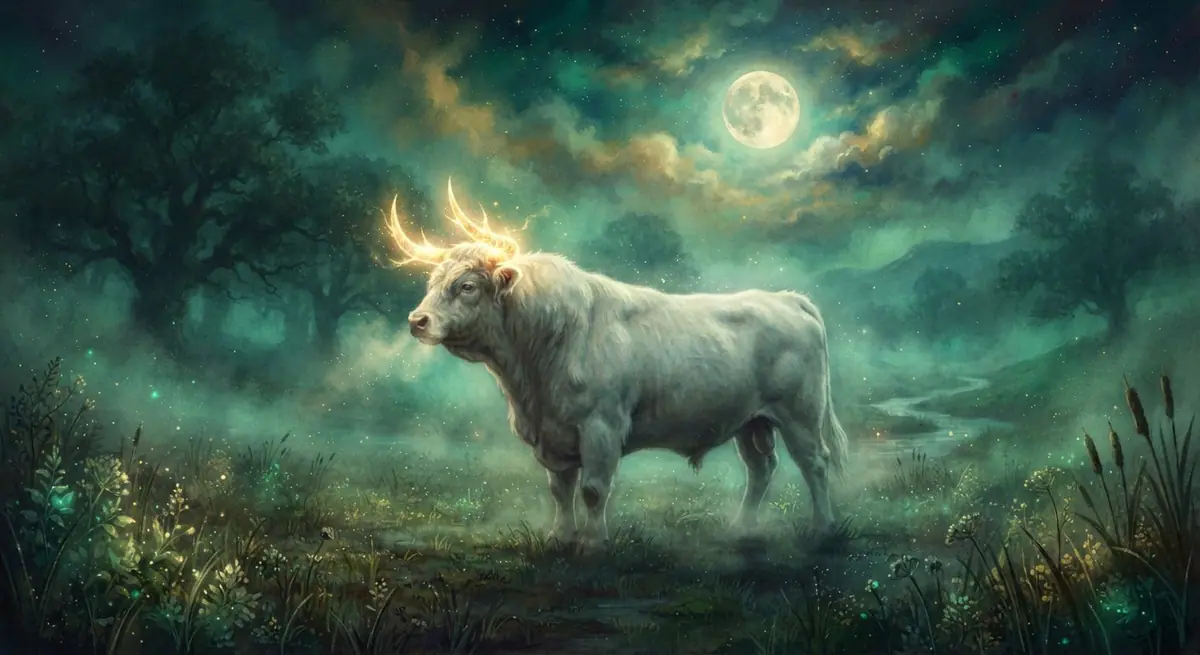
Dreaming of a bull often centers on concentrated force: desire, anger, endurance, fertility, authority, and the pressure to confront something immovable. Psychologically, a calm bull may represent grounded confidence or instinct under control, while a charging or wounded bull can dramatize suppressed rage, fear of domination, sexual tension, or conflict with an imposing person. Riding, harnessing, or guiding it suggests disciplined use of personal power; fleeing from it suggests avoidance. Spiritually, the bull has carried contrasting meanings across cultures: sacrificial strength, agricultural abundance, sacred virility, royal power, and dangerous pride. Its color, health, behavior, setting, and the dreamer's emotional response matter greatly. A fertile bull in a field may point to productive beginnings, whereas a horned bull in darkness may warn of unexamined impulses or an approaching struggle. The symbol is therefore usually mixed rather than automatically fortunate: it can signify prosperity and courage when integrated, but coercion and destructive stubbornness when resisted or uncontrolled.
Get your personalized AI interpretation in seconds
How each tradition reads dreams about Bull
Carl Jung (Archetypes)
Man and His Symbols (1964)
From a Jungian perspective, the bull is an archetypal image of instinctual vitality, embodied power, fertility, and the untamed masculine principle. It may express the psyche's connection with bodily energy and the natural world, but it is not simply a symbol of men or sexuality. Its meaning depends on the dreamer's relation to the animal. A calm bull grazing may show that instinct has found a constructive place in consciousness. A bull confined behind a gate may indicate energy repressed by excessive civility, duty, or fear. A charging bull often personifies a shadow complex: anger, competitiveness, sensuality, or assertiveness that the conscious personality refuses to recognize.
The dreamer's behavior supplies the psychological diagnosis. Running from the bull may reveal projection, in which an unacceptable part of the self is experienced as an external persecutor. Turning to face it can begin a dialogue with the shadow, though defeating or killing it prematurely may suggest inflation—the ego's attempt to eradicate rather than integrate instinct. Riding the bull can symbolize a temporary union of consciousness and libido, while being thrown off warns that the ego has overestimated its control. A wounded or dying bull may represent depleted life energy, grief over lost potency, or the collapse of a former identity.
Jung would also attend to anima and relational context. For a woman, the bull might carry an image of autonomous instinct, a powerful animus projection, or a need to reclaim assertive energy; for a man, it may reveal both a valued strength and a feared shadow of brutality. A bull in a temple, labyrinth, or night landscape acquires collective-archetypal depth, recalling ancient sacrificial and fertility imagery. The personal associations remain decisive: a bull linked with family farming differs from one linked with sport or trauma. Amplification through mythology clarifies the image, but individuation requires integrating its vitality ethically rather than obeying or suppressing it.
Sigmund Freud (Desire)
The Interpretation of Dreams (1899)
A Freudian reading treats the bull as dream-work material whose visible image disguises latent wishes, conflicts, and anxieties. Its large body, horns, force, and reproductive associations can condense phallic meaning, sexual desire, potency, rivalry, and fear of castration, but no single interpretation is automatic. The dreamer's free associations are primary. Someone raised around cattle may produce a practical memory image, whereas someone anxious about a dominant father, lover, or employer may use the bull as a displacement for that person.
A charging bull can represent threatening instinctual pressure: aggressive or sexual wishes that the superego condemns and the ego experiences as danger. Fleeing may fulfill the wish to escape authority while preserving the dreamer's innocence; standing firm may disguise a wish for mastery over a rival. Riding the bull can express triumph, sexual conquest, or identification with a powerful father figure. Being thrown, gored, or trapped may dramatize anxiety about humiliation, impotence, punishment, or loss of control. The dream's apparent fear can therefore coexist with forbidden excitement, since condensation allows attraction and repulsion to appear in one animal.
Freud would examine substitutions and details. A bull in a stable may connect with childhood memories, family rules, or bodily training; a bull in an arena may condense spectatorship, competition, and exhibitionism. Slaughtering it could symbolize aggression toward a father or rival, guilt over that wish, or an effort to master sexuality. A dead bull may represent the wish to remove an authority, but also anxiety about lost vitality. The dreamer's gender does not fix the meaning: the animal may embody a desired partner, an intimidating parent, or the dreamer's own forbidden assertiveness. Color, horns, blood, and bodily sensations may be overdetermined by recent events and infantile material. Interpretation should therefore proceed through associations and the dreamer's history, not through a universal omen dictionary.
Other traditions
Ibn Sirin (Islamic Core)
Muntakhab al-Kalam fi Tafsir al-Ahlam (attributed)
In reports associated with Ibn Sirin, the bull is read chiefly through rank, power, livelihood, and the dreamer's condition. A strong, obedient bull may represent a man of authority, a ruler, a leader, or a year of material capacity; for a farmer it can point directly to cultivation, harvest, and the condition of the land. A bull entering a house may signify an influential visitor or a powerful person entering the household's affairs. If it is calm and the dreamer can hold its horn or ride it, the dream suggests access to authority, victory over an opponent, or control of a difficult undertaking. Falling from its back reverses the indication and warns of lost standing, failure, or humiliation.
A charging or goring bull is more severe. It can signify conflict with a powerful man, an angry superior, or an ordeal that exceeds the dreamer's preparation. If the bull overturns the dreamer, the warning concerns defeat; if the dreamer restrains or overcomes it, the same force becomes conquered opposition. A bull entering violently, damaging property, or pursuing the dreamer may indicate fear of public power, dispute, or a threatening year. Slaughtering a bull can signify defeating an enemy, obtaining authority, or receiving lawful benefit from an important person, though the surrounding circumstances determine whether the act appears just or violent.
The bull's condition is decisive. A lean, sick, dead, or hornless bull may indicate weakness in leadership, reduced resources, or a diminished season. Numerous bulls can represent years, officials, or competing powerful men. Color and customary symbolism may modify the reading, but Ibn Sirin's method does not treat every bull as a fixed omen: the ruler, merchant, farmer, woman, servant, and person under oppression may receive different applications. The dreamer's fear, confidence, and waking circumstances remain essential to interpretation.
Al-Nabulsi
Ta'tir al-Anam fi Ta'bir al-Manam
Abdul Ghani al-Nabulsi treats the bull as an emblem of strength, leadership, labor, and sometimes a year or period of worldly fortune. In his symbolic vocabulary, a bull may stand for a chief, governor, husband, worker, or person whose force affects others. Riding a bull, especially when it submits, indicates mastery of a powerful matter and may suggest office, authority, or benefit gained through a notable man. A bull that carries the dreamer safely is more favorable than one that throws or tramples him, because submission converts raw force into usable power.
Nabulsi's variations are concrete. A bull entering a town or house can signify the arrival of a prominent man, an official intervention, or an event affecting the community. A bull entering angrily, breaking doors, or attacking inhabitants warns of strife, oppression, or an influential person's harmful interference. Fighting a bull depicts an actual contest with a rival or superior; being gored suggests injury from that contest, while escaping or prevailing indicates deliverance and victory. Slaughtering the animal may point to overcoming an enemy, acquiring wealth, or ending a period of domination. Eating its meat can indicate benefit, provision, or money associated with authority, provided the dream presents lawful slaughter rather than senseless violence.
A herd may signify successive rulers, years, or a group of strong men, and the order in which the animals appear can matter. A fat bull suggests prosperity and a productive year; a thin or dying bull suggests scarcity, weakened power, or a failing enterprise. A horned bull emphasizes force and confrontation, while a hornless one indicates reduced capacity. Nabulsi's interpretation also depends on profession: for an agricultural worker the image may concern the field and harvest, while for a court official it may concern command. The dreamer's condition, the bull's behavior, and the result of the encounter establish whether power becomes protection or danger.
Imam Sadiq
Interpretive manuals attributed to Imam Ja'far al-Sadiq commonly place the bull among symbols whose meaning branches according to the dreamer's circumstances. Its principal indications are authority, wealth, courage, strenuous labor, leadership, and a contest with a formidable adversary. A healthy bull standing firmly may signify a strong patron, prosperous livelihood, or the dreamer's own capacity to carry a demanding responsibility. For someone seeking office, the animal can point to command; for a merchant, it may represent capital, a powerful partner, or a difficult market; for a farmer, it naturally connects with cultivation and yield.
The bull's conduct determines the moral direction of the sign. A docile bull that follows the dreamer indicates that strength is available and governable. Riding it without falling suggests attainment of rank or success in directing others. If it throws the rider, the dream warns that ambition exceeds control. A bull that charges, gores, or corners the dreamer represents an enemy, an oppressive superior, or a crisis demanding courage. Defeating it indicates triumph over resistance, whereas hiding while it destroys property shows avoidance of a problem whose consequences continue to spread. Binding or harnessing the animal can symbolize disciplined power, contractual control, or the successful organization of labor.
Slaughter has two possible readings. When performed correctly and for useful food, it may signify victory, lawful gain, relief from an adversary, or the ending of a burdensome authority. When accompanied by bloodshed, grief, or needless cruelty, it may warn of sin, abuse of power, or loss caused by impulsive aggression. A fat bull is associated with abundance; a thin, sick, or dead bull with diminished resources, weakness in a leader, or a barren period. A herd can indicate several influential people or repeated opportunities and conflicts. These attributions are not a universal verdict: the dreamer's piety, occupation, fear, and waking dispute refine the symbol.
Biblical Tradition
The Bible (Old Testament)
Biblical tradition does not provide a single fixed dream code for every bull, but its cattle imagery supplies several established symbolic directions. Bulls and oxen signify agricultural wealth, strength, labor, sacrifice, and at times royal or military power. A strong bull in a fertile setting may therefore suggest provision and productive stewardship. Yet the image can also become a warning against brute force and idolatry. The golden calf episode in Exodus associates bovine imagery with a visible substitute for God, misplaced worship, and communal impatience. A dream featuring a magnificent bull treated as an object of devotion may consequently question what the dreamer has made ultimate.
Sacrificial context changes the meaning. In the Torah, a bull or young bull can be offered in atonement, particularly in rites involving sin, priests, or the community. A bull being prepared for lawful sacrifice may evoke repentance, costly dedication, and the surrender of power to God. An injured, bleeding, or improperly handled animal may instead raise themes of guilt, injustice, or corrupted worship. The ox imagery in Proverbs and the prophetic books also links strength with work and prosperity: an empty manger may signify the absence of oxen and the loss of production, while abundant oxen indicate increase but also responsibility.
Prophetic vision supplies a further layer. Ezekiel's living creatures have a face like an ox, and Revelation's living beings echo that imagery; the bovine aspect can suggest patient service, sacrificial endurance, and strength under divine order. Conversely, horned animals in Daniel symbolize earthly kingdoms and aggressive political power. A charging bull in a dream may therefore represent oppressive authority or a nation acting violently, while a harnessed ox may represent faithful service. Christian discernment asks whether the dream leads toward humility, stewardship, justice, and worship of God, rather than assuming that prosperity or force is automatically blessed.
Christian Tradition
Christian mystical interpretation often reads the bull through the tension between strength consecrated to God and strength corrupted by pride. The animal can represent endurance, courageous service, fertility of vocation, and the willingness to bear a burden. A calm bull beside a field or altar may symbolize disciplined energy placed under divine purpose. For a person facing ministry, care work, or prolonged hardship, the image can encourage steadfastness rather than sudden force. The traditional association of the ox with patient labor and, in some Christian readings, with sacrificial service gives the bull a devotional dimension.
The dream's spiritual atmosphere is decisive. A bull kneeling, harnessed, or moving peacefully may suggest the taming of passions through prayer, repentance, and humility. A bull breaking its harness, charging a church, or dominating the dreamer may expose anger, pride, lust, ambition, or an authoritarian relationship that has displaced love. The point is not that bodily energy is evil; rather, mystical Christianity distinguishes transformed strength from domination. Being pursued can invite examination of a passion avoided, while standing peacefully before the animal may signify courage grounded in trust rather than ego. Slaughter imagery can refer to surrender and sacrifice, but it should not be romanticized when the dream evokes cruelty or trauma.
A bull in darkness may call for discernment, confession, or guidance, especially if accompanied by fear, accusation, or spiritual confusion. A luminous or white bull is not automatically divine: Christian symbolism tests spirits by their fruits, and apparent magnificence may still represent temptation or pride. The dreamer should ask whether the image produces charity, self-command, justice, and service, or aggression and self-exaltation. Mystical interpretation also respects ordinary causes—work stress, farming memories, or cultural imagery. Prayerful reflection, Scripture, and trusted pastoral counsel are preferable to fortune-telling. The bull thus becomes a mirror of power: blessed when offered in service, dangerous when worshiped as the self.
Zhou Gong
Zhou Gong Jie Meng (周公解梦)
In the Zhou Gong tradition, the bull is generally connected with strength, labor, rank, wealth, and the force of circumstances that must be managed. A bull plowing or working in a field is an especially concrete favorable image: it can indicate diligence producing results, household prosperity, or progress after sustained effort. For a person beginning a business or official career, a strong, cooperative bull may signify dependable support and the ability to carry responsibility. A bull in the home may relate to family resources, a powerful visitor, or a matter that will occupy the household.
The animal's movement changes the omen. A bull charging, chasing, or goring the dreamer warns of conflict, pressure from a superior, or reckless behavior that brings trouble. If the dreamer escapes, the difficulty may be avoided; if struck or trampled, the dream advises caution in disputes and financial commitments. Taming, harnessing, or leading the bull indicates that force has been organized and that a difficult undertaking can be brought under control. Riding it successfully commonly suggests advancement or command, while falling from it indicates a setback, loss of face, or failure to manage obligations.
A fat and vigorous bull is associated with abundance and robust opportunity; a thin, sick, dead, or injured animal points toward depleted resources, unsuccessful work, or weakened support. A herd may signify collective labor, many competitors, or a succession of opportunities, depending on whether it moves orderly or chaotically. A bull in a muddy or ruined field emphasizes blocked productivity, whereas one in green pasture suggests nourishment and growth. Chinese dream interpretation also weighs the dreamer's current fortune and emotional response rather than treating the animal as isolated. The same bull may promise authority to a farmer, warn an official against arrogance, or represent burdensome work to someone already exhausted. Balance, disciplined effort, and respect for powerful forces are the central practical themes.
Hindu / Vedic
In Hindu tradition, especially in readings influenced by Swapna Shastra, the bull is interpreted through strength, dharma, fertility, prosperity, and sacred association. Nandi, Shiva's bull and mount, gives the image a particularly important devotional context: a calm, auspicious bull facing a temple or Shiva shrine may suggest protection, spiritual discipline, steadfastness, and alignment with a sacred duty. Because Nandi is also the attentive guardian before Shiva's sanctum, seeing a bull waiting peacefully can symbolize patience, focused devotion, and readiness to receive divine knowledge.
The animal's condition and behavior remain essential. A healthy white bull, a bull adorned for worship, or a bull moving toward a temple is generally favorable, especially for a devotee, someone beginning a disciplined practice, or a household seeking stability. It may indicate support, honor, abundance, or the strengthening of dharmic purpose. A bull plowing fertile land can signify prosperity earned through righteous effort. Riding or guiding a compliant bull suggests mastery of energy and successful leadership, while falling from it warns that pride or insufficient preparation has disrupted one's duty.
A raging, wounded, filthy, or starving bull carries a different message. It may show uncontrolled rajas—agitation, ambition, anger—or a breach between power and dharma. Being chased or gored can warn of conflict, misuse of authority, or consequences from neglecting obligations. A dead bull may indicate exhaustion of vitality, loss of support, or the ending of a worldly phase; the meaning is more serious if the dreamer feels spiritually bereft. Killing a bull is not uniformly auspicious, since it may symbolize violence against sacred order, although ritual context and personal tradition matter greatly.
Swapna Shastra readings traditionally consider timing, the dreamer's stage of life, ritual practice, and the emotional residue on waking. A bull seen after worship may be integrated differently from one appearing amid anger or illness. The central Hindu question is whether force serves dharma and devotion. Strength becomes auspicious when governed by steadiness, reverence, and right action, not merely when it produces worldly power.
Japanese (Yume Uranai)
Japanese 夢占い commonly interprets a bull through energy, assertiveness, ambition, stubbornness, and the dreamer's capacity to confront pressure. The symbol is not as uniformly auspicious as a culturally sacred animal such as a cow or crane, so the bull's behavior and the dreamer's feelings carry particular weight. A healthy, calm bull may represent confidence, rising motivation, physical vitality, or a powerful opportunity. Seeing it at a distance can suggest that the dreamer recognizes a major challenge or influential person without yet engaging directly.
A bull charging or chasing is usually read as a warning about stress, anger, competition, or an approaching confrontation. The dream may reflect pressure from a boss, rival, family member, or one's own expectations. If the dreamer freezes, the image can point to avoidance and low confidence; if the dreamer escapes safely, it may indicate successful boundary-setting or release from an oppressive situation. Facing the bull without panic suggests courage, while being gored or trampled warns against impulsive decisions and conflicts allowed to escalate. Taming, riding, or leading it is more favorable, implying that strong emotions and ambition are becoming manageable resources.
Color and setting add nuance in popular Japanese readings. A white bull may suggest clarity, protection, or a clean beginning, while a black bull can represent hidden anxiety, intense desire, or an unknown obstacle; these are tendencies, not fixed rules. A bull in a green field points toward growth and healthy effort, whereas one in a cramped room suggests pressure invading private life. A dead or injured bull may symbolize exhausted motivation, a failed contest, or the end of a forceful phase. Multiple bulls can represent competing goals or a socially charged environment.
Modern 夢占い also emphasizes the dreamer's waking associations. Someone who admires bullfighting, farming, or sports may supply a personal meaning unlike someone frightened by livestock. The practical guidance is to channel assertiveness, protect boundaries, and avoid needless stubbornness. The bull becomes fortunate when its power is directed; it becomes troubling when anger controls the dreamer.
Don't let the message slip away. Get a profound, personalized analysis that reveals what your subconscious is trying to tell you.
Interpret your Bull dream with AIDream Scenarios
Common Questions & Scenarios
What does it mean to dream about a bull?
What does it mean when a bull chases you in a dream?
What does a calm bull mean in a dream?
What does it mean to dream of fighting a bull?
What does a bull symbolize spiritually in a dream?
Written with AI from the traditions named on this page and maintained by the FASSIR English Editor. Last updated . How we interpret dreams
Disclaimer: This analysis utilizes AI based on historical and psychological texts for educational and spiritual insight. It does not constitute professional medical or psychological advice.