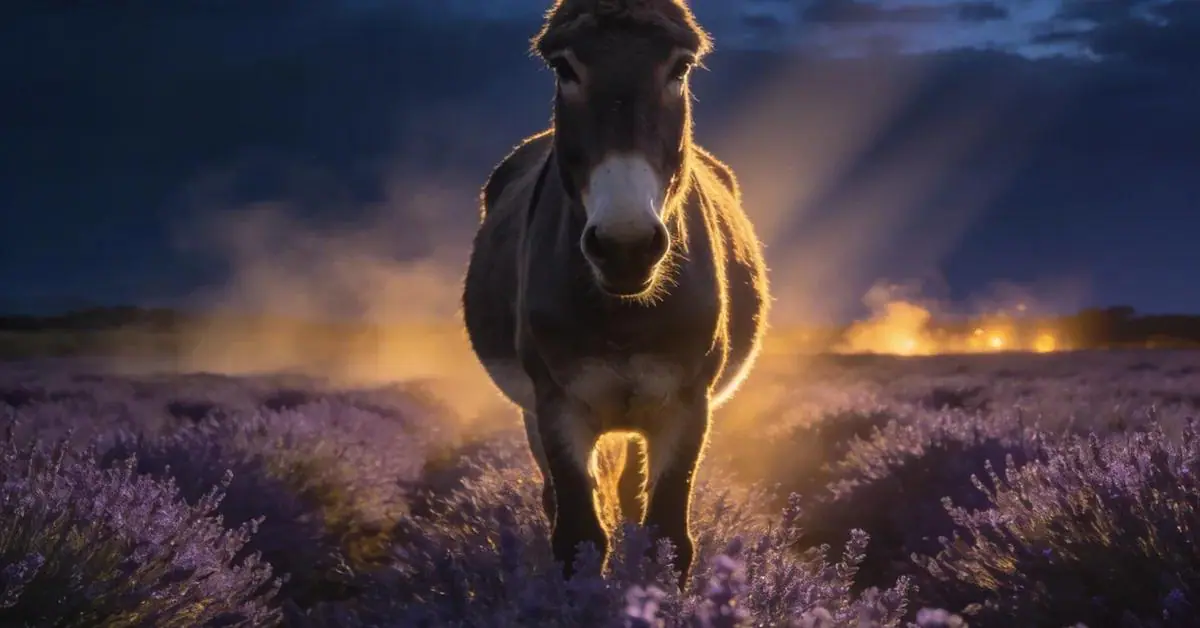
What does it mean to dream about a donkey?
Dreaming of a donkey often reflects endurance, humble instincts, and burdens carried quietly. Carl Jung associated it with the Shadow and with repressed, instinctive aspects of the self. The dream may therefore highlight unconscious stubbornness or a need to integrate raw instinct with consciousness while balancing personal needs against duty.
Is dreaming of a donkey good or bad?
MixedIt depends on the dream. Dreaming of a donkey can be a good or a bad sign depending on what happened and how you felt when you woke up.
Which animal guides your dreams? Take the spirit animal quiz.
In psychological terms, the donkey represents the archetypal 'Shadow' side of persistence and unyielding burden. Jungian thought views it as a symbol of the unrecognized part of the self that carries heavy emotional weight or duty without outward complaint. It serves as a subconscious message to evaluate your 'stubbornness' versus 'resilience.' Dreaming of a donkey often indicates that you are suppressing your instincts in favor of service to others, urging a balance between your personal needs and external demands.
Get your personalized AI interpretation in seconds
How each tradition reads dreams about a donkey
Carl Jung (Archetypes)
Man and His Symbols (1964)
Carl Jung views the donkey as a symbol of the Shadow and the humble, repressed aspects of the self. It represents primordial instincts, endurance, and patience in facing life's hardships. A donkey in a dream might point to unconscious stubbornness or the need to integrate instinctive energy with consciousness. As a beast of burden, it reflects psychological weights carried within the collective unconscious. It symbolizes raw power that lacks conscious direction but is essential for maintaining psychological equilibrium and groundedness.
Sigmund Freud (Desire)
The Interpretation of Dreams (1899)
Sigmund Freud views the donkey as a symbol of repressed sexual urges and libido, often linked to its reputation in folklore. Riding a donkey might represent a desire for dominance or sexual control. Freud also associates the animal with paternal figures or authority; its perceived stubbornness or stupidity may be a projection of feelings toward someone in the dreamer's life. The heavy burdens carried by the donkey symbolize psychological traumas or sexual responsibilities that cause the individual anxiety or feelings of inadequacy.
Other traditions
Ibn Sirin (Islamic Core)
Muntakhab al-Kalam fi Tafsir al-Ahlam (attributed)
Ibn Sirin interprets the donkey as a symbol of one's fortune, luck, and worldly efforts. A strong, obedient donkey signifies prosperity, success in business, and a dignified life, while a weak or emaciated donkey points to financial hardship and exhaustion. Riding a donkey represents status and decorative wealth. The death of a donkey may signify the loss of a primary source of income or the passing of a family elder. Generally, the donkey reflects the dreamer's struggle and his capacity for endurance in the pursuit of his goals.
Al-Nabulsi
Ta'tir al-Anam fi Ta'bir al-Manam
Al-Nabulsi interpreted the donkey as a representation of a servant, a child, or a spouse, often symbolizing travel and the pursuit of knowledge. A large donkey signifies elevated status, while walking calmly with it reflects dignity. Transformation of a donkey into a mule suggests a shift in wealth from trade to travel, and into a horse symbolizes honor obtained through authority. A black donkey represents joy and leadership, whereas a white one signifies beauty and religious adornment. Buying a donkey without inspecting it suggests hidden blessings and unexpected gains.
Imam Sadiq
Imam al-Sadiq views the donkey as having ten meanings: diligence, leadership, wealth, children, wives, sovereignty, victory, livelihood, service, and power. Riding a donkey indicates attaining a position of responsibility or status. A calm donkey signifies ease in affairs, while a rebellious one warns of obstacles. It symbolizes sustenance earned through hard work and perseverance. Hearing its braying is a reminder to seek spiritual protection and refuge from negative influences or devilish whispers that disrupt one's peace.
Biblical Tradition
The Bible (Old Testament)
In the Hebrew Bible, the donkey symbolizes humility, patience, and pastoral wealth. The donkeys of Jacob and Moses were signs of blessing and migratory life. The story of Balaam's donkey depicts the animal as a creature capable of perceiving spiritual truths hidden from humans. It represents the humble means chosen for profound purposes. Additionally, the donkey symbolizes peace; it was used for transport during times of tranquility, contrasting with horses which were primarily associated with warfare and military conquest.
Christian Tradition
In Christian tradition, the donkey is a symbol of humility and gentle service, derived from its role in carrying the Virgin Mary and the entry into Jerusalem. It represents spiritual victory achieved through meekness and endurance of suffering. Dreaming of a donkey may be a call for the believer to serve faithfully, carrying the Gospel with patience. Church Fathers often likened the donkey to the physical body that must be tamed to serve the spirit, representing a Kingdom based on love rather than earthly might.
Zhou Gong
Zhou Gong Jie Meng (周公解梦)
In Chinese tradition, seeing a donkey signifies hard work and delayed rewards. Riding one indicates overcoming obstacles through slow, steady persistence. If a donkey kicks you, it warns of upcoming scandals or betrayal by someone close. Hearing it bray suggests facing rumors or false accusations. A white donkey is an auspicious omen for peace and stability, while a black one hints at temporary sorrow followed by relief. Overall, it is a symbol of the necessary patience required before attaining success in any venture.
Hindu / Vedic
In Hindu culture, the donkey is associated with Goddess Shitala, the deity of healing, who is often depicted riding one. Thus, seeing a donkey can symbolize protection from disease or recovery. However, it is also seen as a beast of heavy labor, reflecting anxieties regarding social status or immense worldly responsibilities. Riding a donkey in a dream might signify an arduous journey necessary for karmic purification, representing the humility and labor required before achieving spiritual or material elevation.
Japanese (Yume Uranai)
In Yume Uranai, the donkey is a symbol of 'Gaman' (perseverance and patience). Dreaming of a donkey suggests the dreamer is carrying heavy burdens but will be rewarded for their resilience. A calm donkey is a Kichimu (lucky dream), indicating stability in home and work. Conversely, an angry or runaway donkey may warn of losing control over personal affairs. Japanese divination emphasizes harmony, seeing the donkey as the latent strength found in simplicity and the avoidance of vanity.
Don't let the message slip away. Get a profound, personalized analysis that reveals what your subconscious is trying to tell you.
Interpret your Donkey dream with AIDream Scenarios
Common Questions & Scenarios
What does it mean to dream of riding a donkey?
What is the interpretation of a donkey chasing or attacking me in a dream?
What does a white donkey versus a black donkey mean in a dream?
What does it mean if I feel afraid of a donkey in my dream?
What does a dead donkey or a dying donkey signify in a dream?
Written with AI from the traditions named on this page and maintained by the FASSIR English Editor. Last updated . How we interpret dreams
Disclaimer: This analysis utilizes AI based on historical and psychological texts for educational and spiritual insight. It does not constitute professional medical or psychological advice.