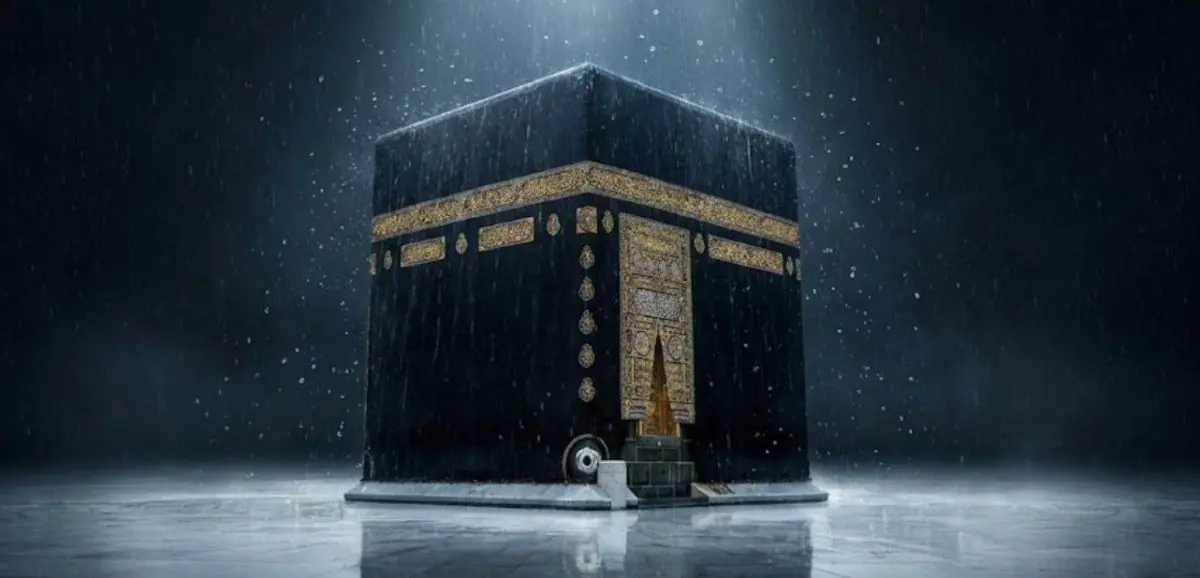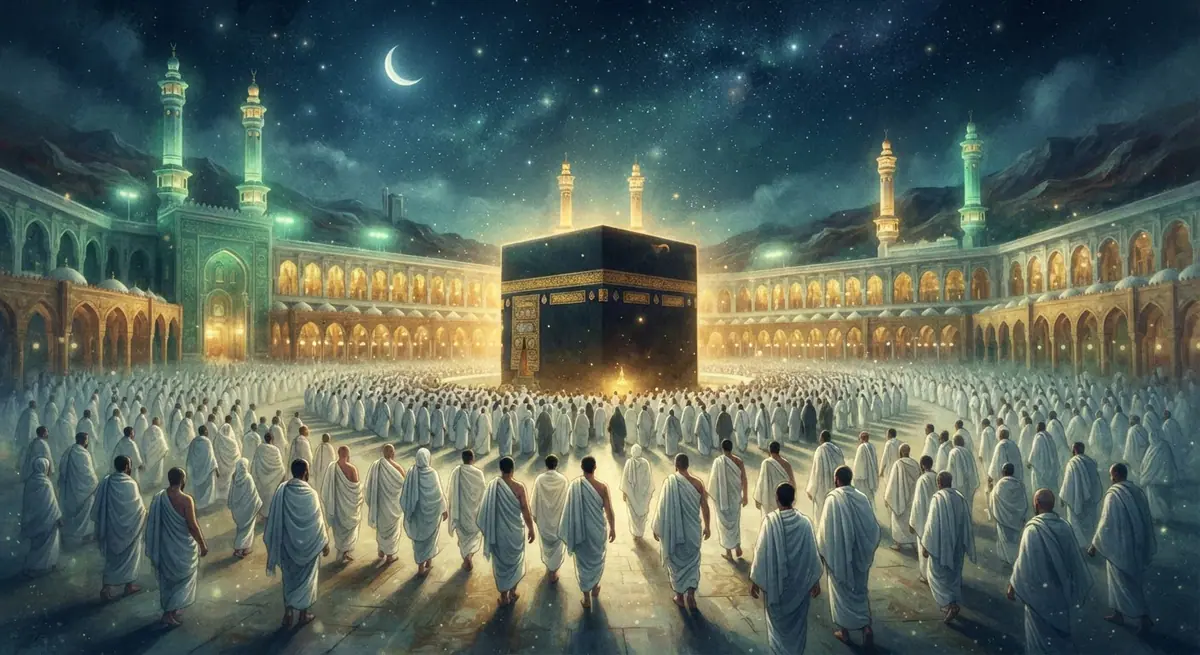
Dreaming of Hajj often represents a profound journey toward purification, duty, forgiveness, and renewed spiritual direction. In Islamic dream interpretation, seeing oneself perform pilgrimage can signify repentance, safety, fulfilled obligations, answered hopes, or the opening of a path to knowledge and lawful prosperity; the dreamer's health, conduct, and ability to complete the rites change its meaning. Psychologically, Hajj may embody a movement from fragmentation toward wholeness: leaving familiar ground, confronting the self, joining a greater community, and orienting life around a sacred center. A peaceful Kaaba, clear rituals, or arrival may suggest integration and moral resolve, while being lost, prevented, or unable to complete pilgrimage can reflect guilt, anxiety, blocked purpose, or fear of spiritual inadequacy. For non-Muslim dreamers, the symbol should be approached respectfully as an image of disciplined devotion and pilgrimage rather than treated as a prediction or invitation to appropriate another faith's rites. The emotional tone and personal context remain decisive.
Get your personalized AI interpretation in seconds
How each tradition reads dreams about Hajj
Carl Jung (Archetypes)
Man and His Symbols (1964)
Jung did not establish a traditional dream dictionary for Hajj, so a Jungian reading must treat the image as a living symbol shaped by the dreamer's personal and cultural associations. Hajj can function as an archetypal pilgrimage: the ego leaves ordinary routine, travels through uncertainty, and approaches a center representing the Self, the regulating totality of the psyche. The Kaaba may appear as a mandala-like center, not because Jung equated Islamic worship with a generic symbol, but because a central sacred form can organize psychic material around a more inclusive order. The dream's religious specificity should be preserved rather than reduced to decoration.
A Muslim dreamer who walks calmly among pilgrims may be experiencing individuation through renewed relation to community, tradition, and conscience. If the dreamer feels humility rather than self-importance, the journey can show the ego accepting a larger psychic authority. Someone who refuses the rites, mocks the pilgrims, or insists on standing apart may be confronting inflation: the conscious personality's resistance to limits and inherited wisdom. The shadow may appear as anger, envy, impurity, or fear of judgment during the journey. Such material is not proof of moral failure; it indicates what has been excluded from conscious identity and requires honest integration.
Anima and animus themes may emerge in the figure who guides, welcomes, or obstructs the dreamer, especially when the guide carries an unfamiliar emotional or spiritual quality. A lost route can signify that conscious plans have separated from the deeper vocation represented by the Self. A completed pilgrimage, by contrast, does not mean psychic perfection; it may mark a temporary alignment between ego and inner center, followed by the task of bringing that insight home. For a non-Muslim, Hajj may symbolize disciplined devotion, ethical belonging, or a call to undertake a personally authentic rite of passage, while the dreamer's feelings determine whether the archetype is consoling, demanding, or intimidating.
Sigmund Freud (Desire)
The Interpretation of Dreams (1899)
Freud did not analyze Hajj as a named symbol in his published dream theory, so a Freudian interpretation begins with the dreamer's associations rather than a universal dictionary definition. The manifest image of pilgrimage may condense several latent wishes: to be forgiven, recognized as morally good, released from debt, reunited with a family or community, or permitted to leave an oppressive routine. The sacred center can carry meanings supplied by childhood authority, parental approval, religious education, sexuality, guilt, and the wish for protection. The dream's exact personal links matter more than the image's public prestige.
A Muslim dreamer who dreams of completing Hajj after conflict with a parent or religious authority might be expressing a wish for absolution and restored belonging. If the dreamer is prevented at the gates, the manifest obstacle may disguise an internal conflict between desire and prohibition: wanting spiritual or social approval while resenting the demands attached to it. Being lost among pilgrims can condense anxiety about anonymity, competition, and the loss of individual identity. Repeatedly packing for Hajj but never departing may represent an inhibited wish, in which practical excuses defend against the anxiety of change.
Freud's ideas of displacement and condensation are especially relevant. A financial debt may appear as a religious obligation; sexual guilt may be displaced into fear of ritual impurity; a wish to escape a marriage, job, or family role may become a desert journey. The Kaaba could be invested with the authority of an idealized parent or superego, while the crowd could represent both longing for union and fear of judgment. A peaceful return may be wish-fulfillment, providing the satisfaction that waking life withholds; a failed pilgrimage may be the disguised success of repression, keeping the forbidden wish unresolved. Interpretation should therefore ask who authorized the journey, what the dreamer feared would happen on return, and which recent experience supplied its emotional charge.
Other traditions
Ibn Sirin (Islamic Core)
Muntakhab al-Kalam fi Tafsir al-Ahlam (attributed)
In the material attributed to Muhammad ibn Sirin, Hajj is read through the dreamer's condition and through whether the pilgrimage is completed, obstructed, or witnessed from afar. For a person who is healthy and capable, seeing oneself set out for the Sacred House points toward religious rectitude, safety, repayment of a debt, restoration of a trust, and relief from fear. Entering Mecca or seeing the Kaaba can indicate security and nearness to lawful guidance; circling it suggests adherence to the Sunnah and service to religion. A merchant may see the journey as profitable travel conducted under protection, while a student may receive a sign of learning and sound counsel.
For someone ill, Hajj has a more conditional reading. If the sick dreamer reaches the sanctuary, completes the rites, or returns safely, the image may signify recovery, forgiveness, or a peaceful resolution. If the person is carried toward the pilgrimage but cannot enter, the dream can warn of worsening illness, death, or an unfinished obligation, especially when the surrounding dream is dark or fearful. A debtor who sees the road open may expect payment; a person in conflict may find reconciliation or release from accusation.
Missing the caravan, being turned away, or failing to complete tawaf reverses the favorable sign: it may expose negligence, broken resolve, postponed repentance, or a journey that will not occur. Seeing oneself go to Hajj at the proper season is stronger than going at an inappropriate time; the latter can indicate confusion or a hoped-for matter being delayed. Ibn Sirin's method does not make the image mechanically auspicious: the dreamer's piety, profession, health, season, and emotional state determine whether pilgrimage means fulfillment or an admonition to correct one's course.
Al-Nabulsi
Ta'tir al-Anam fi Ta'bir al-Manam
Abd al-Ghani al-Nabulsi treats Hajj as a sign with several related meanings: religion, safety, the fulfillment of an obligation, repentance, and movement from fear into protection. A dreamer who sees the Sacred House, performs the rites in their proper order, and returns home may be approaching the completion of a serious duty or the settlement of a matter that has weighed on the conscience. For a traveler, the vision may confirm a safe and beneficial journey. For a ruler, judge, or person responsible for others, it can signify justice and the discharge of entrusted responsibility, provided the dream contains reverence rather than pride.
Al-Nabulsi distinguishes the condition of the pilgrim. A poor person who reaches Hajj may receive a sign of provision and dignity; a debtor may see relief; a frightened person may find security; and one estranged from faith may be called back to repentance. Seeing the Kaaba without entering it can mean desire for guidance without yet acting upon it. Circumambulation indicates seeking protection and keeping close to a legitimate authority or sacred law. Standing at the known stations, or hearing the call to pilgrimage, may point to an appointment with truth, a summons to fulfill a promise, or useful knowledge.
The unfavorable variations are concrete. A person who begins Hajj but abandons it, loses the caravan, or is prevented from reaching Mecca may face obstruction in a planned journey, failure to discharge a trust, or a warning against postponing repentance. An ill dreamer who completes the rites may be comforted by recovery or a good ending, whereas an ill person who is carried away from the sanctuary without completing them faces a grave warning. Al-Nabulsi also gives weight to inappropriate timing: pilgrimage outside its season can indicate disorder, delay, or misplaced confidence. The surrounding signs and the dreamer's character therefore decide whether Hajj is glad tidings or correction.
Imam Sadiq
Attributions to Imam Ja'far al-Sadiq commonly organize the dream of Hajj around meanings such as security, victory, divine protection, fulfillment of a vow, repayment of debt, and the attainment of a needed object. In this interpretive framework, a person who sees the Kaaba and enters the sanctuary with humility is moving toward safety after fear. A traveler may return safely, a debtor may be released from financial pressure, and a person facing an enemy may gain protection or moral advantage. The sign is strongest when the dreamer completes tawaf, prayer, and the other rites without confusion.
The dreamer's state remains essential. For a person who has neglected worship, Hajj may be an invitation to repentance rather than a promise of immediate worldly success. For a seeker of knowledge, walking among the sacred places can signify beneficial learning and a teacher whose guidance corrects the dreamer's direction. For an unmarried person, the journey may represent a dignified transition or a lawful union when the dream is peaceful and the return is safe; it should not be treated as a fixed prediction. A poor dreamer may see the pilgrimage as expansion of provision, while a ruler or official may be warned to govern with justice and to protect the rights entrusted to him.
Failure changes the interpretation. Being unable to see the Kaaba, missing the appointed departure, or returning before the rites are finished can signify a vow left unpaid, a goal postponed, or an obstacle produced by one's own negligence. A sick person who reaches the sanctuary and completes Hajj receives a hopeful sign of healing, forgiveness, or a good conclusion; one who is prevented or carried away may need to prepare for loss and settle unfinished duties. In this tradition, the emotional atmosphere matters: reverence and clarity support favorable meanings, while quarrel, pride, or profanation turns Hajj into a warning against hypocrisy.
Biblical Tradition
The Bible (Old Testament)
The Bible does not mention Hajj, Mecca, or the Kaaba, so Biblical interpretation cannot assign the dream a direct scriptural meaning. It can, however, read the image by comparison with Biblical pilgrimage, wilderness journey, sacred assembly, and covenantal return. Abraham's departure, Israel's passage through the wilderness, journeys to Jerusalem, and the New Testament language of believers as pilgrims provide relevant analogies, while preserving the distinction between Islamic Hajj and Biblical rites. The dream's meaning depends on whether the journey expresses obedience, repentance, exile, or presumption.
A dreamer who travels with humility, shares provisions, and reaches a holy destination may be responding to the Biblical themes of vocation and pilgrimage: leaving security, trusting guidance, and ordering life around God rather than possession. A clear path through desert can recall wilderness dependence and the discovery that guidance is not identical with comfort. A gathered multitude may suggest the people of God, fellowship, or the prophetic vision of nations seeking righteousness. For a Christian or Jewish dreamer, the image could invite examination of covenant loyalty, hospitality, and reverence toward another Abrahamic tradition rather than imply participation in a rite not belonging to that person's faith.
Being lost, turning back, or refusing to share the journey may resemble Biblical warnings about murmuring, idolatry, or hard-heartedness. Yet hardship is not automatically punishment: wilderness testing can precede wisdom and renewal. A dreamer who reaches the sanctuary but boasts of achievement may be confronting the Biblical critique of outward ritual without inward justice. Someone barred from entry may feel exile, unworthiness, or unresolved estrangement, but the dream may also call for reconciliation and mercy. The most defensible Biblical reading is therefore ethical: Hajj becomes an image of pilgrimage toward holiness, and the decisive question is whether the dreamer returns more truthful, just, humble, and compassionate.
Christian Tradition
Christian mysticism has no single traditional doctrine for dreaming of Hajj, and Hajj remains an Islamic act of worship rather than a Christian sacrament. A mystical reading can nevertheless recognize the image as a serious pilgrimage symbol: the soul leaves distraction, passes through deprivation and discipline, and seeks a holy center. Christian writers commonly interpret pilgrimage as conversion of the heart, an exodus from the false self, and a movement toward union with God. The Islamic form should be approached with reverence and not appropriated as a Christian ritual.
A Christian dreamer who walks peacefully beside pilgrims may be encountering the mystery of a faith community whose devotion challenges private, self-made spirituality. The dream may call for humility, hospitality, and repentance, especially if the dreamer has reduced religion to identity or argument. A desert road can symbolize apophatic purification, in which familiar images and comforts fall away. A luminous sanctuary may represent the soul's hunger for divine presence, while the crowd can reveal the tension between solitary contemplation and communion with others. If the dreamer feels invited but recognizes that the rite belongs to another tradition, the appropriate response may be respectful learning and ethical fellowship rather than imitation.
Obstruction can have several mystical meanings. Being unable to enter may expose attachment to control, spiritual pride, or fear of surrender; being lost may signify the dark night in which former certainties no longer guide experience. A dream of completing the journey and returning home may indicate a call to embody contemplation through service, mercy, and justice. Conversely, taking pride in having reached the sacred center warns against treating a spiritual experience as personal status. Christian discernment asks about the fruit of the dream: does it produce love, humility, truthfulness, and peace, or anxiety, superiority, and exclusion? Those fruits matter more than a spectacular sacred image.
Zhou Gong
Zhou Gong Jie Meng (周公解梦)
Zhou Gong's traditional dream corpus does not contain a standard, historically established entry for the Islamic Hajj. A responsible reading within Chinese dream-interpretation practice therefore treats it as a foreign sacred journey and applies familiar motifs of travel, worship, communal order, and reaching a revered destination, without claiming that classical Zhou Gong personally discussed Mecca. The symbol's particular meaning comes from the dreamer's associations and from the condition of the road.
If a dreamer travels toward Hajj on a clear road, arrives safely, and participates respectfully, the image may be read through the favorable Chinese motif of completing a long journey: a difficult undertaking approaches success, an examination or appointment may go well, and a promise may be fulfilled. Seeing a great sanctuary or an orderly gathering can indicate contact with respected authority and the restoration of social harmony. For a person in business, the long-distance journey may suggest opportunity through distant connections, though the dream does not guarantee profit. For a student, reaching the destination may represent perseverance rewarded after sustained effort.
The road's reversals are equally important. A broken vehicle, lost route, storm, or inability to enter the sacred place resembles traditional warnings about obstruction, wasted effort, or an ill-timed venture. Returning safely after completing the journey is more favorable than wandering endlessly, because return signifies bringing gained virtue or knowledge back into ordinary life. A dreamer who feels excluded from the procession may be anxious about status, belonging, or a family obligation. If the dreamer is sick, the destination can symbolize hope and support, while a perilous or unfinished journey reflects concern about vulnerability rather than a fixed omen. In a Chinese context, the image may also express respect for another culture's faith; interpretation should not erase Hajj's Islamic identity by replacing it with generic fortune-telling.
Hindu / Vedic
Swapna Shastra does not contain a classical, standardized entry for the specifically Islamic Hajj. In a Hindu interpretive context, the dream can be approached through the broader category of tirtha-yatra, pilgrimage to a sacred crossing place, while acknowledging that Hajj belongs to Islam and is not a Hindu rite. The key motifs are travel toward a sanctified center, purification, vows, collective devotion, and the completion or interruption of an undertaking. Personal samskaras, or impressions, may explain why this particular pilgrimage appears.
For a dreamer who reaches the sanctuary with a calm mind, bathes or prepares respectfully, and returns safely, the image may parallel auspicious pilgrimage symbolism: accumulated burden is being released, dharma is being clarified, and a long effort may bear fruit. A student could experience it as disciplined progress toward knowledge; a householder as a call to fulfill obligations before seeking withdrawal; and a person in crisis as a sign of moving from disorder toward sattva, clarity and balance. The large assembly can represent the power of shared devotion and the movement beyond narrow ego identity.
If the dreamer cannot find the route, violates the sacred space, or leaves in anger, the image may indicate unresolved vasanas, conflicting desires, or a vow undertaken without inner preparation. A broken journey need not foretell misfortune; it can show that desire for spiritual experience has outrun ethical discipline. A dream of carrying offerings or helping another traveler emphasizes seva, selfless service, whereas insisting on being first exposes rajas, restless ambition. For a Hindu dreamer, Hajj may also be a respectful encounter with another tradition's sacred geography, not evidence of a literal command to convert or travel. The dream's guna-like tone—clear and peaceful, agitated, or dark and confused—helps distinguish purification from anxiety and aspiration from escapism.
Japanese (Yume Uranai)
Japanese 夢占い has no classical, fixed entry for Hajj, since the symbol belongs to Islamic religious culture rather than the traditional Japanese dream lexicon. It can therefore be interpreted through neighboring Japanese motifs: a long journey, visiting a sacred place, joining a procession, crossing a boundary, and returning changed. The dreamer's own knowledge of Islam and emotional response should come first. A respectful approach avoids treating Hajj as a generic lucky charm or collapsing it into shrine pilgrimage.
If the dreamer follows a clear route, sees the Kaaba from a distance, and feels quiet reverence, the scene may signify a major life transition approached with discipline. In common modern 夢占い terms, arriving at a powerful sacred destination can reflect goal attainment, renewed purpose, or the need to choose a direction after uncertainty. For someone beginning school, work, marriage, or recovery, the procession may represent support from a group and the courage to enter a new stage. Returning home with a sense of calm suggests that an insight can be integrated into ordinary responsibilities rather than remaining an exotic fantasy.
A dream of missing the group, losing luggage, or being unable to cross the desert may express fear of falling behind, social isolation, or anxiety about an important commitment. Heavy rain, darkness, or confusion can point to emotional fatigue and a need to reconsider timing. Seeing oneself intrude, mock the rites, or feel superior warns of cultural misunderstanding and defensive ego. Conversely, helping a traveler or moving patiently with others emphasizes empathy and cooperation. If the dreamer is Japanese and has recently encountered news, study, or travel imagery about Hajj, the dream may simply be memory processing. Its strongest personal meaning comes from the feeling on waking—peace, awe, pressure, or exclusion—not from an automatic prediction of luck.
Don't let the message slip away. Get a profound, personalized analysis that reveals what your subconscious is trying to tell you.
Interpret your Hajj dream with AIDream Scenarios
Common Questions & Scenarios
What does it mean to dream of going for Hajj?
What does it mean to dream about performing Hajj with family?
What does seeing the Kaaba during a Hajj dream mean?
What does it mean to dream of missing Hajj or being unable to reach it?
Is dreaming of Hajj a sign that I will go on pilgrimage?
Written with AI from the traditions named on this page and maintained by the FASSIR English Editor. Last updated . How we interpret dreams
Disclaimer: This analysis utilizes AI based on historical and psychological texts for educational and spiritual insight. It does not constitute professional medical or psychological advice.