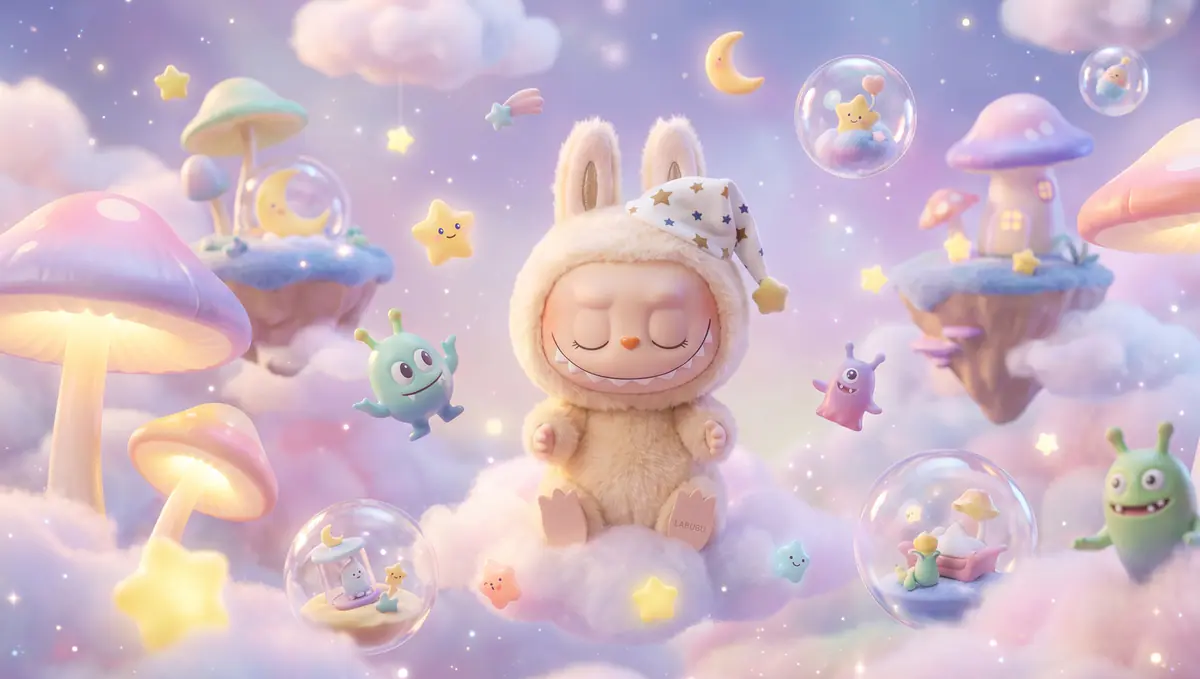
What does it mean to dream about a Labubu?
Dreaming of Labubu represents the Trickster archetype and a playful shadow challenging social norms. Jung associated its sharp teeth and mischievous grin with the Shadow appearing in a socially acceptable form, suggesting that the dreamer is integrating rebellious or chaotic inner-child qualities while balancing playfulness with hidden anxieties and public responsibility.
Is dreaming of a Labubu good or bad?
MixedIt depends on the dream. Dreaming of a Labubu can be a good or a bad sign depending on what happened and how you felt when you woke up.
In a psychological context, Labubu represents the 'Trickster' archetype—a mischievous manifestation of the shadow self that challenges social norms. Dreaming of this creature suggests a subconscious desire to embrace non-conformity and primal instincts. It often signifies a transitional phase where the dreamer is learning to integrate their inner eccentricities with their public persona, highlighting the balance between playfulness and hidden anxieties.
Get your personalized AI interpretation in seconds
How each tradition reads dreams about a Labubu
Carl Jung (Archetypes)
Man and His Symbols (1964)
Carl Jung would identify Labubu as an embodiment of 'The Trickster' archetype. This figure represents the undisciplined aspects of the collective unconscious that challenge social norms. The sharp teeth and mischievous grin symbolize the 'Shadow' manifesting in a socially acceptable form—a toy. The dream invites the individual to explore their 'inner child' in its rebellious or chaotic phase, or to recognize parts of their personality that use humor and play to manipulate reality and evade serious responsibility.
Sigmund Freud (Desire)
The Interpretation of Dreams (1899)
Freud would interpret the obsession with aggressive-looking toys like Labubu as linked to repressed childhood desires or 'castration anxiety.' The elongated teeth symbolize oral aggression, while the soft texture represents a libidinal need for comfort and security. The dream suggests a conflict between the urge to rebel against authority and a regressive need for parental protection, where repressed childhood energy is projected onto material objects that hold contradictory symbolic meanings.
Other traditions
Ibn Sirin (Islamic Core)
Muntakhab al-Kalam fi Tafsir al-Ahlam (attributed)
Ibn Sirin interprets the appearance of mischievous-looking dolls or figures with large teeth as a sign of deceptive people in the dreamer's life who hide their true intentions behind a smile. Seeing such a creature suggests being lured by the vanities of worldly life (Dunya) that may distract from spiritual duties. If the figure is small and charming yet sharp-featured, it serves as a warning against envy (Ain) or minor intrigues from those close to you, requiring one to maintain spiritual protection.
Al-Nabulsi
Ta'tir al-Anam fi Ta'bir al-Manam
Al-Nabulsi interpreted small, strange-looking figures as symbols of enemies who lack power but possess significant cunning. A character like Labubu, characterized by a wide grin, may represent false joy or a situation that seems pleasurable but ends in regret. Collecting these figures suggests surrounding oneself with superficial people or engaging in trivial matters. Occasionally, its appearance might signify the return of someone from travel or receiving peculiar news that causes both surprise and confusion.
Imam Sadiq
Imam al-Sadiq views the presence of figures that blend cuteness with monstrous features as a reflection of the internal struggle between the lower self and the spirit. Labubu represents the 'Nafs' inciting one toward mischief by making forbidden or trivial things look appealing. Gifting it to someone may symbolize spreading rumors or disturbing the peace. Breaking the figure is considered a positive omen, signifying the dreamer’s victory over inner fears and the shedding of negative psychological influences.
Biblical Tradition
The Bible (Old Testament)
In a Biblical symbolic context, such figures can be linked to spirits of distraction that tempt through small, seemingly harmless appearances. This resonates with the warning in the Song of Solomon about 'little foxes that ruin the vineyards.' Labubu may represent trivial thoughts that divert one from divine wisdom. It serves as a reminder to discern between what is holy and what is vain, cautioning against modern 'idols' or inanimate objects that occupy a place in the heart meant for spiritual focus.
Christian Tradition
From a Christian perspective, Labubu represents a 'mischievous spirit' attempting to beautify the grotesque. The sharp teeth behind a smile recall the warnings of Church Fathers about the enemy disguising himself as an angel of light or through false innocence. This dream suggests a subtle 'spiritual warfare' where obsession with such trends acts as modern materialism-based idolatry. It calls for spiritual vigilance and prioritizing eternal values over consumerist trends that hollow out the soul's depth.
Zhou Gong
Zhou Gong Jie Meng (周公解梦)
According to Zhou Gong, seeing small mountain spirits or clever 'goblins' in a dream is a sign of fluctuating luck. If Labubu is smiling at you, it signifies a modest profit from an unexpected source, though it may vanish quickly. If the figure is hiding, it warns of petty thieves or envious neighbors. Keeping such an item in the home suggests the introduction of active but chaotic 'Qi' energy, which might cause minor disruptions in family discipline or harmony.
Hindu / Vedic
In Hindu thought, Labubu represents 'Maya' (illusion) in its playful form. The contradictory features symbolize the shifting nature of the material world (Gunas). Seeing it suggests the dreamer is immersed in 'Rajas' (activity and playfulness), potentially blocking 'Sattva' (purity). The dream serves as a reminder that the external joy of material objects is transient, and one should avoid emotional attachment to inanimate dolls or trends that lack consciousness (Atman).
Japanese (Yume Uranai)
In Yume Uranai, Labubu resembles small 'Yokai' that appear to cause minor chaos or playfulness. Seeing it is a 'Kichimu' (auspicious dream) if colors are bright, indicating a delightful, unexpected change. If it feels menacing, it is a 'Kyomu' (ominous dream) warning of misunderstandings with friends. Japanese tradition suggests inanimate objects can acquire spirits (Tsukumogami); Labubu represents the modern urban spirit that requires a balance between playful fantasy and grounded reality.
Don't let the message slip away. Get a profound, personalized analysis that reveals what your subconscious is trying to tell you.
Interpret your Labubu dream with AICommon Questions & Scenarios
What does it mean to dream of a pink Labubu doll?
What is the interpretation of buying Labubu in a dream?
What does it mean to see Labubu laughing or smiling in a dream?
What is the interpretation of losing a favorite Labubu doll in a dream?
What does it mean to see a large collection of Labubu characters in a dream?
Written with AI from the traditions named on this page and maintained by the FASSIR English Editor. Last updated . How we interpret dreams
Disclaimer: This analysis utilizes AI based on historical and psychological texts for educational and spiritual insight. It does not constitute professional medical or psychological advice.